What Factors Help Explain the Italian Prime Minister’s Level of Influence?
Since assuming office in October 2022, Giorgia Meloni has established a notable level of political influence, a rarity in Italy’s traditionally unstable political landscape. Her rise to power came in the wake of the centre-right coalition's triumph in the general election held on 25 September 2022. Fratelli d’Italia secured its position as the largest party, garnering 26% of the vote, which allowed her to establish a government backed by a parliamentary majority. On October 22, 2022, she was officially sworn in, marking a historic moment as Italy’s first female prime minister.
The influence she wields can be attributed primarily to the combination of electoral legitimacy and the strength of coalition cohesion. Since 1946, Italy has seen a staggering turnover of over 65 governments. This persistent executive instability has historically constrained the authority of prime ministers. In contrast, the coalition led by Meloni, which includes Fratelli d’Italia, Lega, and Forza Italia, has demonstrated a notable level of internal discipline throughout its initial years in power. This increased durability bolsters agenda-setting capabilities and fortifies Italy's negotiating power within the European Union.
Her influence is closely linked to a strategic shift in foreign policy. In a notable display of political consistency, Meloni’s administration, while anchored in post-national conservative values, has reiterated Italy’s dedication to NATO and its backing of Ukraine. At the same time, Italy has also maintained its military and financial support in alignment with EU-coordinated frameworks. According to analysts at the Council on Foreign Relations, the alignment with transatlantic institutions has provided reassurance to markets and EU partners who are concerned about continuity. The fusion of clear ideological principles at home and dependable institutions abroad has expanded her influence across party lines.
Economic governance stands as a significant structural dimension. Italy stands as the third-largest economy within the eurozone, grappling with a public debt that surpasses 140% of its GDP. Efforts to balance fiscal consolidation alongside the fulfilment of campaign promises necessitate discussions with the European Commission. Under her administration, budget laws have been enacted with the aim of achieving gradual deficit reduction, all while maintaining specific tax and family-policy initiatives. Despite facing constraints in fiscal projections, the commitment to EU mechanisms has bolstered executive credibility within financial markets.
The recent developments in migration policy have significantly enhanced her public profile. Italy continues to serve as a key gateway for crossings in the Mediterranean. In a bid to enhance border security, Meloni’s administration has pushed for reinforced controls and has engaged in negotiations for external cooperation agreements. Notably, a memorandum with Tunisia has been established, targeting the reduction of migration departures. Migration has emerged as a pivotal issue in discussions surrounding EU policy, with Italy's geographical position placing its prime minister at the forefront of negotiations concerning burden sharing and the management of external borders. This strategic positioning enhances her impact in European decision-making circles.
In the domestic arena, Meloni's communication strategy has demonstrated a significant impact. Experts analysing her political messaging highlight a carefully crafted rhetoric that intertwines national identity, social conservatism, and economic pragmatism. Her ongoing emphasis on sovereignty in relation to the constraints of EU membership has enabled her to strengthen her support among conservative voters, while simultaneously minimising institutional friction. Televised addresses and social media have played a pivotal role in strengthening centralised party leadership.
Proposals for institutional reform are seen as enhancing her political leverage. In the years 2023 to 2024, the government has put forth plans for constitutional reform that seek to implement the direct election of the prime minister. This initiative has been referred to within the country as the “premierato” reform. Advocates contend that reform would bolster executive stability within a system that has long been characterised by fragmentation. The initiation of such reforms demonstrates a strong confidence in parliamentary arithmetic while also enhancing the visibility of leadership.
Under her leadership, the transformation of the party has significantly amplified her influence. Fratelli d’Italia, established in 2012, saw a significant increase in electoral support, rising from approximately 4% of the vote in 2018 to 26% in 2022, according to the Italian Ministry of the Interior's election results for those years. Recent comparative analyses have identified organisational discipline and message coherence as key factors contributing to this growth. Italy's influence within the European Parliament has been bolstered by her alignment with the European Conservatives and Reformists group, enhancing the country's standing in this parliamentary bloc.
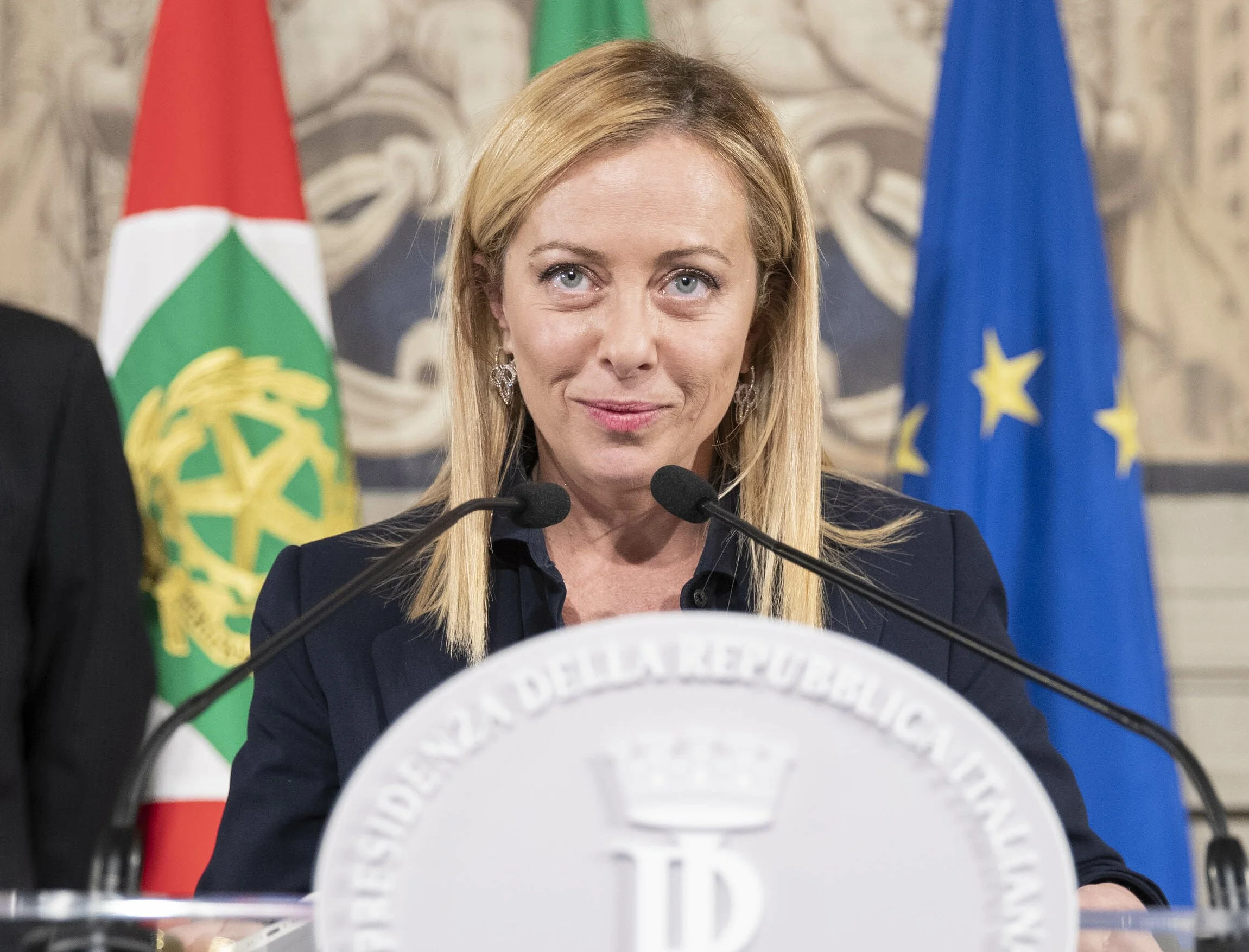
Image courtesy of the Presidenza della Repubblica via Wikimedia Commons, ©2022. Some rights reserved.
The views and opinions expressed in this article are those of the author and do not necessarily reflect those of the wider St Andrews Foreign Affairs Review team.