Strategic Autonomy or Legal Drift? EU Trade Policy in the Era of a Paralysed WTO
The global trading system has lost its referee. Since the World Trade Organisation’s (WTO) appellate court stopped functioning in 2019, trade disputes can be appealed into a legal void, leaving some of the world’s largest economies effectively beyond enforcement.
For three decades the WTO had acted as something close to a constitutional court for global trade. Governments still consistently argued, retaliated and negotiated, but they accepted one basic premise: disputes would ultimately be resolved within a shared legal framework. When the United States blocked new appointments to the WTO’s appellate body, that premise collapsed.
The consequences have been gradual but significant. Without a functioning appeals system, the WTO’s once-celebrated dispute settlement mechanism has become increasingly difficult to enforce. Governments can challenge rulings or simply appeal into the void, delaying decisions indefinitely. What was once the backbone of liberal trade governance now struggles to impose meaningful discipline on its members.
Into this vacuum has stepped the European Union (EU).
In recent years, Brussels has introduced a series of new trade instruments designed to protect European economic interests in an increasingly coercive global marketplace. The carbon border adjustment mechanism (CBAM), the anti-coercion instrument (ACI) and a growing network of digital trade agreements are presented as defensive tools, ways to safeguard fair competition and the integrity of the single market.
Taken together, however, they suggest something more ambitious: the emergence of a parallel system of trade governance built around European regulatory power.
This shift reflects a broader concept that now dominates EU policy circles: ‘strategic autonomy’. Originally developed in the context of defence policy, the term has expanded into economic governance. European leaders increasingly view trade policy as a tool for protecting the union from geopolitical pressure, supply chain disruptions and environmental externalities.
In practice, that means designing policies capable of functioning even when multilateral institutions fail.
The carbon border adjustment mechanism in particular clearly illustrates this new approach. Introduced as part of the European Green Deal, CBAM places a carbon price on certain imports entering the EU market. Goods such as steel, cement, aluminium, fertilisers and electricity must reflect the same carbon cost faced by European producers under the EU’s emissions trading system.
From Brussels’ perspective the logic is straightforward. Without a border adjustment, strict climate rules risk pushing companies to relocate production abroad, a phenomenon known as carbon leakage. By levying an equivalent carbon price on imports, the EU hopes to ensure that climate ambition does not undermine industrial competitiveness.
But CBAM also pushes at the boundaries of WTO law.
The core principle of the multilateral trading system is non-discrimination: countries should treat domestic and foreign producers equally and avoid favouring some trading partners over others. Whether CBAM fully satisfies this requirement however remains contested.
EU officials argue that the mechanism merely mirrors domestic carbon pricing and therefore respects WTO obligations. Critics, however, say it functions in practice as a tariff shaped by European regulatory priorities.
Under normal circumstances such disagreements would be settled through WTO litigation. Today that system lacks a functioning appellate court capable of delivering definitive rulings. As a result, the legality of CBAM may remain unresolved for years, effectively allowing major powers to test the limits of trade law without immediate consequences.
The EU’s anti-coercion instrument goes further still.
Adopted in 2023, the ACI gives Brussels the power to retaliate against countries that attempt to pressure EU member states economically. The legislation was prompted in part by China’s informal trade restrictions against Lithuania after Vilnius allowed Taiwan to open a representative office there.
Under the new instrument, the European Commission can investigate cases of economic coercion and impose countermeasures ranging from tariffs and investment restrictions to limits on access to public procurement markets. Crucially, these measures can be deployed relatively quickly and without waiting for multilateral authorisation.
Supporters argue that the mechanism fills a genuine gap in the global trading system. Economic coercion has become an increasingly common tool of geopolitical competition, while existing WTO rules struggle to address such behaviour effectively. Allowing smaller states to confront large powers alone often leads to asymmetric outcomes; a collective EU response promises greater deterrence.
Yet the ACI also raises difficult legal questions. WTO rules typically allow countermeasures only after a dispute settlement ruling. By empowering the EU to impose unilateral retaliation, the instrument risks bypassing procedures designed to prevent tit-for-tat escalation. In effect, trade enforcement shifts away from multilateral adjudication and towards political decision-making in Brussels.
A similar dynamic is emerging in the EU’s expanding network of digital trade agreements. Deals with partners including Singapore, Japan and New Zealand establish rules on data flows, digital services and online consumer protection. In many areas they go well beyond existing WTO provisions, which still provide only limited governance for digital commerce.
Regional trade agreements have long complemented the multilateral trading system. What distinguishes the current wave of digital governance is the extent to which it reflects European regulatory preferences. Issues such as data protection, platform accountability and competition policy increasingly follow standards shaped by EU law.
Scholars often describe this dynamic as the ‘Brussels effect’: because access to the EU’s vast internal market is so valuable, companies frequently adopt European rules globally rather than maintain different regulatory regimes.
Applied to digital trade, the effect allows European regulations to shape global governance without formal international negotiations.
Taken together, these instruments reveal a quiet transformation in European trade strategy. Rather than relying solely on multilateral rules negotiated through institutions such as the WTO, the EU is increasingly willing to exercise regulatory power directly. Strategic autonomy becomes less about defending the existing system and more about constructing alternatives when that system falters.
Whether this approach ultimately stabilises or fragments global trade governance remains uncertain.
On one hand, EU initiatives may help fill gaps left by institutional paralysis. If climate policies, anti-coercion measures and digital standards eventually influence international norms, they could provide a foundation for future multilateral agreements.
On the other hand, unilateral regulatory expansion risks accelerating the erosion of common rules. Other major powers are unlikely to remain passive. The United States has experimented with its own industrial policies and trade restrictions, while China has repeatedly used economic pressure in geopolitical disputes. If each major actor begins designing its own enforcement mechanisms, the result may resemble a patchwork of overlapping regimes rather than a coherent legal order.
The deeper question concerns the nature of international law itself. Institutions such as the WTO were built on the assumption that states would accept binding constraints in exchange for predictable rules. That assumption now looks increasingly fragile. As geopolitical rivalry intensifies, governments appear more willing to reinterpret or bypass legal commitments in pursuit of strategic goals.
In that environment the EU faces a genuine dilemma. Continuing to rely exclusively on multilateral institutions that no longer function effectively would leave the union vulnerable to coercion and regulatory competition. Yet building autonomous enforcement tools risks weakening the legal framework that historically protected European interests.
European trade policy therefore sits at an uneasy crossroads. Strategic autonomy promises resilience and influence in a more contested global economy. At the same time, it blurs the line between defending multilateralism and quietly moving beyond it.
For decades the WTO was presented as the institutional guardian of global capitalism’s rules. Today those rules increasingly emerge from regulatory power, market size and geopolitical leverage rather than adjudication in Geneva.
Europe insists it is defending the rules-based trading system. But by increasingly enforcing its own rules when global institutions fail, it may also be helping to usher in something very different: a world where the law of trade is written less in treaties than in the regulatory reach of the largest markets.
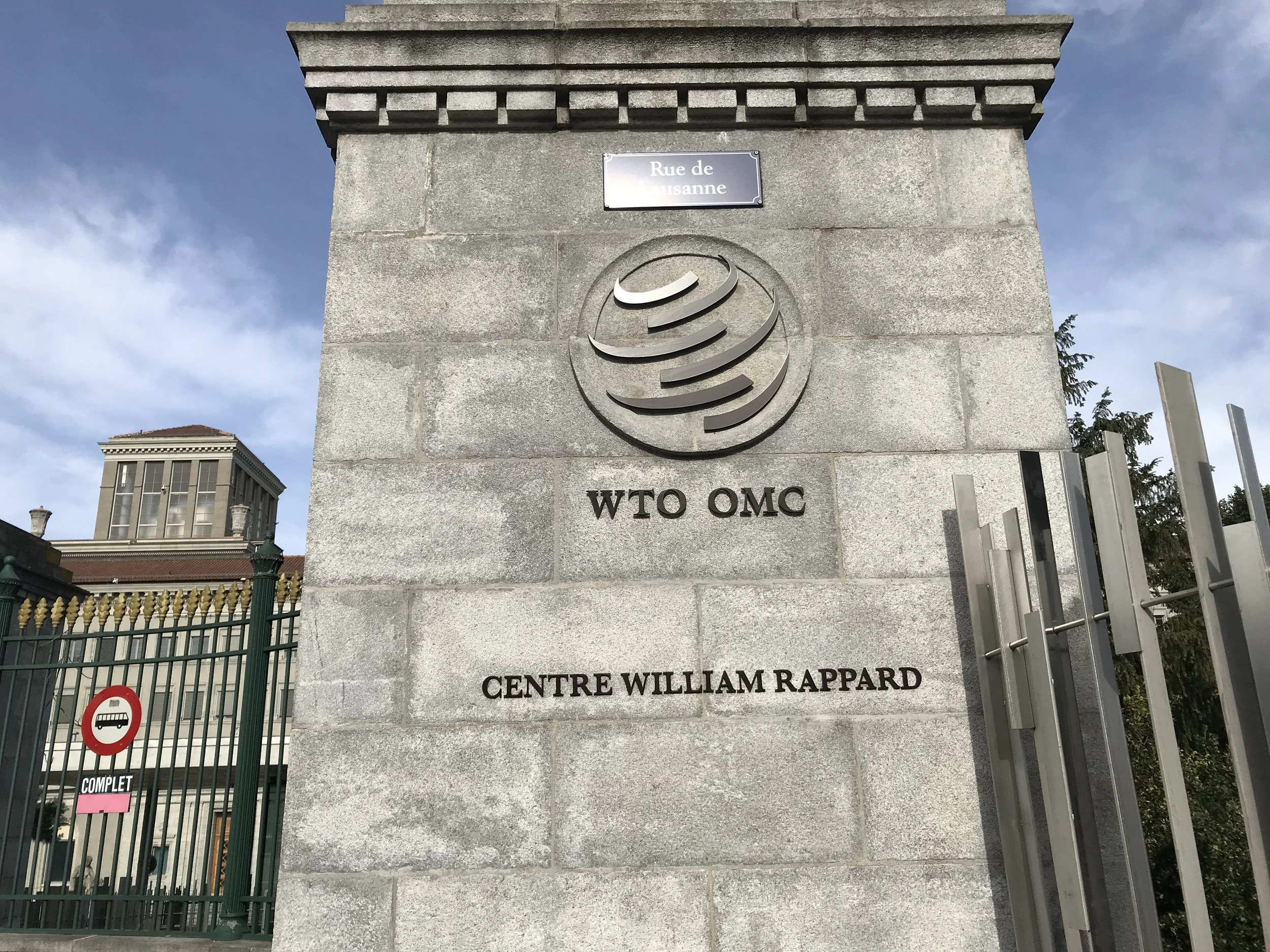
Image courtesy of Benoît Prieur via Wikimedia Commons, ©2018. Some rights reserved.
The views and opinions expressed in this article are those of the author and do not necessarily reflect those of the wider St Andrews Foreign Affairs Review team.