The Endurance of the Islamic Republic
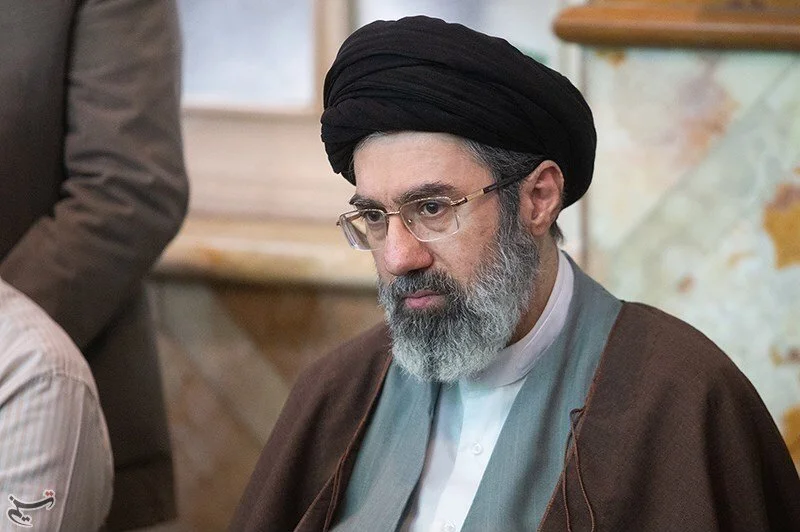
At the time of writing this, the war in the Persian Gulf has gone on for nearly a month. Israel and the United States continue to bombard Iran, sabotage energy infrastructure, and seek to assassinate top leaders; the Strait of Hormuz is in crisis, and the Gulf region is in turmoil. Though the United States and Israel succeeded in assassinating Ali Khamenei and damaging Iranian oil and military facilities, what the Iranian response would be. A war launched with unclear objectives has gone predictably off rails. Even now, the United States is proposing diplomacy and searching for an off-ramp. The Islamic Republic has fought back beyond what Washington ever expected, appointed a new leader, and remains in complete control of the domestic security situation. The miscalculation lies within Washington’s misperceptions of Iran and political echo chambers. As with the Iraq War in 2003, dissident groups, lobbyists, and Neoconservative ideology, have dragged America into a war in the Middle East.
While observers claim that Iran is “ripe for change,” the Islamic Republic’s imminent collapse has been predicted ever since its inception. Iran is not on the verge of a revolution, certainly not a democratic one. The protests in January 2026 were brought on by economic hardships, unlike the pro-democracy protests like the Mahsa Amini protest of 2022-23. While the government and idea of Islamic governance is deeply unpopular with the Iranian people, outside analysts tend to read what they want to see, instead of considering the evidence to the contrary. Iran’s domestic security services are masters of repression. The IRGC, Basij, and Morality Police number in the tens of thousands and are unrestrained in their willingness to kill and torture to keep power. A real democratic revolution in Iran, though not impossible, would be much harder to achieve than usually believed.
Despite its heinous oppression and ramshackle economy, the Islamic Republic has governed successfully in other ways. In its darkest hour, the Islamic Republic persevered through the devastating Iran-Iraq War. It navigated the Tanker War, terrorist threats, and has survived the ongoing war on drugs from Afghanistan. Iran’s historical diplomatic isolation with the slogan “Neither East nor West” has served it well. In forty-six years, Iran has become a technologically advanced country, managed to skirt Western sanctions, and forged strategic, though never over-reliant, partnerships with Russia and China. Most of all, Iran has grown its network of Shia proxies around the Middle East and beyond.
The Islamic Republic is the result of centuries of political and social shortcomings and dynamics in Iran. Ironically, one of the major causes of the Islamic Revolution was regime change and foreign meddling by the United States. And yet, some historical accounts even treated the Iranian Revolution and subsequent Islamic Republic treat like an accident of history like that Daniel Immerwahr’s piece in The New Yorker. Another narrative is that the country was taken hostage by a small group of religious extremists after the Revolution. Trump Administration officials seem to believe that if Iran were bombed strategically enough, the “real” Iran would “rise up” and Iran’s course would re-correct. Instead, modern Iran is a deeply paradoxical country. The Islamic Republic of Iran is the world’s only theocratic government. Iran’s political system combines clerical authority and popular elections, and it has a vast decentralized security system and bureaucracy. While most of Iran’s citizens are non-practicing, the country’s Shia clergy have always had considerable power, comparable to the Catholic church during the Middle Ages. The roots of the Islamic Republic runs deep. Killing the top level of Iranian leaders will only lead to their replacement. The only people with the power to permanently alter Iran’s course are the Iranians themselves.
How then, did the United States end up bombing Iran while believing their bombing would be greeted as liberation? And, that killing Iran’s head of state of thirty years would not warrant a severe military response? The answers lie inside the Beltway. In the absence of a formal diplomatic relations with Iran, diaspora groups and lobbyists have taken its place. Iranian American organizations like National Iranian American Council (NIAC), National Union for Democracy in Iran (NUFDI), and the National Council of Resistance in Iran (NCRI) seek to sway the political discourse in their favor. Each is strongly opposed to the other and each claim to represent what Iranians truly want, and each has a dubious record. NIAC seeks détente with Iran, but the brother of its founder is suspected by Swedish authorities of spying for Iran. NCRI is the political branch of the Mujahedeen-e Khalq, a terrorist group once aligned with Saddam Hussein that lobbied the U.S. Congress to have itself removed from the list of foreign terrorist organizations. The most influential in Washington, is NUFDI, the organization of exiled Crown Prince Reza Pahlavi; Pahlavi seeks to be the leader of a democratic Iran while still honoring the legacy of his loathed father, the Shah. The power of these lobbies is amplified by supporters of Israel and select news outlets like London-based Iran International and the Wall Street Journal’s opinion column. In many cases, Iranians outside Iran support military action and sanctions to cripple the economy. But the opinions of diaspora Iranians, especially in the United States, do not represent Iranians in Iran who must actually face the consequences of war and sanctions. According to polling, there was a huge gap between the predictions of Middle East analysts and policymakers surrounding the Iran war. Among actual Middle East scholars, the majority predicted the survival of the regime, and only 1% of scholars believed that the war would result in a democratic, pro-America Iran. These assessments were far removed from the assessments of American and Israeli officials. Echo chambers and political fault lines in D.C. led those in power to believe that the Iranian government would be easily toppled and that bombing Iran would be welcomed by Iranians.
The endurance of the Islamic Republic is best understood with a quote by Iranian scholar Vali Nasr, “what is most often missed in understanding Iran’s revolution and its Islamic Republic is [its] fundamental commitment to protecting national sovereignty… on the world stage.” As of now, no other political faction in Iran-- separatists, monarchists, Marxists-- are truly committed to Iran’s sovereignty. If the Islamic Republic survives its current war, the time may come for the United States to finally recognize the Islamic Republic of Iran as a sovereign government. Restoring cordial diplomatic relations would allow the United States to negotiate arms control agreements and manage the balance of power in the Persian Gulf. But, this course of action would face steep resistance from Israel, Iran hawks in Washington, and Iranian dissidents. As Dalia Dassa Kaye has noted in Enduring Hostility: The Making of America’s Iran Policy, analysts or civil society actors that favor diplomacy with Iran have been slandered as naïve and “regime apologists.” One can condemn Iran’s malignant actions, while still supporting diplomacy to mitigate those actions.
Regardless of the outcome of the war, U.S.-Iran hostilities are far from over. To face future challenges with Iran, and for the sake of maintaining stability in the Middle East, the United States should form an independent relationship with Iran, independent of Israel, Iranian diaspora politics, and Neoconservative ideologues. Open channels of communication would prevent military miscalculations and lead to more accurate political analysis. If the Islamic Republic were so weak, it would not have endured for over four decades and be on its third leader. For the long-term interest, America should see Iran for the country that it is and not what it wishes it would be.
Image courtesy of Mostafa Tehrani via Wikimedia Commons, ©2026. Some rights reserved.
The views and opinions expressed in this article are those of the author and do not necessarily reflect those of the wider St Andrews Foreign Affairs Review team.