The Drawbacks of Sanctions
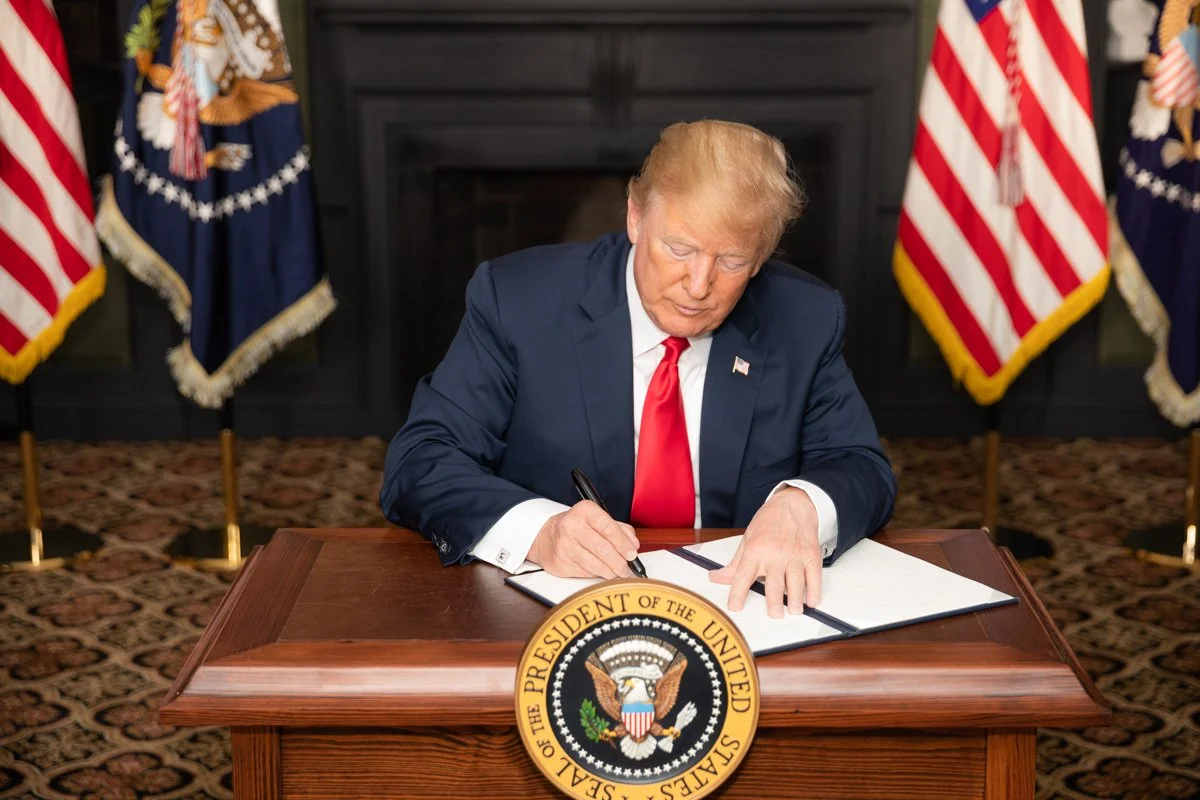
In June 2025, U.S. President Donald Trump announced 50% tariffs on India; the administration’s rationale was that India was importing Russian oil and thereby supporting the war in Ukraine. American officials had long been frustrated with India’s close ties to Russia. Indian diplomats have since tried to reason with the Trump administration. Trump’s tariffs on India, like those on other countries, have had the opposite of the intended effect. In August 2025, Indian President Narendra Modi met Chinese leader Xi Jinping just days before a landmark military parade in Beijing, where they pledged to be partners, not rivals. Modi’s appearance alongside America’s adversaries was alarming, but not unpredictable.
The use of sanctions and high tariffs by the United States and other countries has a long and messy track record. Ideally, sanctions are imposed to punish a government for human rights abuses or breaking international norms -- but as the world seems poised to enter an era of renewed great power competition, sanctions are no longer the right tool for achieving foreign policy goals or spreading democratic values. Sanctions have numerous drawbacks. They rarely achieve their original aim, punish a country’s population more than the government, reinforce government control over the economy, draw sanctioned countries closer together, and inhibit the exchange of culture and liberal values.
The 1979 Iranian Revolution was one of the worst fallouts between the United States and a former ally. Following the Shah’s ouster and the Iranian hostage crisis, the U.S. imposed sanctions on Iran, specifically targeting its oil industry. Analysts predicted the Islamic Republic’s quick collapse under the pressure of sanctions. Over forty years later, the Islamic Republic, despite its weak currency and international isolation, still stands. In the mid-2010s, the Obama Administration attempted a diplomatic breakthrough with Iran through the Iran Nuclear Deal, promising sanctions relief in exchange for a cap on nuclear enrichment. Trump pulled out of the nuclear deal in 2018, and relations declined sharply afterwards. Iranian diaspora groups and pro-Israel interest groups had strongly opposed this rapprochement with Iran. In the absence of a formal diplomatic relationship with Iran, these interest groups, which are often greatly out of touch with the home country’s population, fill the void. Analysts in Washington are still predicting the imminent collapse of the Islamic Republic, even after Israel and Trump’s bombings of Iran led to an outcry of national unity. Maximum pressure sanctions on Iran have not led to a democratic revolution or the collapse of its government. Those in power know how to evade sanctions. And economic isolation solidifies power and draws sanctioned and pariah states closer together. Russia, once a partner in negotiating the Iran Deal, has gotten closer to Iran. And Russia and Iran have built longstanding ties to Venezuela.
Lastly, there is the case of sanctions on Russia. In 2014, after the Russian annexation of Crimea, the United States sanctioned senior Russian officials. When the full-scale war with Ukraine broke out in February 2022, Western countries rapidly imposed sanctions on Russian officials, oligarchs, and business and financial transactions. This included the removal of Russia from international financial transactions flights to Russia, visa agreements, and, most consequently, Russian oil exports. These measures were fair and necessary. But it will also present policymakers with a major dilemma down the line. At some point, the war in Ukraine will end, likely only in the event of Putin’s death. At that point, Western politicians will have to make the choice between détente with Russia or keeping Russia under sanctions. Their decisions would have a tremendous impact on whatever administration comes to power after Putin. In a guest essay for The Economist, Russian opposition leader Yulia Navalnaya stated, “What is required is a Russia strategy that looks decades, not months, ahead... It would be a huge mistake to accept as legitimate a successor to Putin from within his own regime—someone who would make at most cosmetic reforms. The West needs a democratic, free Russia.” Navalnaya is right that policymakers should prepare to think long-term about Russia, but Navalnaya may be wrong to urge Western policymakers to outright reject whatever strongman succeeds Putin. Diplomatic stonewalling would be a self-fulfilling prophecy. The path to a democratic, free Russia will require extending an olive branch first. A Russia permanently cut off from Europe would only be more antagonistic and authoritarian. The exchange of cultures, ideas, and trade is what cultivates democracy and peace. It was Russia’s closeness with the democratic world in the 2000s and 2010s that fostered pro-democracy movements in Russia, like that of Navalnaya’s husband, Alexei Navalny.
All these examples illustrate the renewed importance of old-school diplomacy. During its post-Cold War “unipolar moment,” the United States was able to rely on coercion and economic pressure to achieve its aims. But now, with renewed competition with Russia and China, it is time for a return to high-stakes, Cold War-style diplomacy. The Trump administration has already made some steps in the right direction. Trump brokered a new trade agreement to de-escalate tensions with China, and has begun rapprochement with Belarus in an attempt to pull Lukashenko away from Putin. There are even talks of brokering a new Iran Nuclear Deal. In an article in Foreign Affairs, Jeremy Friedman argued that the United States won the Cold War by having more alliances and by being flexible with its allies. Instead, Trump’s tariffs are driving away BRICS member states and countries in the Global South. Sanctions seem like an easy solution to complex problems, but they are not. Policymakers must weigh the short-term popularity and ease of imposing sanctions against the long-term consequences of isolating and ostracizing their adversaries.
Image courtesy of Shealah Craighead via Wikimedia Commons, ©2018. Some rights reserved.
The views and opinions expressed in this article are those of the author and do not necessarily reflect those of the wider St Andrews Foreign Affairs Review team.