Polite Company in an Impolite Age: The Return of the Commonwealth Idea
In an age intoxicated with the theatrics of great-power rivalry—where summits are staged as gladiatorial contests and diplomacy is reduced to social media provocation—it has become fashionable to dismiss the post-colonial commonwealths as relics of empire. The networks clustered around the Commonwealth of Nations, the Organisation internationale de la Francophonie, and the Community of Portuguese Language Countries (CPLP) are often described as sentimental clubs: polite, ceremonial, and strategically irrelevant. They are often treated as bygone afterthoughts to the “real” business of geopolitics. This judgment is not merely premature; it is myopic. For beneath the antique vocabulary and inherited pageantry lies a set of flexible, linguistically coherent, geographically expansive forums that are quietly shaping contemporary international politics.
The post-colonial commonwealths are underrated precisely because they do not behave like the great alliances of the twentieth century. They lack aircraft carriers, mutual defense clauses, and the sharp-edged rhetoric of bloc politics. Instead, they trade in softer currencies: shared language, legal-administrative traditions, professional and educational exchange, and habits of consultation. In a fractured international system—exacerbated by the politics of division associated with figures such as Donald Trump—such connective tissue is no trivial asset.
The politics of division associated with Donald Trump offered a cautionary spectacle of how quickly multilateral commitments can be derided as burdens rather than assets. International institutions were caricatured as conspiracies and constraints on sovereignty; global health coordination was politicized; trade regimes were treated as instruments of humiliation rather than mutual benefit. While Washington oscillated between confrontation and withdrawal, and while the European project faced its own centrifugal pressures, the post-colonial commonwealths continued their less glamorous labor: building networks across continents that share language and institutional memory, even when they do not share ideology.
Consider the modern Commonwealth of Nations, historically associated with the United Kingdom but no longer subordinate to it. The Commonwealth of Nations today comprises fifty-six states spanning Africa, Asia, the Caribbean, the Pacific, and Europe. Its critics point to its modest secretariat and consensual procedures as evidence of weakness. Yet its very looseness allows it to convene countries that might otherwise struggle to find neutral ground. Commonwealth election observation missions, legal reform initiatives, and parliamentary exchanges have contributed to governance standards in small and mid-sized states that are frequently overlooked by larger powers except when crises erupt. The bi-annual Commonwealth Heads of Government Meeting remains the largest regular meeting of heads of government outside of the United Nations with this year’s set for November 1st in St John’s, Antigua and Barbuda.
More striking, however, are the Commonwealth’s global health initiatives. Long before pandemics became the stuff of geopolitical melodrama, Commonwealth health ministers were coordinating on infectious disease control, non-communicable diseases, and health system strengthening. During COVID-19, the network’s ability to share technical expertise and best practices—particularly among small island developing states—proved that linguistic and administrative familiarity can accelerate practical cooperation. The Commonwealth’s work on vaccine access, digital health records, and workforce training may not command headlines, but it demonstrates that post-colonial networks can function as nimble platforms for policy diffusion in ways that more universal bodies sometimes cannot.
Leadership matters in such settings, and the recent 2025 appointment of Shirley Botchwey as Secretary-General of the Commonwealth signals both continuity and renewal. As a former foreign minister of Ghana under Nana Akufo-Addo, Botchwey embodies the demographic and political center of gravity that has shifted decisively toward the Global South. Her tenure begins at a moment when the Commonwealth’s relevance will be judged not by nostalgia but by delivery—on climate finance, digital equity, human rights and the reform of global institutions.
The Francophone sphere presents a parallel case. The Organisation Internationale de la Francophonie convenes states across Europe, Africa, North America, and parts of Asia-Pacific. It has engaged in election monitoring, educational exchange, cultural diplomacy, and digital regulation. In parts of West and Central Africa, Francophone mechanisms often provide early platforms for constitutional dialogue and conflict mediation. Their efficacy varies, and criticisms—particularly regarding democratic backsliding—are neither trivial nor unfounded. Yet the institutional habit of consultation, rooted in a shared linguistic and legal heritage, remains a valuable diplomatic asset.
Yet it is the Lusophone world—less discussed in Anglophone commentary—that most vividly illustrates the contemporary potential of these forums. The Community of Portuguese Language Countries (CPLP) binds together countries from South America, Africa, Europe, and Asia, including Brazil, Angola, Mozambique, Portugal, and Timor-Leste. What unites them is not proximity but language and a history of entanglement. In a multipolar era where middle powers seek diversified partnerships, such a network can be surprisingly potent.
Take, for example, the CPLP’s ability to host a business forum in Macao—an event that underscores how post-colonial ties intersect with twenty-first century economic geography. Macao, with its Lusophone heritage and status as a Special Administrative Region of China, serves as a commercial bridge between China and Portuguese-speaking countries. By convening a business forum there, the CPLP demonstrated its capacity to leverage historical-cultural links for contemporary trade diplomacy. It created a platform where African energy ministers, Brazilian agribusiness leaders, Portuguese financiers, and Chinese investors could meet under a shared linguistic umbrella. Such gatherings do not supplant the World Trade Organization; they complement it by fostering trust and deal-making within a semi-familiar cultural milieu. It is precisely this sort of pragmatic brokerage that rarely commands headlines yet shapes economic outcomes.
Equally illustrative is the CPLP brokered energy deal in Goa, between Angola and India. In Goa—itself marked by a layered Lusophone past—the CPLP has explored cooperation on renewable energy and sustainable development. Energy transitions are among the most geopolitically sensitive issues of our time, entangled with questions of climate justice, industrial policy, and strategic autonomy. That a Lusophone forum can convene stakeholders around these questions in South Asia speaks to its quiet elasticity. It is not bound to a single continent; it can operate wherever linguistic and historical ties provide an entry point.
The detractors will insist that these networks are haunted by empire. Indeed, they are. Their genealogies cannot be disentangled from colonial domination, exploitation, and resistance. But to regard them solely as vestiges is to ignore how post-colonial states have appropriated and reshaped them. Membership today is voluntary; agendas are negotiated; and the balance of influence has shifted markedly. The Commonwealth is no longer a British instrument; the Francophonie is not reducible to Parisian fiat; the CPLP is as much shaped by Brasília and Luanda as by Lisbon.
Academic observers have begun to notice this phenomenon. In his article, “Comparative Commonwealths: an overlooked feature of global governance?”, Timothy Shaw argues that these linguistic associations function as parallel, and often complementary, architectures of global governance. They operate below the radar of the G7 or the United Nations Security Council, yet they facilitate policy transfer, norm diffusion, and coalition-building across continents. To treat them as vestigial is to ignore how governance increasingly occurs through overlapping networks rather than singular hierarchies
The Trumpian politics of division dramatized how quickly established alliances can be strained when domestic polarization spills into foreign policy. Yet the post-colonial commonwealths, precisely because they are less securitized and more networked, are resilient to such shocks. They do not depend on a single hegemon’s largesse or mood. Their connective logic is distributed across universities, professional associations, diaspora communities, and civil services.
None of this is to romanticize them and certainly none of this absolves the commonwealths of criticism. They suffer from underfunding, bureaucratic inertia, and at times a reluctance to confront democratic backsliding among members. Their communiqués occasionally lapse into diplomatic euphemism. But it is a category error to measure their worth by the yardstick of NATO or the G7. They are not designed to coerce; they are designed to convene.
In a century likely to be defined by climate disruption, pandemic risk, energy transition, and digital fragmentation, the ability to mobilize trusted networks across continents may be as important as the ability to deploy fleets. The post-colonial commonwealths—Anglophone, Francophone, Lusophone—constitute ready-made architectures for such mobilization. They are multilingual corridors of diplomacy that connect Lagos to London, Maputo to Macao, Port-au-Prince to Paris.
Underestimated because they are familiar, dismissed because they are polite, these forums represent a subtler form of power: the power of shared language and institutional memory to lower transaction costs in an anarchic world. In an era when the loudest voices often mistake volume for influence, the quiet persistence of these networks may prove, in the end, more consequential than the grandstanding of empires old or new.
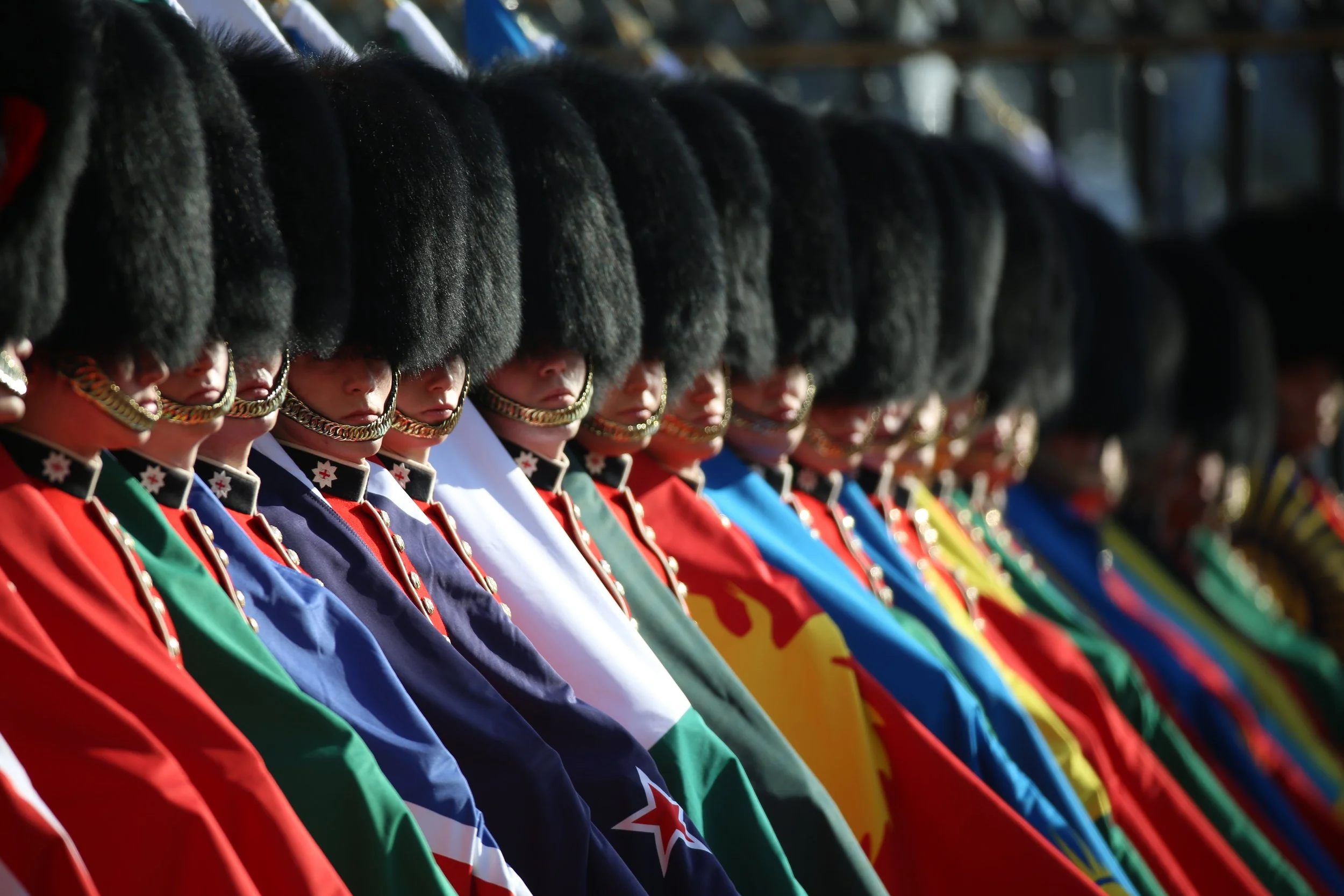
Image courtesy of Owen Cooban via Wikimedia Commons ©2018. Some rights reserved.
The views and opinions expressed in this article are those of the author and do not necessarily reflect those of the wider St Andrews Foreign Affairs Review team.