The Increasing Importance of Prediction Markets in Global Events
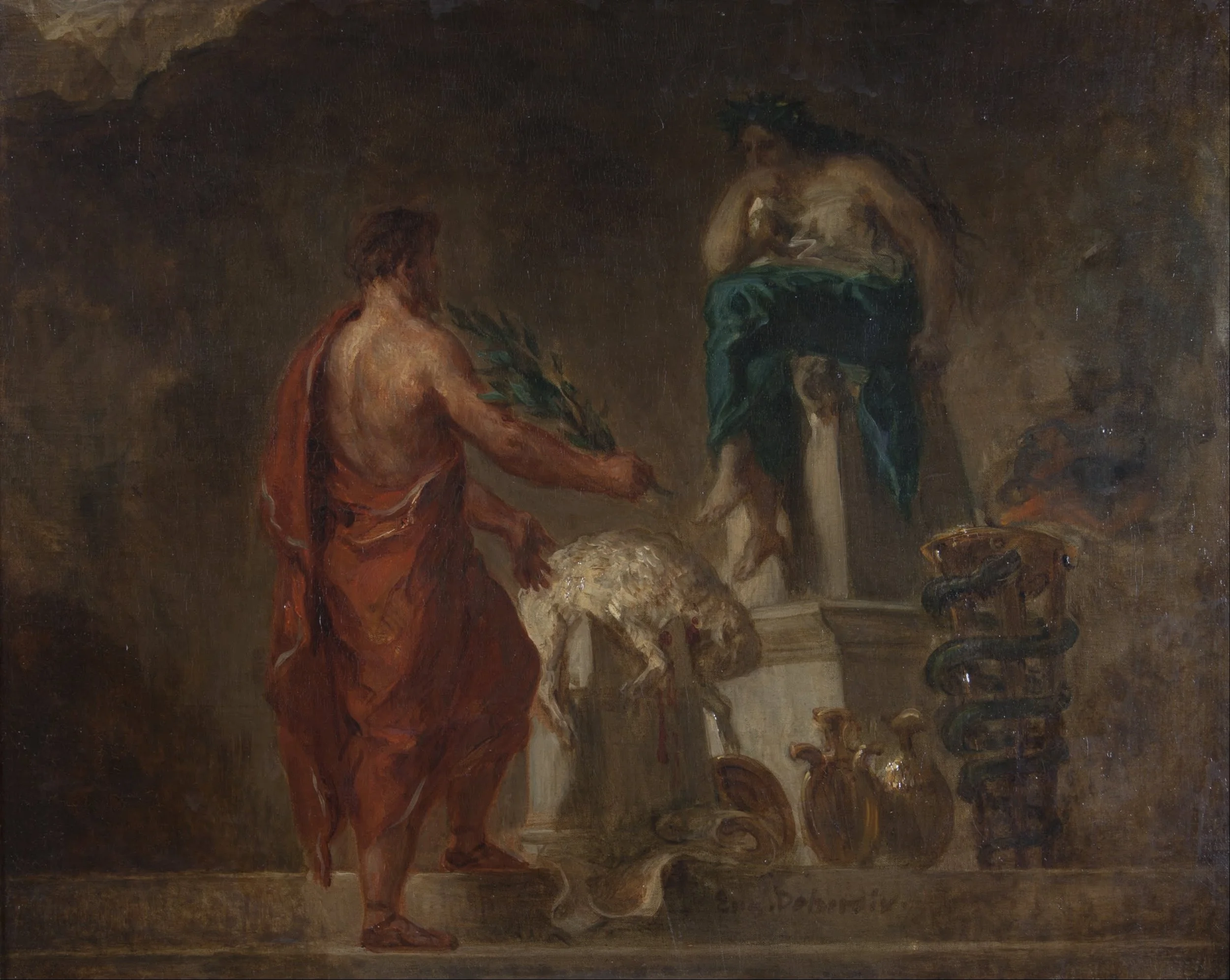
Sometime in the 6th century BC, King Croesus of Lydia visited the Oracle at Delphi to consult the high priestess on whether he should attack the upstart Persian Empire to his east. Obscured in the foggy vapours and darkness of the temple cellar, she gave her cryptic reply; Croesus would “destroy a great empire” should he decide to attack. Emboldened, the king moved against the Persians, unaware that the empire he was destroying was his own. Lydia would remain in Persian hands for centuries to come.
Had prediction markets had existed in ancient Anatolia, the story may have been different. If Croesus had wanted a more direct appraisal of his enemy’s strength, who better to consult than the thousands of inhabitants of both lands? The sight of merchants, diplomats and soldiers betting against his attack with their own money might have told him his efforts would be futile. Indeed, it seems that in 2026, prediction markets are becoming a formidable prophetic force.
National intelligence is just one of the spaces where these platforms have the potential to make an impact. The founders of these controversial trading applications envision a hugely significant role for their creations in a post-truth world. Tarek Mansour, co-founder of Kalshi, told the Financial Times last week that prediction markets will “play the role of modern oracle, innovative asset, public educator, new journalism and political saviour.”
These markets work via the trading of shares between individuals. The higher the value of a share (anywhere between $0.01 and $0.99), the more likely the event linked to the share is to come about. If the event does occur, the share pays out $1. The Polymarket homepage provides a dazzling array of examples; optimistic traders can bet on Prince Andrew seeing the inside of a prison cell for 30₵ a share, shares linked to Fenerbahҫe beating Nottingham Forest in a Europa league clash are selling at 43₵, and if you don’t believe Supreme Leader Khamenei will be able to see out 2026 in office, you could bet on that and potentially quintuple your money.
So, what does this mean for the wider world? Arguably, in a world saturated with partisan news outlets and confused, compromised social media reporting, these markets could soon become universally trusted sources of truth. It has been proven in the last decade by men such as Piers Morgan and Tucker Carlson that the easiest path to fame and riches in the media world is via sensationalised, polarising content; facts have become increasingly worthless to despondent, alienated viewers around the world. With the arrival of large-scale prediction markets, political forecasting can once again become a discipline focussed on rational judgements, not entertainment.
In a world driven by money flows, it does not seem unreasonable to wonder why money cannot be used to foster transparency and accuracy in our day-to-day information cycles. Markets move faster than printing presses, and predictions that force people to put money where their mouth is could end up filtering out a lot of hot air. The prospect of cash in exchange for astute analysis seems to be encouraging an apolitical wealth of OSINT (open-source intelligence) surrounding ongoing global conflicts – official Polymarket partner, PolyGlobe, has set up a live Ukraine war map tracking frontiers and fallen zones, driven by demand from traders. Traditional outlets have also given the vote of confidence, last month Dow Jones announced they would partner with Polymarket to publish prediction data in their news offerings.
Yet a closer look reveals that these markets are not the democratising bastions of reliable information that they purport to be. Besides the obvious moral faux pas of turning a grim news cycle of tragedies into a spinning roulette wheel, there are other issues at play.
First of these is that the ‘wisdom of crowds’ narrative might in reality be overblown. In a guest essay for the New York Times last month, economist Kyla Scanlon sounded the alarm on allowing community-decided probabilities to become legitimate forecasting tools. One obvious danger is the ability of big capital to sway the odds unilaterally, recommending that bet totals should be public above a certain level, she argues that large single bets “get laundered into legitimacy through the language of collective wisdom and truth machines, with a light touch of regulation.”
Even when prediction markets are operating with healthier cash ratios and participation levels, one must question how wise the crowd actually are. A lot has been written in economics about the phenomenon of the ‘unrealistically optimistic consumer’, and this trend seems to be alive and well on Polymarket, where users have decided that there is a 3% chance Jesus Christ’s second coming will occur in the next 10 months.
However, the biggest danger seems to be the possibility for confirmation bias, where predictions begin to shape the narrative themselves. Politicians are perennially terrified of ‘spooking the markets’, and when share prices on contentious events begin to be reported as evidence of market consensus, this can begin to undermine democratic institutions. Scanlon laments how Polymarket seemed to legitimise and arbitrate on Trump’s abduction of Nicolás Maduro last month, declaring that the operation did not constitute an invasion (by resolving ‘event contracts’ to this end) before Congress could itself deliberate on whether Trump had acted ultra vires. If prediction markets continue their ascent towards becoming a legitimate news source, it could pose a number of awkward questions for traditional authority.
Nevertheless, these new institutions are a potent emerging force in a world where reliable information is few and far between. With proper regulation, they could be a silver bullet for disinformation and uncertainty, and allow leaders to keep finger firmly on the pulse of political opinion. Going forward, governments would do well to recognise these outfits as forces for good and sparingly use legislation to shape them into something useful, rather than sinister.
Lycurgus Consulting the Pythia by Eugène Delacroix. Courtesy of University of Michigan Museum of Art
The views and opinions expressed in this article are those of the author and do not necessarily reflect those of the wider St Andrews Foreign Affairs Review team.