Instability or Security? The State of ISIS in Iraq
ISIS are far removed from their heyday of 2016 when the group took over large swathes of Iraq and Syria. Iraqi intelligence estimates that active ISIS fighters number around 10,000, although the UN puts this at around 3,000. They have been limited to a protracted, dispersed insurgency since 2017, largely in the north and west of the country. Targeted missile strikes keep them in check, the most recent being in Nienevah province, which killed four. However, ISIS militants thrive on instability and uncertainty, and as some analysts point out, recent events may be ever more ‘conducive to a resurgence of ISIS.’ In particular, the elections of 2025 are still in ‘complete deadlock’, instability in Northern Syria, and the transfer of ISIS prisoners from Syria to Iraq all point to rising instability benefitting ISIS. Furthermore, the recent bombing of Iran by US and Israeli forces will also lead to a deepening level of precariousness in the region as Iranian-backed militias such as Kataib Hezbollah Harakat Hezbollah al-Nujaba, and Asaib Ahl al-Haq are activated by Iran to carry out attacks on military locations in the country.
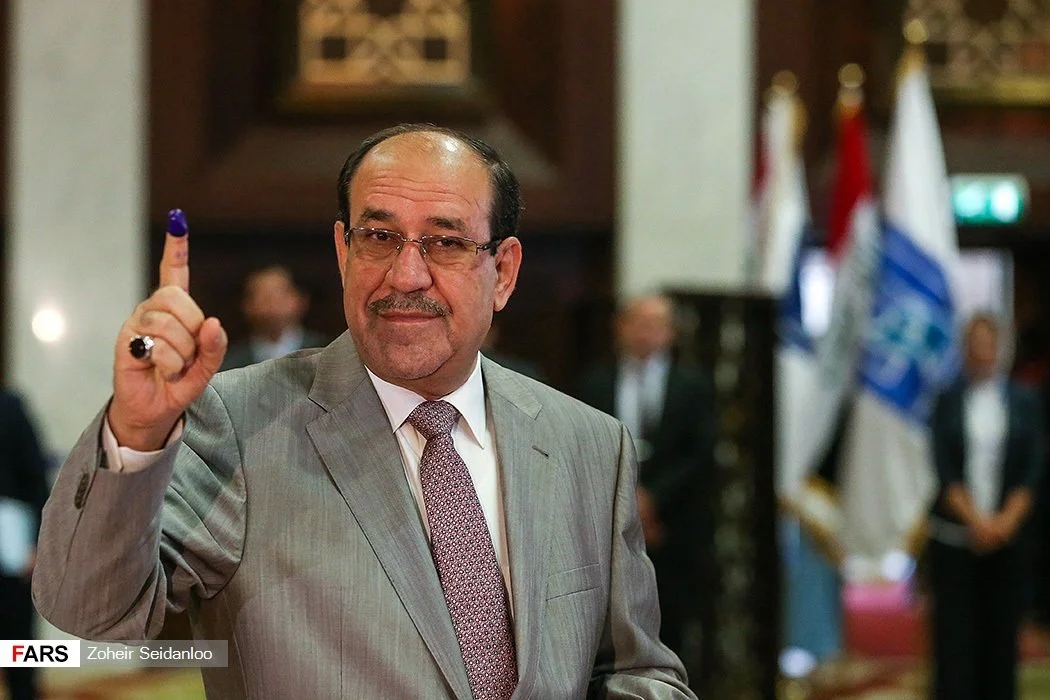
Following the 2025 elections in Iraq, the incumbent Prime Minister, Mohammed Shia al-Sudani and the leader of the party with the most votes, Reconstruction and Development, withdrew from the premiership race. Nouri al-Maliki, the former Prime Minister from 2006 to 2014, emerged as the most likely leader. He presided over years of Sunni oppression, institutionalised sectarianism, and large-scale corruption in which an estimated $320 billion was lost from 2003 to 2018. The increasing decay of the Iraqi state under his rule was one of the primary reasons for the emergence of ISIS. Unsurprisingly, many analysts have pointed out that his return to power would ‘repeat the same mistakes of the past.’ However, US President Donald Trump warned that his government would cut off aid to Iraq if Maliki were chosen as Prime Minister. He wrote in a Truth Social post, “If we are not there to help, Iraq has ZERO chance of success, prosperity or freedom.” With the Americans set to fully depart the country by September 2026, Iraq could be increasingly vulnerable to Islamic militant groups, although this may be prolonged given the recent escalation in the Gulf.
Trouble across the border in Syria is also worrying. After Syrian government forces under President Ahmed al-Sharaa moved into the North to retake land from the Syrian Democratic Forces (who had ownership of ISIS prisoner camps in Al-Hol and Roj), it is estimated that a few hundred prisoners escaped during the confusion. As a result, the US transferred the majority of the remaining prisoners (5,700) to a detention centre in Iraq last month to “help prevent an ISIS resurgence in Syria.” Admiral Brad Cooper, the CENTCOM commander, noted that preventing mass breakouts was crucial to the security of the region and the US itself, and that his country remained “poised to respond to any [ISIL] threats that arise in the region.” However, Iraqi Foreign Minister Fuad Hussein remarked that “if those thousands of terrorists stay in Iraq for a long time, I mean, security-wise, it’s very dangerous, so we need support from various countries.” Again, fears were raised on the potential security vacuum in Northern Syria as ISIS have become “very active recently” especially considering the fact that “there are many people who believe in this ideology” there, according to Hussein.
The launch of missile strikes against Iran last Saturday morning, with the apparent goal of regime change, will not help the situation either. Iranian-backed militias are now being activated in Iraq, and the group Saraya Awliya Al-Dam has claimed responsibility for drone strikes against American bases in Erbil, Northern Iraq. There are approximately 100,000 members of these militias, and a new theatre of the conflict could be about to get underway. Intervention in the Middle East largely comes with unforeseen consequences, as the rise of ISIS from Al-Qaeda in Mesopotamia after the American invasion of 2003 attests to. The group will undoubtedly seek to exploit the situation, as deepening instability and uncertainty will only help their cause.
Image courtesy of Zoheir Seidanloo via Wikimedia, ©2018. Some rights reserved.
The views and opinions expressed in this article are those of the author and do not necessarily reflect those of the wider St Andrews Foreign Affairs Review team.