AI Diplomacy: How Organizations Are Building Diplomatic Relations Through AI Partnerships
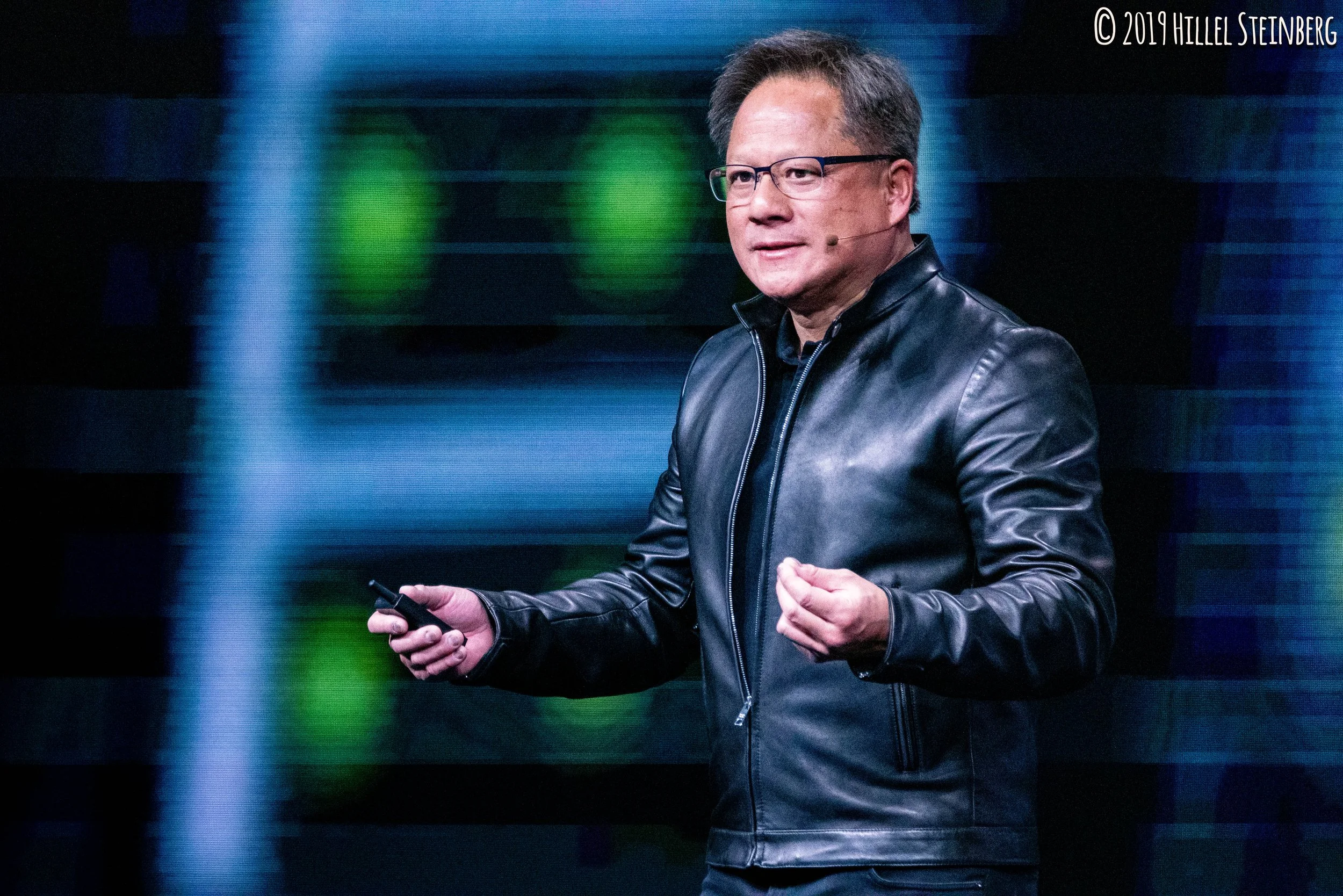
In late October earlier this year, an image of Jensen Huang, President and CEO of NVIDIA Corporation, alongside Samsung Electronics Chairman Jay Y. Lee and Hyundai Motor Group Executive Chair Euisun Chung garnered signifcant media attention. While clearly a planned photo-op, it reflects the broader question of how states navigate AI partnerships with national security and economic dependence in mind.
Despite turbulent relations between states, most notably between the United States and China, regarding AI, chip restrictions, and ongoing tariff and trade disputes, AI businesses and organizations are increasingly driving international partnerships. These industry-led efforts amount to a form of grassroots multinational “AI diplomacy.” In the current competitive environment, AI is often framed in binary terms: whichever country “wins” the AI race will secure digital hegemony. As US actions escalate, from export controls and the U.S. AI Action Plan to a widening trade war, US technology firms are simultaneously reinforcing this narrative by forging major partnerships with other global tech conglomerates.
On another front, multinational organizations and industry groups are developing AI ethics, norms, and frameworks aimed at fostering safer innovation. In an increasingly bipolar world led by the US and China, the future trajectory of AI remains uncertain. Will AI continue to be weaponized and cast as a central arena of national security competition? Or will more people come to witness its benefits?
The current US strategy resembles what might be termed a form of coercive AI diplomacy, aimed at securing future American digital primacy. A Chatham House article argues the US seeks to become “both the foundation and the garden walls of the global digital economy.” Rather than pursuing genuine partnerships, the US appears to be seeking global consumers for its technologies. With vast land, resources, and a robust innovation ecosystem, the US can feasibly pursue AI sovereignty while exporting its technologies abroad. Recent legislation under President Trump further facilitates this by making it more difficult for other states to build domestic AI ecosystems independent of US technology.
NVIDIA sits at the centre of these tensions. Restricted by the US government from selling advanced superchips to China on national security grounds, and with China countering by prohibiting local firms from purchasing from NVIDIA and pushing them toward domestic suppliers, the company has pivoted toward a series of partnerships with the US Department of Energy, Nokia, Uber, and Stellantis. These collaborations reinforce US dominance in AI and further diminish global prospects for developing independent models capable of rivalling American technology. They also support the US attempt to export “full-stack AI packages”, the entire suite of hardware, software, and standards.
China, meanwhile, is pursuing digital influence through a different pathway: open-source AI. Models such as DeepSeek and Qwen are openly released, enabling developers globally to run and modify them on their own servers. While some US companies have only recently embraced open-source approaches, China’s models have already become foundational to both academic research and industry adoption across many countries.
US-based companies, by contrast, continue to expand global partnerships across sectors from education to telecommunications. NVIDIA recently announced a major deal with Samsung to supply over 260,000 advanced AI chips, supporting Samsung’s ambitions in semiconductors, robotics, and autonomous vehicles. Samsung has also entered a strategic partnership with OpenAI to build global AI infrastructure and data centres for the Stargate Project. Through Samsung SDS, the company will now offer consulting and deployment services for businesses integrating OpenAI models into internal systems.
Debates around sovereign AI and a country’s ability to develop AI independently using its own data, infrastructure, and workforce have become increasingly prominent. The US appears committed to this model rather than the open-source orientation championed by China. OpenAI has argued, somewhat unconvincingly, that partnering with non-democratic institutions such as those in the UAE can help “spread democracy,” though critics question this logic.
Other US companies are also shaping AI diplomacy. Anthropic recently partnered with Iceland’s Ministry of Education and Children to integrate Claude into classrooms nationwide, launching one of the world’s first comprehensive national AI education pilots. This positions Iceland as a testing ground for national AI-driven educational reform.
Non-profits also play a role. The Special Competitive Studies Project (SCSP), one of the largest AI strategy organizations in Washington, D.C., recently launched an educational partnership with RIT Kosovo, further embedding American AI influence in regions less represented on the global stage.
While China promotes a more open, less forceful model of AI diffusion, the US continues to push a more assertive, consumer-oriented approach. How countries respond, whether by aligning with one bloc, engaging both, or pursuing sovereign AI, will be central in an era shifting away from US hegemony toward a bipolar, and perhaps even multipolar, order.
Image courtesy of Hillel Steinberg via Flickr, ©2019. Some rights reserved.
The views and opinions expressed in this article are those of the author and do not necessarily reflect those of the wider St Andrews Foreign Affairs Review team.