UNGA 81: Palestine Emerges as a Central Focus
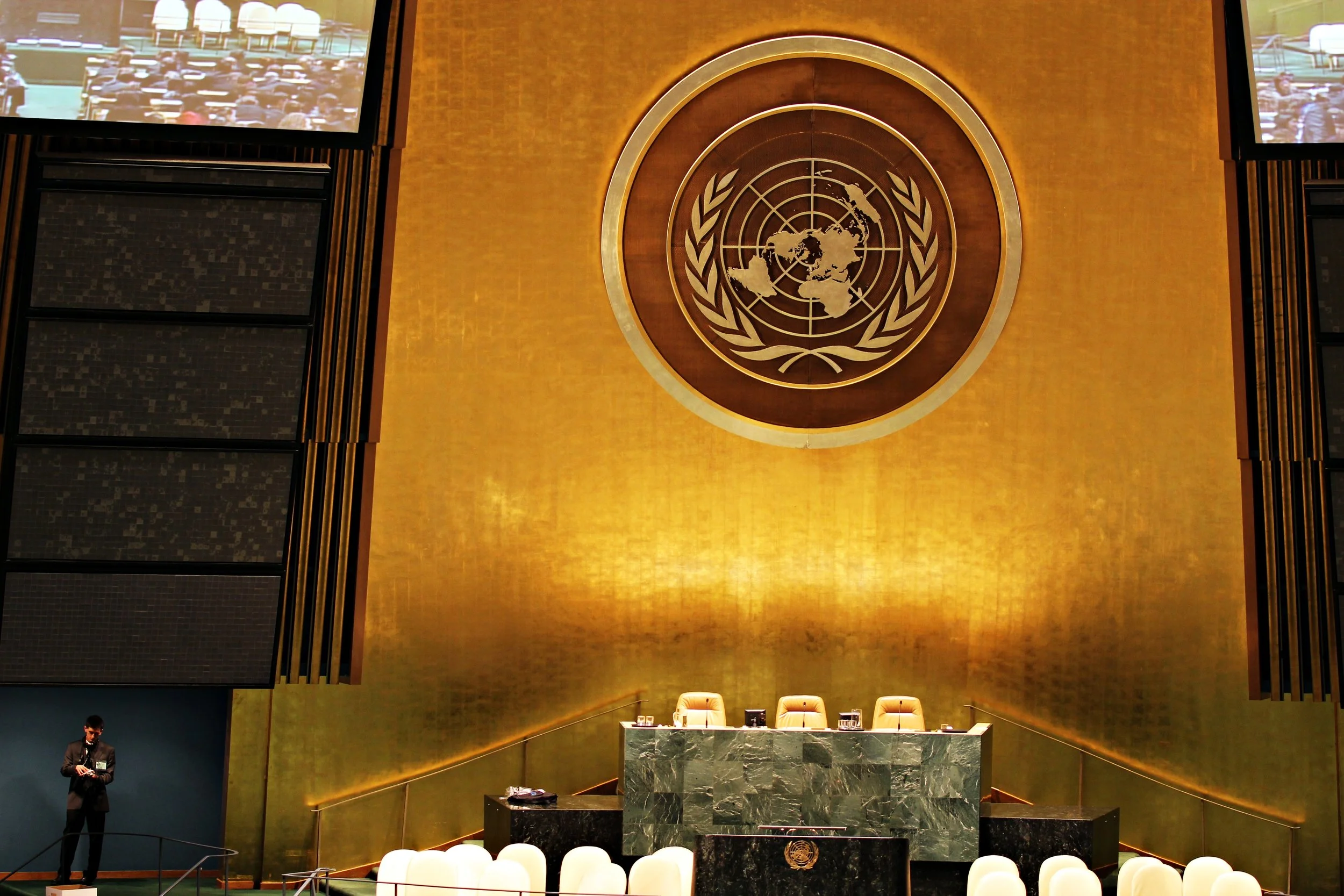
The 81st United Nations General Assembly (UNGA 81) took place from September 22 to September 28, 2026 at the UN Headquarters in New York City. At the assembly, heads of state and key government officials from around the globe came together to address a myriad of current issues. Centered on the theme, ‘Restoring Trust, Managing Transformation: A United Nations That Delivers for All,’ the session called for a people-centered approach to peace and featured key meetings on global issues such as AI, climate change, great-power rivalries, nuclear disarmament and war and, injustice.
Of these issues, none emerged more salient than the crisis in Gaza. The so-called ‘question of Palestine’ was cemented as the primary geopolitical focus of this year’s general debate from the opening address. UN Secretary-General António Guterres declared, ‘Together, let’s send a clear message from this Hall: The fighting must stop. Humanitarian aid must flow. Amid the turmoil engulfing the region, we must not lose sight of the devastating situation in the Occupied Palestinian Territory. We cannot allow the two-State solution to disappear before our eyes.’
This concern remained prominent throughout the duration of the assembly with countless leaders expressing their positions on the ongoing war on Gaza. During their speeches, regional leaders such as King Abdullah II of Jordan and Emir Sheikh Tamim bin Hamad Al Thani of Qatar heavily criticised Israel’s actions and called on the international community to prevent further genocide and a dangerous spillover into the entire region.
Other countries such as the UK, France and Canada expressed their commitment towards Palestinian sovereignty. French President Emmanuel Macron, British Prime Minister Andy Burnham, Canadian Prime Minister Mark Carney, and Saudi Foreign Minister Prince Faisal bin Farhan Al Saud utilised the forum to co-chair a high-level meeting to discuss the recognition of a sovereign Palestinian state. Macron poignantly expressed in his address, ‘But what is our credibility worth if we remain inactive on Gaza? Some claim that peace has been achieved, but this has not opened up humanitarian deliveries. The spectacle, the spectacle. It is shameful. Shame on all of us.’ This bold criticism highlights how powerful global leaders like Macron are pushing back against global passivity in Gaza and demanding countries to act before it is too late.
Although the debate over Palestine brought certain key leaders together, it also exposed the tense geopolitical divisions in the current international system. These divisions were particularly visible when Israeli Prime Minister Benjamin Netanyahu took the stage to deliver his speech. Before uttering a single word, delegations from 77 countries initiated a mass walkout to showcase their opposition to Israeli actions in the Middle East. Netanyahu reacted by stating, ‘If there are any other moral cowards who haven’t yet left this hall, please do so now.’
Still, not everyone at the UNGA was opposed to Israeli actions in Palestine. The United States denied visas to Palestinian officials for a second consecutive year, preventing Palestinian President Mahmoud Abbas from attending in person. Instead, President Abbas spoke via a pre-recorded address. In his speech, Abbas classified the struggle of his people as a ‘war of genocide’ and called for full membership into the UN, as well as the unification of Gaza and the West Bank and an end to illegal Israeli settlements. He linked current events to the First Arab-Israeli War, urging world leaders not to enable ‘another Nakba.’
In stark contrast to Abbas, Netanyahu rejected accusations of genocide, declaring that ‘accusing Israel of genocide is the greatest lie of the century.’ By portraying Israel as the victim rather than the aggressor, he challenged the legitimacy of genocidal claims, characterising opposing accounts as ‘distorting the facts’ and ‘spitting in the face of truth.’ These competing narratives illustrate how the UNGA became a forum not only for diplomatic debate, but also for a struggle over how the conflict is understood, who is held responsible and whose claims are considered legitimate.
Now three years after the October 7 attacks, it is clear that this conflict remains a critical test for the international community. Through numerous addresses and private meetings, the 81st UNGA has further revealed the polarisation of Arab-Israeli relations. Questions surrounding the viability of the two-state solution, Palestinian independence, settler violence, and the Palestinian refugee crisis remain seemingly intractable, despite calls from world leaders to halt the violence.
Looking towards the future of Israeli-Palestinian relations, it will be imperative for the UN to prove its soft power as the world's leading peacekeeping body. Debates surrounding the use of veto power by permanent members of the Security Council, particularly the United States on resolutions concerning Israel, continue to raise questions about the UN’s capacity to secure collective action. While the General Assembly does provide a platform for international debate, its ability to enforce decisions remains limited. Ultimately, for stability to be achieved, world leaders must move beyond rhetoric and pursue more concrete measures that advance Palestinian autonomy and halt the violence in Gaza.
Image courtesy of Basil D Soufi via Wikimedia Commons, ©2011. Some rights reserved.
The views and opinions expressed in this article are those of the author and do not necessarily reflect those of the wider St Andrews Foreign Affairs Review team.