Too Many Uniforms, Too Little Security: Cabo Delgado’s Slow-Burning Insurgency
It is a recurring feature of contemporary global politics that some of the most consequential crises occur far from the main currents of international attention. In regions stretching from the Sahel to the Horn of Africa, state authority has eroded under the combined pressures of armed groups, local grievances, and uneven development. The insurgency in Mozambique’s Cabo Delgado province exemplifies this trend in Southern Africa, and recent reductions to USAID programming have added an additional layer of concern for those monitoring the region’s stability. It is also an area of notable geopolitical relevance: the province contains some of the world’s largest natural gas deposits, juxtaposed against communities with limited avenues for economic participation.
The insurgency—known locally as Ansar al-Sunna and intermittently linked through messaging to the Islamic State—did not arise spontaneously. Its origins lie in a convergence of long-standing socio-economic inequality, governance failures, and the appeal of alternative sources of authority in a setting where the formal state has often struggled to meet basic expectations. Early recruits were not primarily motivated by transnational ideological commitments; many were young men who had experienced chronic unemployment, restricted opportunities, and a sense that the region’s resources were being developed for the benefit of external actors rather than local residents. These structural factors made the area vulnerable to external influence and allowed the insurgency to adopt global jihadist narratives without losing its local character.
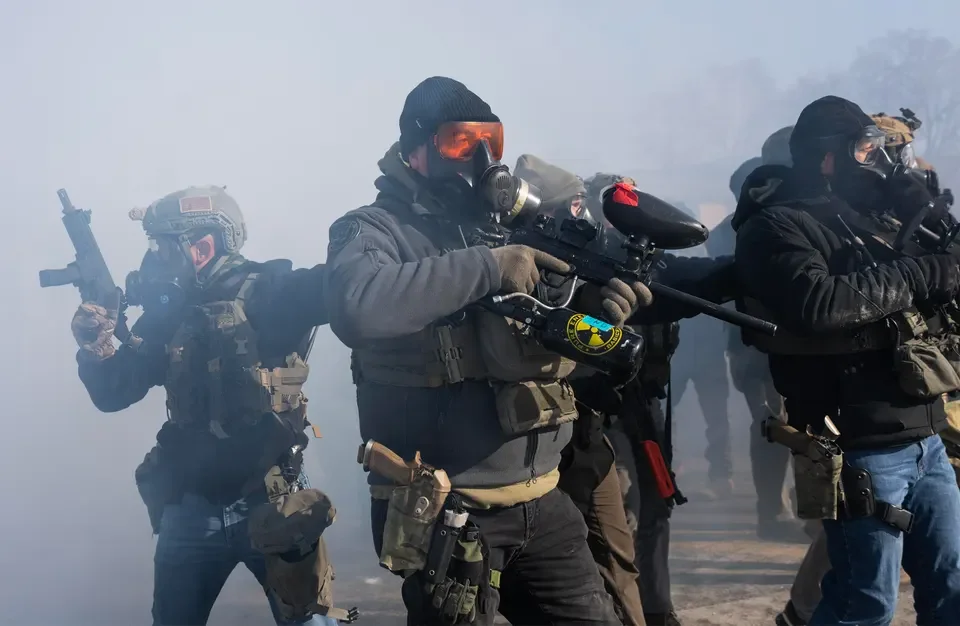
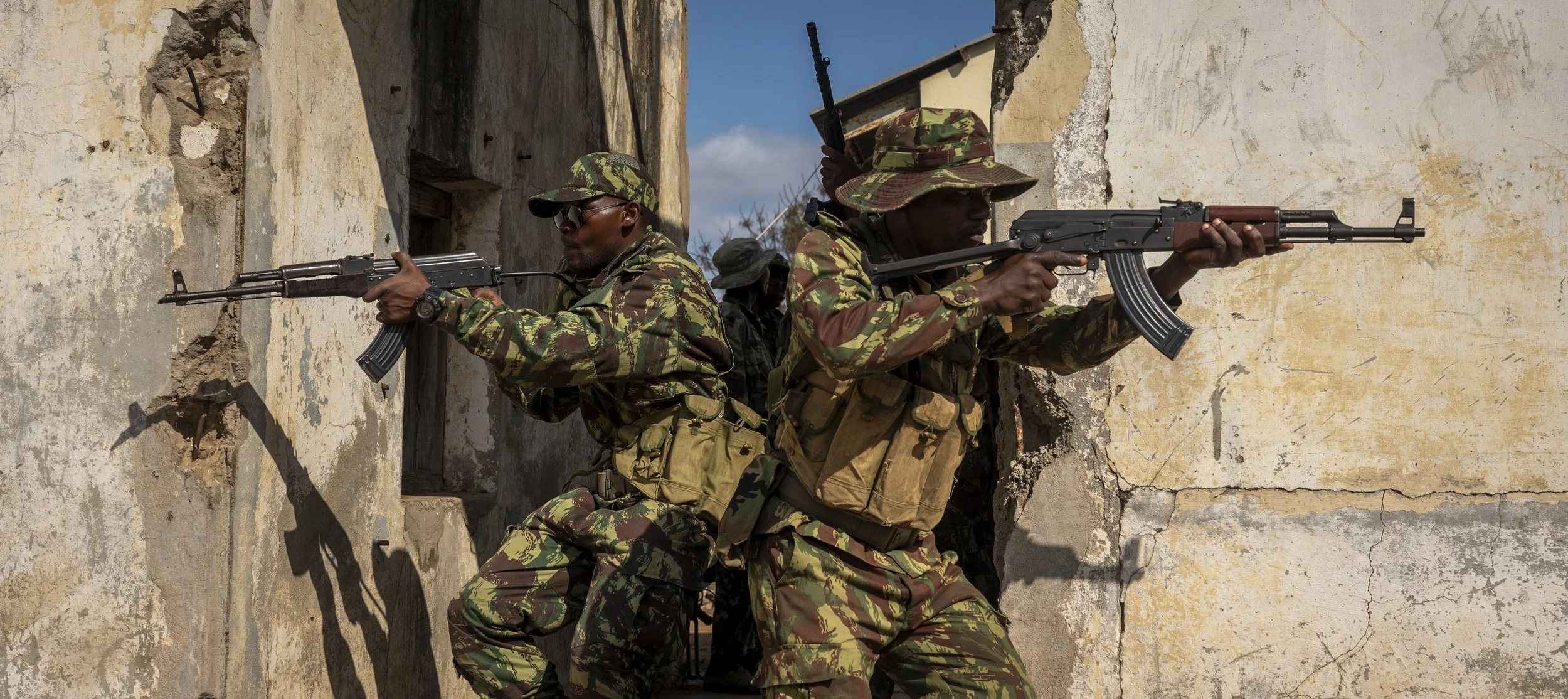
The security response has drawn in a wide array of actors: Mozambican government troops, Portuguese, U.S., and British special operations forces engaging in direct action while providing training and limited advisory support, military contingents from Rwanda, the Southern African Development Community Mission in Mozambique (SAMIM), and occasional deployments of private military contractors, among them Russia’s Wagner Group. Despite this diverse coalition, the overall effect has been limited. The conflict has settled into a recurring pattern in which security forces recapture territory, insurgent fighters withdraw into less accessible terrain, and attacks resume once operational pressure diminishes.
The Islamic State’s media apparatus recognized an opportunity in Mozambique, incorporating the conflict into its broader communications despite having limited operational control. This attention, in turn, prompted a delayed but familiar international cycle: expressions of concern, policy discussions, and an array of development and stabilization initiatives. Among these, USAID’s programs stood out for acknowledging the essential point that long-term security depends on strengthening social and economic resilience. Their focus on livelihoods, infrastructure, education, and community engagement reflected international research showing that development initiatives can reduce the appeal of armed groups by offering credible alternatives and improving local governance capacity.
However, in recent months, development assistance to northern Mozambique has faced reductions, particularly in the United States, where foreign aid is often politically vulnerable to budgetary retrenchment. These cuts have occurred despite evidence that Cabo Delgado requires sustained investment to counteract the drivers of instability. When schools close, health services decline, and local markets collapse, insurgent groups do not merely gain rhetorical advantage; they often become the only actors capable of providing—or appearing to provide—basic forms of order or support. The Mozambican government, facing significant operational constraints, has turned to private military contractors and external security partnerships, but these measures cannot substitute for long-term institution-building or community-level development.
The strategic implications of reducing development engagement are clear. Over the past decade, policymakers have frequently argued that countering violent extremism requires addressing the underlying conditions that allow such movements to grow. Yet the implementation of this principle has often been inconsistent. The cycle of crisis—characterized by initial neglect, sudden escalation, reactive intervention, and subsequent withdrawal—has repeated itself across multiple regions. Cabo Delgado risks becoming another example of this pattern, with comparatively little international attention to ensure oversight, learning, or continuity.
Arguments that the situation is primarily an internal Mozambican matter or that the United States cannot support every global development need are reasonable in a narrow fiscal sense. But they also overlook the broader costs of disengagement. Regional displacement, pressure on neighboring states, the spread of organized crime, and the potential establishment of transnational militant networks are all foreseeable consequences. These burdens tend to fall most heavily on local populations and nearby governments, not on the policymakers who invoke fiscal restraint.
Despite the severity of the situation, Cabo Delgado is not without promising elements. Civil society groups, local leaders, and international partners have shown that targeted development interventions can improve stability and support community resilience. These efforts demonstrate that progress is possible when development, governance, and security strategies operate in concert. However, such progress requires continuity. Abrupt reductions in development assistance create vacuums that armed groups are quick to exploit.
For the United States, the situation in northern Mozambique underscores a broader strategic question: whether development assistance will continue to be treated as an optional expense or recognized as an essential component of long-term stability and conflict prevention. If the aim is to reduce the appeal and operational capacity of extremist groups, then sustained engagement—rather than episodic involvement—remains necessary.
Insurgent organizations understand the significance of local grievances, service provision, and perceived legitimacy. Effective policy from Washington must acknowledge the same realities.
Awaiting citation.
The views and opinions expressed in this article are those of the author and do not necessarily reflect those of the wider St Andrews Foreign Affairs Review team.