Can States be Agents of Terror? A Monopoly of Violence and ICE
Kidnappings, killings, and disappearances or arrests, self-defense, and deportations? The way in which we categorize a group’s behavior carries intense connotations on the legitimacy of their actions. From the origin of the term terrorism in 18th century France amidst the infamous Reign of Terror, the debate of whether a state can be labeled as an agent of terror has been heavily contested. Historical and contemporary examples of utilizing terror to enforce the compliance of a group of the population can be tied to actions of authoritarian regimes as well as subnational groups around the world. However, this phenomenon is much less commonly associated with democratic governments. Has the use of terror become a tactic of democracies?
Modern concepts of terror date back to the French Revolution where the state carried out systematic violence against French citizens. Terrorism is understood as an act in which the perpetrator intentionally employs violence (or its threat) to instill fear (terror) in a victim and the audience of the act or threat. While the origins of terrorism come from a state’s violence on its citizens, terrorism is typically labeled as a tactic belonging to subnational groups against the state. State governments hold a monopoly over legitimate violence in our international order today, therefore the attempt to label a government a terrorist is difficult to establish. However, there are unmistakable similarities that can be seen between the use of illegitimate violence to extreme actions by Immigration and Customs Enforcement (ICE) agents in the United States today.
Using terror as a tactic relies on the framing of the action to determine how it will be condemned. The legitimacy of the state cloaks overt displays of violence in different lenses, such as arrests instead of abduction, imprisonment instead of hostage taking, execution instead of murder. Abuses of the monopoly of legitimate physical force by a state can exponentially surpass the typical violence carried out by terrorist groups, given the capacity and resources of a government.
Despite the use of terror by governments, there is a lack of international legal sanctions on terror as a tactic by states. However, this insufficient acknowledgement by international law does not mean that states do not enact violence that violates international law. By drawing this comparison between acts of terrorism and illegitimate violence by a government, one can see the overreach by state officials, specifically in the United States today.
ICE agents in the United States have carried out a new wave of arrests, detainments, and deportations both through legal and illegal means since the start of the second Trump Administration in early 2025. Amidst this crackdown, some observers believe that the central mission of immigration officers in this administration is not ensuring compliance with the law but arresting as many noncitizens as possible. From racial profiling, break-ins, violent traffic stops, and unwarranted arrests, ICE and border patrol agents have engaged in widespread violations of the law, including the detainment of individuals who are in the country legally.
A catalyst for the present imposition of ICE agents in major U.S cities was a Supreme Court decision last year. In September 2025, an official ruling permitted the Trump administration to use race and ethnicity as a factor to conduct immigration enforcement, along with speaking Spanish, or working in an immigrant-heavy profession such as landscaping or contracting. This essentially gave officers a green light to embolden their use of improper enforcement techniques.
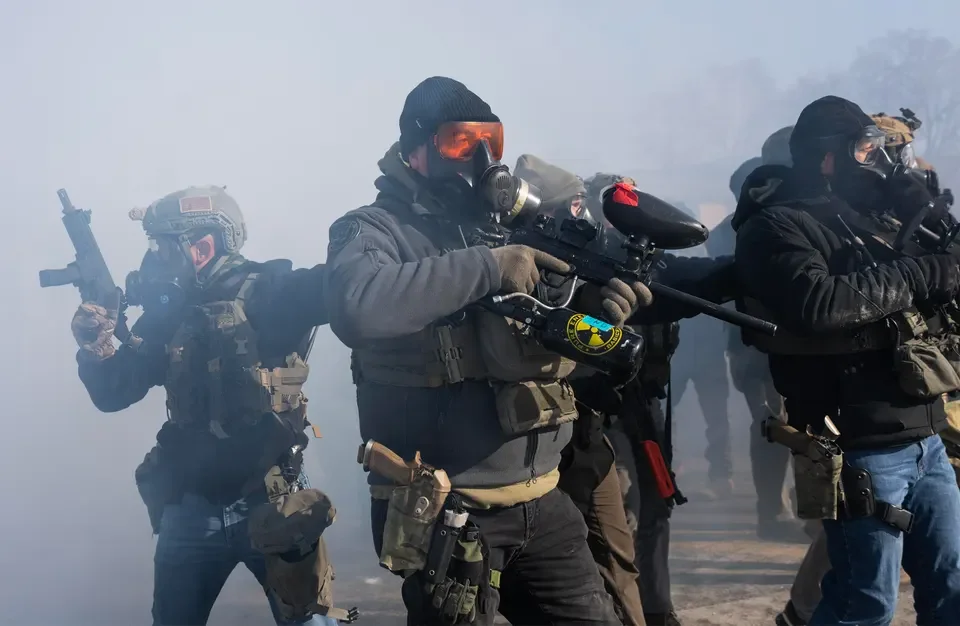
This development in U.S. immigration mandates has subsequently seen pedestrian stops become a significant part of immigration enforcement, despite their previously insignificant contribution. The Trump administration has also permitted the arrest and transport of suspected noncitizens to a second location for biometric screenings to take place. Subsequently, we are seeing news coverage of immigration agents resorting to breaking windows of vehicles, pushing individuals to the ground during arrests, and spraying chemical agents to crowd-control observers. These enforcement operations have seen escalations to such a degree that several people have been shot, killing a total of five so far.
The most unsettling element of all this violence is the utter lack of accountability these agents, ICE, and DHS have faced. Following the death of both Renee Good and Alex Pretti in Minneapolis, federal prosecutors were instructed from the Department of Justice leadership to not investigate or charge anyone responsible for the deaths. Despite clear video footage of both incidents, the lack of consequence for these agents is instilling an idea of untouchable power by the government while conventional judicial pathways are failing immigrants and American citizens in the process.
So, who are the faces behind the masks? Contemporaneously with the extreme reduction of training time required and the limited background checks for new agents, ICE has carried out a largescale campaign aimed at the recruitment of U.S military veterans. From their website, ICE states “All veterans are invited to Continue Your Service to America” as veterans now compose a significant portion of the ICE workforce. The analogous nature of current ICE operations to U.S. military campaigns is creating a heightened sense of invincibility among agents as enforcement operations regularly exhibit the use of overt violence. Retired Army Lt. General Mark Hertling has called ICE agents “an undisciplined militia” who are engaging civilians as if they were hostile forces. Without proper training and the alignment of their experience in community engagement and relations dynamics, this “dangerously undefined” group is acting in a manner that seems to be confusing active military battlefields with urban streets of America.
The focus of ICE’s operations has most recently targeted Democratic cities, such as Minneapolis, whose local governments are not sympathetic to the current administration’s goals. With states such as Florida and Texas holding two of the highest immigration populations, their major cities are not witnessing this blatant overreach by ICE. These actions are reinforcing the views that Trump is seeking to acquire a league of ‘Yes-men” within the U.S government who will further his personal agenda throughout his second term.
Federal Judge Skyes in Riverside, California has accused the Trump administration of terrorizing immigrants and recklessly violating the law in its efforts to deport millions of people as the administration has continued to deny bond hearings to those who have been detained. Judge Skyes has claimed that “beyond terror against noncitizens, the executive branch has extended its violence on its own citizens, killing two Americans.” This outcry from public servants has illuminated the growing tension surrounding the actions by immigration agents under the current administration.
Conventional pathways for immigration enforcement have shifted, through both legal and illegal means, where many believe we are witnessing the use of terror by ICE agents. Public displays of violence against suspected immigrants and observers, ominous social media posts, and a total lack of consequence following the killings of two American citizens has resulted in deep-seated fear as Americans navigate this reality in their communities. While it is true that the United States has a serious immigration challenge that needs addressing through structural reforms, it is clear that the tactics used by the government is an abuse of their ‘monopoly of violence’. Under the current administration, ICE enforcement operations are furthering a divide already established in the country and instilling a sense of terror into the minds of those living in America today.
Image courtesy of Star Tribune via Getty Images, ©2026. Some rights reserved.
The views and opinions expressed in this article are those of the author and do not necessarily reflect those of the wider St Andrews Foreign Affairs Review team.