To Rebuild Gaza— Look to Chechnya
Since the start of the second Trump presidency in January 2025, the Gaza War has received considerably less media attention than during the height of the conflict. The Israel-Hamas War, actively fought from October 2023 to January 2025, is far from resolved. Israeli military actions have not ceased, and Hamas remains active in Gaza. The threat of terrorism still looms over Israel, and millions of Palestinians remain in Gaza without shelter or sufficient humanitarian aid. In September 2025, U.S. President Donald Trump and Israeli Prime Minister Benjamin Netanyahu announced a 20-point peace plan. President Trump has also created a “Board of Peace” to oversee Gaza’s reconstruction. But despite the fanfare, these efforts have yielded little tangible progress. The sustained Israeli bombing campaign over the course of many months reduced much of the Gaza Strip to rubble. Pockets of Hamas resistance remain, and millions are without basic necessities. If the United States, Israel, and their allies are truly committed to rebuilding Gaza, they will need sustained political will and a concrete plan. In this seemingly impossible situation, an often-overlooked corner of the world could provide the ideal case study for Gaza’s reconstruction-- the autonomous republic of Chechnya.
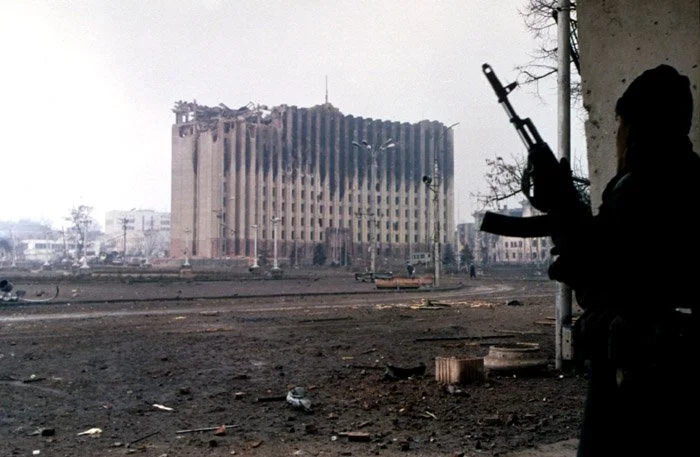
Of all the wars in recent times, the Second Chechen War most reflects the political situation and brutal nature of the Israel-Hamas War. In the First and Second Chechen Wars, the Russian Federation fought against the breakaway Muslim-majority republic of Chechnya. The first war ended in a ceasefire after a hostage crisis, but hostilities resumed in late 1999 with the Chechen invasion of Dagestan, the 1999 Moscow apartment bombings, and the political rise of Vladimir Putin. The Second Chechen War developed an increasingly Islamist and jihadist dimension in the quest for Chechen independence. The jihadism in the Second Chechen War foreshadowed America’s War on Terror post-9/11. During the war, Russian military forces carpet-bombed the capital of Grozny and carried out brutal repression in the surrounding mountain communities. Photos of post-war Grozny resemble Gaza in 2026. And yet, despite the destruction caused and the Russian people’s historic animosity towards Chechens, Russia successfully rebuilt Chechnya, restoring order and stopping Islamist terrorism. Chechnya under Ramzan Kadyrov is oppressive, more so than the rest of Russia. Kadyrov’s own security forces keep power and strictly enforce Islamic law.
The Russian policies on Chechnya in the aftermath of the Second Chechen War could prove useful for Israel and the United States. First, Russia recognized the importance of rebuilding Chechnya for the sake of its own security, if nothing else. Russia granted Chechnya significant autonomy. Russia backed Akhmad Kadyrov, the Grand Mufti of Chechnya, to rule in the aftermath. Kadyrov was assassinated in 2004, and the rule over Chechnya was later passed to his son, Ramzan Kadyrov. By empowering a single executive and choosing a vassal from the local population, Russia was able to best ensure Chechnya’s compliance. Gazans are unlikely to ever accept a foreign leader, and a governing board or cabinet could prove ineffective at governing due to lack of accountability and divided interests. Israel briefly planned on installing a single Palestinian family to rule Gaza in the war’s aftermath. But this plan, if ever seriously considered, was later abandoned. Palestinian Authority President Mahmoud Abbas is ninety years old, distrusted, and deeply unpopular. The international community is best off following the Kadyrov model and finding a Palestinian executive to govern Gaza.
Despite the Second Chechen War ending in 2000, the counter-insurgency and counter-terrorism campaign continued for another decade. In the early 2000s, Russia suffered some of the worst terrorist attacks in modern history, the Nord-Ost theater hostage crisis in 2002 and the Beslan school siege in 2004. Even if Israel declares formal victory over Hamas in Gaza, the counter-terrorism campaign is sure to continue. In the years following the Second Chechen War, Russia paid for the reconstruction of Chechnya. Even today, Russia continues to subsidize the autonomous republic. These government subsidies have faced considerable domestic opposition in Russia from nationalist groups In the aftermath of the Gaza war, it would be foremost Israel’s responsibility to pay compensation— something the bitter Israeli public is likely to support. In addition to Chechnya’s autonomy, Chechnya and Russia have also managed to co-exist via de facto segregation. Ethnic Russians keep out of Chechnya, and Chechen religious law and customs stay in Chechnya. Israeli far-right ministers have spoken of resettling Gaza, which is not only illegal under international law, but would make further peace efforts impossible. By following the Chechen model, the United States, Israel, and their Arab allies could successfully rebuild a Palestinian-run Gaza. In the aftermath of the Gaza War, the United States, Israel, and the Arab world should assume the financial and practical responsibilities for rebuilding Gaza. Israel’s cooperation and long-term commitment would be essential to these efforts-- something the bitter Israeli public is unlikely to ever support. In addition to Chechnya’s autonomy, Chechnya and Russia have also managed to co-exist via de facto segregation. Ethnic Russians keep out of Chechnya, and Chechen religious law and customs stay in Chechnya. Israeli far-right ministers have spoken of resettling Gaza, which is not only illegal under international law, but would make further peace efforts impossible. By following the Chechen model, the United States, Israel, and their Arab allies could successfully rebuild a Palestinian-run Gaza.
There are three scenarios for Gaza’s future. The first, and worst, would be if Israeli forces expelled the Palestinian population from Gaza with the tacit approval of the United States. This action would classify as ethnic cleansing and possibly a genocide. Benjamin Netanyahu could very well win the 2026 Israeli parliamentary elections. With Israel facing a deepening political crisis and demographic overhaul by ultra-orthodox Jews, the possibility of a peaceful resolution has never been worse. The second possible scenario is the successful reconstruction of Gaza. The international community supports this route, especially in the Arab world. At least for now, President Trump has considerable leverage over Netanyahu. Despite its criticisms, Trump’s Board of Peace still signals a will for continued U.S. involvement in Middle East peace processes. The third and most likely scenario for Gaza is the continuation of the status quo-- continued suffering for Palestinians and political can-kicking. The Russo-Chechen Wars may be largely forgotten and rarely studied by Western officials, but when assessing Gaza, they provide the best model for a nation’s reconstruction after the crushing of an Islamist insurgency. As millions of Palestinians suffer in Gaza, diplomatic stalling, corruption, and bureaucratic lethargy will be the enemies of a sustainable peace.
Image courtesy of Mikhail Evstafiev via Wikimedia Commons, ©1995. Some rights reserved.
The views and opinions expressed in this article are those of the author and do not necessarily reflect those of the wider St Andrews Foreign Affairs Review team.