The Upcoming COP30 in Brazil: More "Greenwashing" or True Momentum without the U.S?
(Some) foreign leaders have headed over to the 30th COP summit in Belém, Brazil, a city situated within the Amazon rainforest—hopefully a vivid and immersive reminder to those attending of what they’re tasked to protect. On the agenda are over 145 points of discussion, including fossil fuels, indigenous people’s rights, financing developing countries’ climate agendas, renewable energies, and forest preservation.
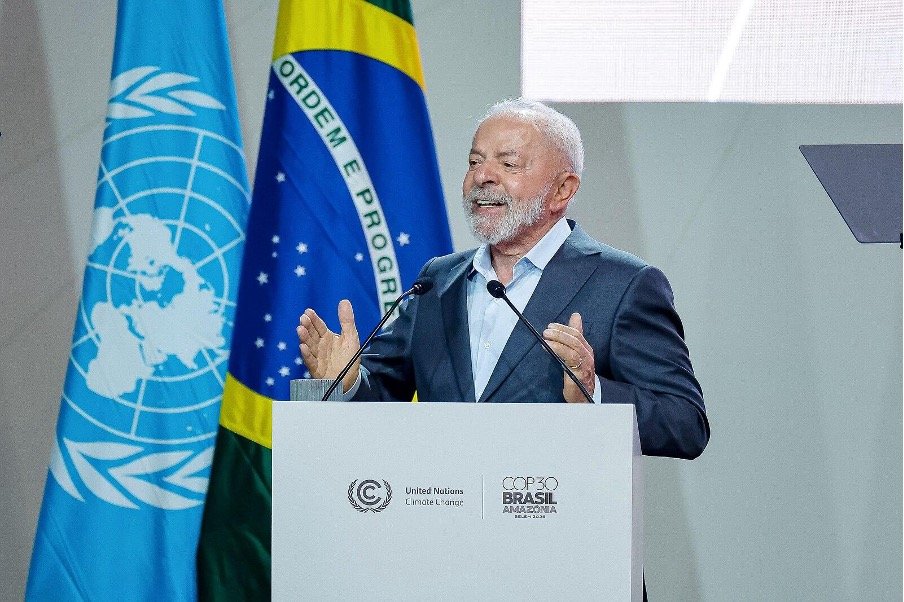
The landmark 2015 Paris Climate Agreement stipulated that countries must meet every five years at a “conference of parties” (COP) to submit their nationally determined contributions (NDCs) – clear and detailed plans to cut greenhouse gas emissions. Experts are calling this year’s COP30 potentially the most significant COP since the signing of that agreement ten years ago, which tried (and failed) to curb GHG emissions to a 1.5C limit. But temperatures are rising faster than previously expected and previous COPs’ emission cuts, while somewhat slowing the temperature rises, bring the climate nowhere near the 1.5 degree target. As such, the revisions to the NDCs at this COP30 must be profound. Brazilian President Luiz Inácio Lula da Silva, in fact, characterized this COP30 as being less focused on grandiose speeches and new promises, rather, on action, revision, and implementation of existing pledges.
As in the past, an alliance of small island states, such as Barbados, Antigua and Barbuda, and Palau will act as the moral voices of COP30. Pacific island nations like Palau, whose entire population could become climate refugees if those 1.5 degree Celsius “benchmarks” are surpassed, have the greatest stake in these talks producing the actions they promised.
However, despite Brazilian President Lula’s high hopes that this COP will restore the image of Brazil as a leader in climate diplomacy, there are a multitude of reasons to be skeptical of COP30's impact, more so than other COPs. In fact, according to the UN’s Nationally Determined Contributions Synthesis Report, even the stronger targets put forth by island nations are not collectively ambitious enough to reach the 1.5 degree Celsius target. Activists are demonstrating this disillusionment in Rio de Janeiro where they have been projecting climate activism messages on Rio’s landmarks.
One cause of well founded skepticism of COP30 succeeding is the marked absence of U.S President Trump and his entire presidential team. Trump, who has characterized climate change as ‘the greatest con job ever perpetrated on the world’, notoriously withdrew from the Paris agreements and will also be skipping COP30. Former President Joe Biden had submitted an NDC as one of his last acts as president, but it has now become largely symbolic, taken up only by local and state governments or business leaders that are prepared to defy the federal government and continue pursuing these climate change commitments.
This has meant that both Europe and Latin America are now vying to create climate alliances with China, with the Brazilian President being shuttled around the COP30 in a Chinese electric car as a potential sign of a broader pivot from the US towards a willing China for political and technological climate action support. However, there is also a widespread and far more concerning trend of climate change backsliding as the environmental agenda falls precipitously from the priorities of both the West and of China, given recent geopolitical developments on the global stage.
For instance, Trump’s far-right leanings are only the apex of a climate-denying, far-right populist tide that is rearing its ugly head, winning elections in the US and across Europe and threatening to reverse the slow momentum that had been gathering to fight climate change at the turn of the century. Specifically, Trump’s recent actions have diminished the climate change movement and have emboldened a trend of climate-change reversal, with the UK’s Reform party openly embracing climate denial and Argentina’s President Javier Milei, a Trump ally, slashing economic policy.
Similarly, other geopolitical catastrophes such as the ongoing conflicts in Gaza and Ukraine have not only meant European reversion to fossil fuels to decrease dependence on Russia, but have also meant that the COP30 has essentially been eclipsed from Western attention. Climate action has been forced to the back burner because, while the conflicts in Gaza and Ukraine involve immediate humanitarian crises, climate change is often considered a problem for ‘future’ generations according to Brundtland’s Sustainable Development Report. However, with increasingly common climate-induced natural disasters, such as the recent Hurricane Melissa impacting or destroying the livelihoods of nearly 6 million people in the Caribbean, it is no longer just future generations being impacted. With climate change often being cited as a “super wicked problem” in scholarly literature– referring to the very slim chances of it being ‘solved’– and with developments such as emboldened far-right climate deniers and extreme climate activism like Just Stop Oil fracturing the somewhat cohesive climate momentum of even a few decades ago, it is easy for Western politicians to keep kicking this proverbial, super wicked, ‘can’ down the line with the excuse that there are more ‘immediate’ global concerns.
So will this COP30 contribute anything of substance to the fight against climate change? In order to do so, the COP30 would have to grapple with issues that plague all COPs. For example, closer scrutiny of the ‘net-zero’ targets that many countries proclaim to be following reveals that a lot of these targets are vaguely formulated in terms of scope and architecture, and severely lacking in transparency. President Lula has also begun drilling oil in the Amazon River just weeks before the start of the conference, threatening to tarnish Brazil’s clout and image of leadership in climate diplomacy. He claims that this oil drilling would help raise revenues for clean energy transitions, another stark reminder of nations’ continued climate hypocrisy and difficulties in reconciling contradicting realities. Furthermore, China’s President Xi Jinping is not showing up, and neither is India’s Prime Minister Narendra Modi; both nations sent officials instead. In other words, there does appear to be, as Greta Thunberg characterizes it, a familiar trend of “greenwashing” whereby leaders hide behind vague and unactionable goals with inherent contradictions and hypocrisies and send officials in their stead as a mere signal of their climate commitment.
Despite these apparent failures of COPs more generally, it must be stressed that these sessions do produce more and more universal climate actions than nations would have ever undertaken alone. Collective international scrutiny, even merely for the avoidance of reputational costs, does still make these nations work harder than they ever would towards climate goals.
However, even ‘relative’ success might be difficult at this COP30 in particular due to the current geopolitical environment: one of increasingly mainstream far-right politics and climate change denial, and of humanitarian crises which not only divert attention away from a more remote and challenging ‘climate fight’ but actively towards fossil fuels. Further, Trump’s clear message on the futility of institutions might merely spur a pivot in European and developing countries towards China as an alternative climate leader, but it inevitably still shakes the foundations of that very multilateralism needed for the “super wicked” and Global Commons issue that is climate change.
Image courtesy of Mauro Pimentel via picturedesk.com, ©2025. Some rights reserved.
The views and opinions expressed in this article are those of the author and do not necessarily reflect those of the wider St Andrews Foreign Affairs Review team.