Tearing the Centre Apart: what Germany’s recent state elections tell us about German and European politics
The right in Saxony-Anhalt. The left in Berlin. Germany's latest state elections have produced seemingly contradictory results, yet both results point to the same question: is Germany’s political centre collapsing? These elections come at a time of growing uncertainty in German politics, as voters look beyond the traditionally dominant parties.
Saxony-Anhalt:
In Saxony-Anhalt, Alternativ für Deutschland (AfD), Germany's far-right party, won 39 of the 42 seats needed for a majority in the Landtag with 43% of the vote. The Christian Democratic Union (CDU), previously the state’s largest party, fell to 15 seats, while the Greens, Die Linke (The Left Party), and the Social Democratic Party (SPD) each won 8 seats. The new Sarah Wagenknecht Alliance (BSW) gained 5 seats. This represents a significant decline for the centre parties, the CDU and SPD, who were members of the trifold governing coalition.
Coalitions between multiple parties are very common in Germany due to the electoral system. Yet this presents a serious problem for the AfD. The reason for this is known as "Die Brandmauer" (The Firewall). In short, all the other political parties hold a stance of non-cooperation with the AfD to prevent the influence of far-right ideologies in German politics. After their recent victory, the AfD invited every party who had won seats in Saxony-Anhalt to coalition talks, but all declined except BSW. Furthermore, to hold off the AfD, 68% of Green voters and 78% of SPD voters said that their main reason for voting was to prevent an AfD Minister-President (the head of the federal state government). Yet, even with tactical voting, the AfD still managed to get nearly enough seats to govern on its own. Despite only needing three more seats to secure a majority in the federal state, the AfD is unlikely to succeed. The Brandmauer will likely hold out on this occasion, meaning the AfD would not be able to govern the state. However, its continued exclusion raises a difficult question for Germany's established parties. So far, the Brandmauer has done little to prevent the AfD from gaining support. If voters increasingly perceive the established parties as maintaining power despite significant electoral losses, frustration with the political centre could deepen and potentially provide further support for the AfD.
Berlin:
On the other hand, the election results in Berlin paint a picture that is not entirely dissimilar to Saxony-Anhalt. In the capital, the far-left party in German politics, Die Linke, which emerged from the former East German Communist Party, secured a quarter of the votes, finishing ahead of the CDU at 19% and the AfD at 16%. Campaigning on the rising cost of housing in the capital city, the party promised to nationalise private housing associations that dominate the city's market.
The election results meant that Die Linke received nearly double the number of votes it had previously and could elect its first Mayor of Berlin. Like the AfD, the party must also find partners to govern with, a process which for them should be easier than for their far-right counterparts, as there is far less resistance against them, with both the SPD and the Greens willing to form a coalition.
The result is significant beyond Berlin because it demonstrates that dissatisfaction with Germany's political centre does not necessarily push voters towards the right. Die Linke's success offers an alternative route for voters who feel that the established parties have failed to address immediate economic concerns, but do not like the direction of the AfD. This has created a greater problem for the centre parties, because voters are being pulled to both extremes of the political spectrum. In this sense, Berlin presents the opposite route from Saxony-Anhalt: while voters there moved towards the AfD, Berlin shows that the same dissatisfaction can produce support for the far left.
The current dip of the German centre:
The current collapse of the central parties cannot be traced back to a single moment, but Angela Merkel’s successor, Olaf Scholz, marked a decline. His SPD led a coalition with the Greens and the Free Democratic Party (FDP) lasted three years and four months before being dissolved after the finance minister was sacked. The current Chancellor, Friedrich Merz, has also struggled to deal with the economic issues plaguing the country since 2022. There are several reasons for these problems. An important pressure has been Germany's vulnerability following Russia's invasion of Ukraine. Before the war, Germany relied heavily on Russian energy resources, leaving the country particularly exposed. At the same time, Germany faces the longer-term problem of an aging population with a growing proportion of retirees relative to the working population. These pressures have raised concerns about living costs and public services.
The two elections therefore reveal different responses to the same underlying problem: dissatisfaction with the political centre. The AfD offers an alternative on the right, while Die Linke offers one on the left. The question for Germany is therefore not only whether the AfD or Die Linke can continue to gain support, but also whether the centre can find a way to regain voters' confidence before the political landscape changes permanently in favour of the political extremes.
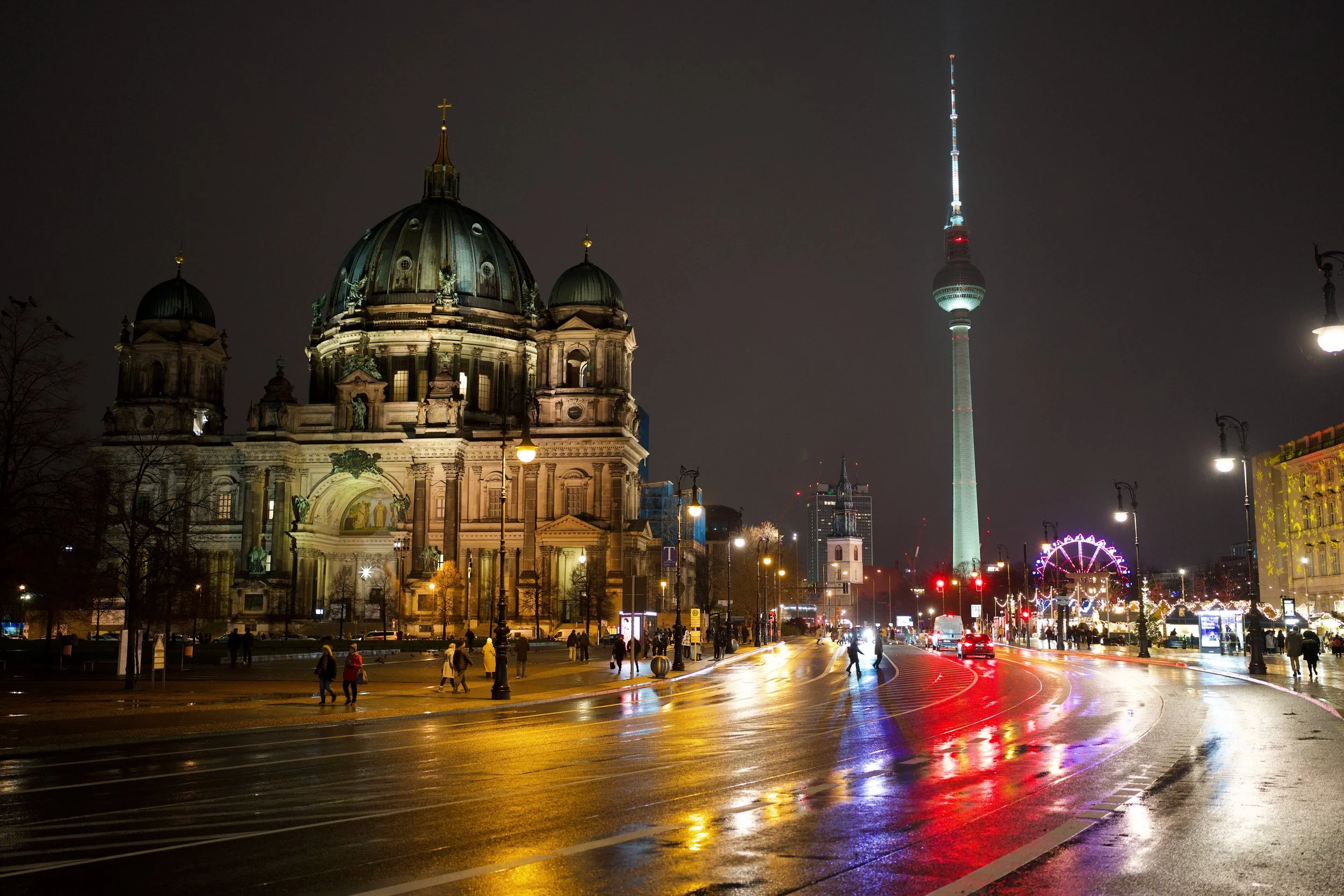
Image courtesy of Abdulmomen Bsruki via Pexels, ©2023. Some rights reserved.
The views and opinions expressed in this article are those of the author and do not necessarily reflect those of the wider St Andrews Foreign Affairs Review team.