Sanctioning Justice: Trump’s Clash with the ICC One Year On
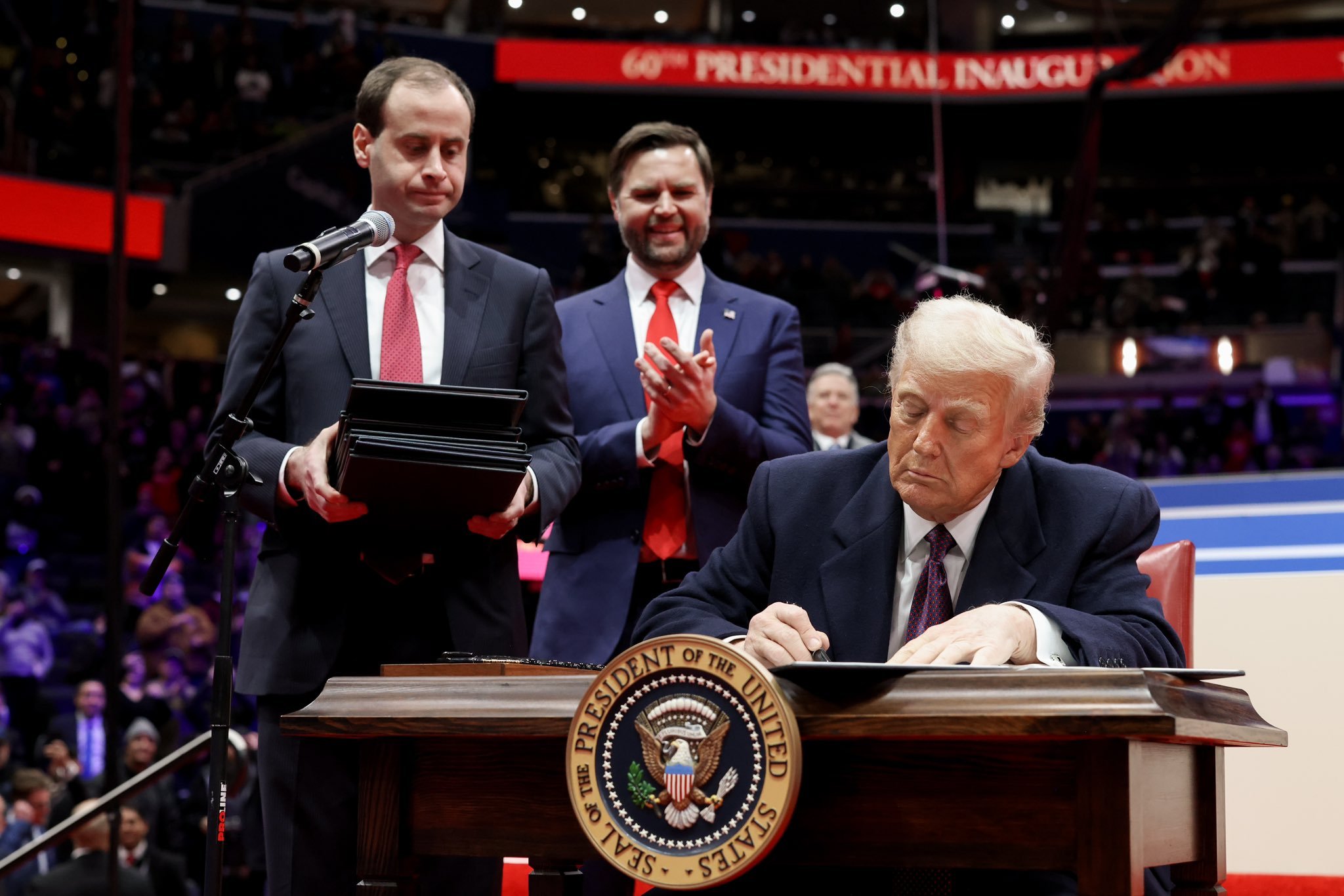
On 6 February 2025, United States President Donald Trump signed an executive order imposing sanctions on the International Criminal Court (ICC) in response to the court’s issue of an arrest warrant for Israeli Prime Minister Benjamin Netanyahu. One year later, consequences of those sanctions appear even broader than initially anticipated.
Within the initial order, President Trump promised to impose “tangible and significant [domestic] consequences” on those responsible for the ICC's ‘transgressions’, including but not limited to blocking property and assets, restricting travel, and revoking the visas of ICC officials and their relatives.
In early February 2026, the Guardian reported on statements from ICC Judges Kimberly Prost and Luz del Carmen Ibáñez Carranza, Canadian and Peruvian nationals respectively, who found that following the sanctions, their credit cards connected to American companies Amazon and Google had been canceled. They struggled to book Ubers, reserve flights or hotel rooms, and expressed uncertainty regarding the efficacy of potential international bank transfers. Beyond these obstacles, Ibáñez Carranza also stated that her daughter’s U.S visa had been revoked and her associated Google accounts closed.
These financial implications for the lives of Prost, Ibáñez Carranza, and other ICC officials and their families fall relatively in line with the Trump administration’s list of proposed consequences. However recently, inclusion on the sanctions list has come to represent something qualitatively different. A 2026 Reuters report found that Francesca Albanese, the United Nations Special Rapporteur for Palestine, as well as several ICC judges and prosecutors, can now be found on the U.S. Treasury Department's Specially Designated Nationals list. Their company? Suspected al-Qaeda terrorists, Mexican drug traffickers, and North Korean arms dealers.
The designation came not only in the wake of Trump’s sanctions, but also following a Series of letters in which Albanese warned more than a dozen U.S. firms, including Amazon, Alphabet, and Microsoft, that she was considering naming them in a U.N. report for allegedly contributing to gross violations of human rights by Israel in Gaza and the West Bank. Several of the groups reported the letters to the White House, leading the Trump administration to announce specific sub-sanctions against Albanese for “writing threatening letters” despite the U.N. insistence of her diplomatic immunity.
Within one calendar year, the Trump administration’s threats against those responsible for perceived transgressions have not only become literal, but have also magnified in their intensity. Actions taken against Judges Prost and Ibáñez Carranza are within the scope of the initial executive order; the treatment of Albanese and her colleagues, however, are not.
Trump’s clash with Albanese and the ICC illustrates the institutional and personal fallout that stems from continued U.S estrangement from international organizations. During the first year of his second term, Trump enacted a series of major executive orders which sought to significantly reduce American participation in the current international world order. The U.S. exit from the World Health Organization received widespread attention; actions taken against the ICC did not. It is important to note that the ICC is the only court currently operating with international authority over the most severe crimes of concern to the world at large, including but not limited to genocide, war crimes, crimes against humanity and the crime of aggression. The ICC and related bodies of the United Nations rely heavily on bureaucratic structures to maintain order, carry out tasks and develop international norms. A necessary part of that bureaucratic structure is the compliance of states party to the ICC’s founding treaty, the Rome Statute. While the United States is notably not a signatory of the statute, the country has garnered a reputation in the past decade for open communion with the work of the court, outside of the Trump era. Since the beginning of Trump’s second term, that open channel and any further opportunity for cooperation or aid have been severed.
The executive order and the subsequent actions taken against Albanese and her colleagues suggest a targeted attack on the foundational blocks of our international system. They could demonstrate to the world that the United States is no longer interested in promoting or assisting with the crucial work of the ICC. Beyond this, they also serve to create a dangerous international precedent, in which any other country may feel less inclined to aid the court or other UN bodies in the future.
The initial executive order suggesting domestic consequences for ICC officials did not paint the full story. President Trump and his administration are not afraid to go far beyond the initial scope to prohibit the ICC from functioning as intended, placing ICC employees on sanctions lists alongside individuals widely regarded as threats to national security. This is not simply ‘blocking assets’; it is overriding the necessary work of the ICC to favour a major U.S ally. The ever-developing nature of the President’s sanctions suggests that this confrontational approach toward the international community is far from over and that the extent of these consequences may continue to grow. If sustained, these measures may signal not merely a dispute with one court, but a broader redefinition of the United States’ relationship with international law itself.
Image courtesy of VP via Wikimedia, ©2025. Some rights reserved.
The views and opinions expressed in this article are those of the author and do not necessarily reflect those of the wider St Andrews Foreign Affairs Review team.