Mineral Diplomacy and the Politics of Peace: The DRC–Rwanda Conflict in America’s Security Strategy
America First & Rise of Mineral Diplomacy
In December 2025, the Trump administration issued its new National Security Strategy, which emphasised an “America first” approach centred on securing critical supply chains and strengthening national security. A key pillar of this strategy is stabilising regions vital to US economic and strategic interests. President Trump, presenting himself as a broker of stability, has supported resolutions between Azerbaijan and Armenia, Russia and Ukraine, and Pakistan and India, to name a few. Most recently, this has included the Democratic Republic of Congo (DRC) and Rwanda.
When examining the US’s involvement in these seemingly distinct conflicts, a pattern emerges. These countries are not only home to conflict, but also significant amounts of critical minerals, a high valued asset in global supply chains. The Caucasus region produces crude oil and natural gas, with Azerbaijan possessing aluminium and copper and Armenia containing copper, silver, and antimony. Ukraine secured a deal with the US last April involving energy, infrastructure, and critical minerals from deposits of graphite, titanium, lithium, and uranium. Similarly, Pakistan announced last September that they would provide the US with rare earth and critical mineral supplies.
Strategic Competition and the Critical Minerals Imperative
It is clear that peace negotiations increasingly intersect with mineral security. The conflict between the DRC and Rwanda appears to follow this pattern, raising broader questions about how strategic resource interests shape contemporary conflict resolution efforts.
Beyond individual peace agreements, the Trump administration’s mineral strategy extends into broader structural policy. Initial efforts have included renewed attention toward Greenland and Canada, underscoring that mineral acquisition is not limited to conflict mediation.
Additionally, since 2018, when trade tensions between the US and China, mineral supply chains have become a central area of strategic rivalry. China controls 70% of the world’s rare earth and critical mineral market share, giving Beijing significant leverage over materials essential to advanced manufacturing, defence technologies, and digital infrastructure. While many minerals are extracted elsewhere, China’s dominance in refining and processing is what positions it at the centre of the global supply chain.
In response, the Trump administration introduced an executive order on the 20th of March 2025 to promote the diversification on US supply chains and thus increase domestic mineral production. This strategic push was furthered earlier this month. On the 4th of February 2026, US Secretary of State Marco Rubio and other officials hosted the inaugural Critical Minerals Ministerial. Representatives from 54 countries and the European Commission discussed global efforts to strengthen, diversify, and secure mineral supply chains. That same day, the US signed 11 new bilateral frameworks and memorandums of understanding (MOUs), expanded financing opportunities to support strategic minerals projects, and launched the Forum on Resource Geostrategic Engagement (FORGE) and Project Vault. The day before, an MOU about potential asset acquisition was signed between Glencore and the US-backed Orion Critical Mineral Consortium under the US-DRC Strategic Partnership Agreement. In review, these events illustrate that that mineral security is embedded within a greater geopolitical strategy aimed at closing the mineral supply gap.
The acquisition of mineral rights signals more than economic gain, it signals an increase in technological innovation, economic power, and national security. Rare resources like cobalt, lithium, tantalum, etc. Are necessary for batteries, electronics, IT, defence tech, and electronic vehicles (EVs).
At the same time, peace and conflict resolution cannot be viewed in isolation from these agendas. This raises a fundamental question: do mineral-driven negotiations address the deeper roots of violence, or do they primarily serve broader geopolitical and economic objectives?
Africa’s Mineral Wealth and the Geopolitics of Development
Africa holds roughly 30% of the world’s proven critical mineral reserves, which positions it as a pivotal player in global supply chains. The DRC alone has the largest reserve of cobalt in the world along with significant quantities of lithium and uranium.
The US and global actors recognise Africa’s mineral wealth as a strategic opportunity. Much of the DRC’s mining and refining infrastructure is controlled or financed by Chinese firms as part of their Belt and Road Initiative. Like the DRC, beyond extraction, the region’s capacity to process minerals domestically remains limited, highlighting the importance of partnerships and investment frameworks that extend beyond mining to refining, technology transfer, and industrial development. According to the IMF, Africa’s possession of critical minerals could transform the region, but this needs to go beyond mining towards focusing on processing too.
Africa’s mineral endowment and strategic position make it a focal point for both economic diplomacy and geopolitical competition, setting the stage for the DRC–Rwanda peace process as a case study in how resource security and conflict resolution intersect.
DRC-Rwanda Conflict and US-Brokered Peace
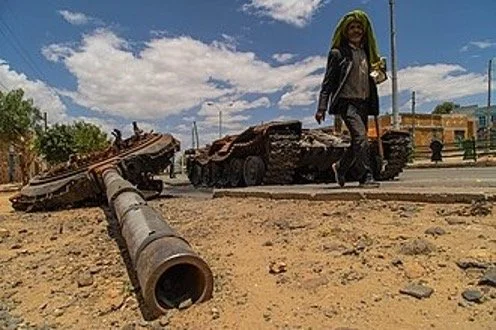
While Africa’s mineral wealth presents opportunities, these resources are largely inaccessible due to ongoing conflict like the DRC-Rwandan war. For the past 30 years, the eastern DRC (where the majority of the DRC’s mining sites are located) has been home to more than 120 active armed groups. Civilians in these areas face sexual violence, forced displacement, chronic poverty, as well as exploitation at the mines. Specifically in the North and South Kivu provinces, significant amounts of territory have been seized since 2022 due to the resurgence of the March 23 Movement (M23) militia. The group is led by Tutsis, who claim are trying to protect the interests of minority Tutsis from Hutu rebel groups that have resided in the DRC since the 1994 Rwandan geocide. According to a 2023 UN Group of Experts, the Rwandan government has provided indirect military support like troops and weapons to M23, but Kigali has denied any involvement.
The US intervened in the conflict, brokering a deal between the two countries on 27 June 2025, taking a “resources-for-security” approach. The DRC-Rwanda Peace Agreement provided a ceasefire between the two parties, enforcing a 30-day timeline for a joint security mechanism to manage rebel disarmament like the M23. It also addressed regional economic integration, linking mineral supply chains to US investment. The Congolese President Tshisekedi described the deal positively, saying the agreement would ‘promote our strategic minerals, particularly copper, cobalt, and lithium, in a sovereign manner’, while ‘ensuring a more equitable distribution of economic benefits for the Congolese people.’ However, the M23 leadership decried the agreement as corrupt and unconstitutional, and a report from January 2026 indicate that gold and other minerals in eastern DRC remain connected to conflict, human rights violations, and environmental harm.
Later that year, on 4 December 2025, President Trump hosted the signing of the Washington Accords for Peace and Prosperity between the DRC and Rwanda to reaffirm the commitment to implement the Peace Agreement they signed back in June. The signing included additional economic frameworks to the Regional Economic Integration Framework in the Great Lakes region. This includes the bilateral instruments like the Strategic Partnership Agreement between the US and DRC. These accords acknowledge a mutual commitment to fostering peace, stability, and long-term economic development in the region. Additionally, the accords commit to strengthening security, defence, and infrastructure across the DRC, including its key mining regions. The DRC will foster mutually beneficial investment and development partnerships with the United States aimed at promoting long-term economic growth, diversifying the mining sector, enhancing transparency, and improving labour standards. These efforts also seek to ensure secure and reliable flows of critical minerals for both commercial and defence purposes. Overall, cooperation is designed to link regional stability with economic prosperity, addressing armed conflict while leveraging the DRC’s strategic position in the global mineral supply chain.
Conclusion: Mineral Security or Sustainable Peace?
The DRC-Rwanda peace agreement illustrates how the Trump administration has intertwined conflict resolution with strategic access to critical minerals. President Trump’s approach reflects a broader pattern in which states worldwide negotiate over supply chains, as exemplified by the Critical Minerals Ministerial. Yet mineral wealth is only one facet of complex international relations, and economic diplomacy alone cannot resolve deeper challenges such as ethnic violence, land disputes, and weak local governance. Recent policies that reduce humanitarian funding in conflict-affected regions like eastern DRC raise further questions about the effectiveness of a resource-centred strategy. Sustainable peace requires the United States to engage not only as a broker of economic opportunities and access to minerals, but also as a guarantor of justice, development, and human security. As the World Bank warns, less economically developed countries, particularly in Africa, face growing hardships over the coming decades, and it will take far more than mining deals to secure long-term stability and prosperity.
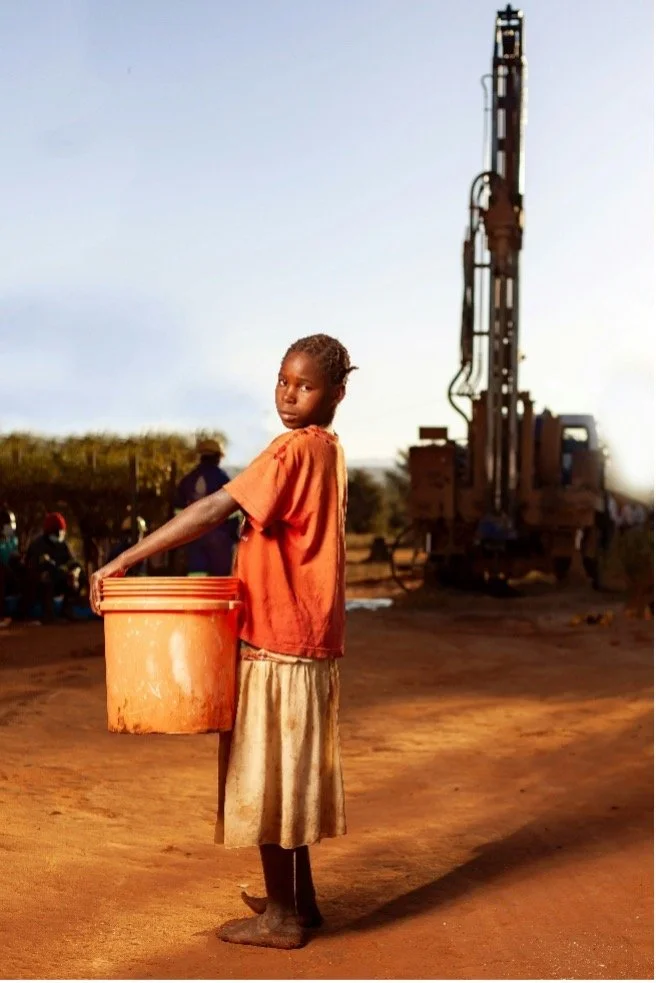
Image courtesy of Richard Nyoni via Upsplash, ©2025. Some rights reserved.
The views and opinions expressed in this article are those of the author and do not necessarily reflect those of the wider St Andrews Foreign Affairs Review team.