Key Concerns Surrounding EU Approval of ‘Return Hubs’ for ‘Irregular’ Third-Country Nationals
On Thursday 26th March 2026, the EU Parliament approved a proposal for ‘a common system for the return of third-country nationals staying illegally in the Union.’ The proposal passed with an overwhelming vote of 389 in favour, 206 against and 32 abstaining, and a majority of right-wing and far-right Members of the European Parliament (MEPs) approved the detention and removal of people that don’t currently fulfil the conditions of entry to the EU. In brief, immigrants found to violate entry conditions would be forced to return to their country of origin, a prior country of transit, or another ‘safe’ third country. If found non-compliant, they would be detained in an agreed third country for up to two years, risking an entry ban that prohibits future return to the European Union.
The decision doesn’t come as a surprise considering the growing share of far-right MEPs (from 20% in 2019 to more than 25% in 2026) and the recent ‘failures’ of similar proposals, including the legal complications facing the Italy-Albania removal agreement and the cancelled UK-Rwanda scheme. Consequently, this new plan aims first and foremost to ‘improve the credibility’ of the EU removal system. Currently, only one in five people ordered to leave do so; those remaining are left in limbo due to legal, logistical or humanitarian constraints. The proposal also claims to improve transparency and consistency in return procedures across the EU. Theoretically, it would ensure all EU states and third countries involved would adhere to both EU and international human rights laws such as the Charter of Fundamental Rights of the European Union and the 1951 Geneva Convention and its 1967 Protocol. The proposal also aims to deter those attempting to enter the EU without the valid requirements. However, extensive research proves that border control and domestic immigration policies do not deter people from making the journey..
An analysis of the proposed resolution reveals five key concerns:
1) Human rights
Critics have described the plan as a human rights ‘black hole’. Although approved third countries might initially agree to EU human rights standards, it would be very difficult for the Union to oversee this in the long-term, as non-EU countries are not directly bound to EU law. On top of this, the proposal includes a number of ethically and morally ambiguous points which raise concern over potential human rights violations within the EU itself. For instance, Article 21,6 states that ‘A third-country national may be searched or his or her personal belongings may be searched and seized, […] where it is necessary and duly justified’. This search, that ‘may be carried out without the consent of the third-country national’ seems to contradict the ‘fundamental rights, in particular the principles of human dignity and of physical and psychological integrity’ of the individual concerned.
2) Those at risk of removal
Despite the policy’s stated intentions to remove immigrants with criminal records and those considered a security threat, many individuals at risk of being forcibly removed are simply victims of the inefficiency of the current EU immigration system who find themselves in situations of ‘irregularity’ due to external circumstances. As highlighted in Political Quarterly, administrative immigration fees have risen sharply in recent years, pricing out low-income families. In addition, visa durations have shortened, renewal processes have become more complex, and employer-sponsorship systems continue to expose workers to abuse and force them to remain dependent on a single employer; all these factors render many immigrants vulnerable to irregularity and forced removal.
3) Safety of approved third countries
According to Article 17 of the report, an arrangement ‘may only be concluded with a third country where international human rights standards and principles in accordance with international law, including the principle of non-refoulement, are respected.’ However, all countries considered safe for the return of their own nationals by the EU –Bangladesh, Colombia, Egypt, Kosovo, India, Morocco, and Tunisia–present risks of human rights violations. Furthermore, up to 20% of those applying for international protection from these countries are recognised as refugees under the Geneva Convention. Considering this, how can such countries be considered safe if a significant proportion of emigrants to the EU are proved to be fleeing persecution?
4) Unaccompanied minors
The legislation surrounding the detention and removal of unaccompanied minors is concerningly vague. The report states that ‘minors, as a rule, should not be detained,’ but then proceeds to underline the detention of said minors ‘as a measure of last resort’ that must be reviewed ‘at least every three months’. The proposal also authorises a ‘psychological and medical’ age assessment for those whose age is undetermined and states that a ‘refusal to undergo an age assessment’ shall not ‘prevent the determining authority from taking a decision on the age of the third national.’ This measure would pose a serious risk to those appearing close to the age of 18 who may then be erroneously deprived of crucial rights and assistance. Moreover, as highlighted in The Conversation, ‘The EU’s own data shows that thousands of minors, including those travelling with families, go missing after arriving in Europe. Many are feared to be exploited and abused for sexual and labour purposes.’ If this is the case within the EU’s own borders, how is the Union going to ensure that those unaccompanied minors returned to third countries will be safe?
5) Language access
Throughout the return process, third-country nationals reserve the right to receive translated information regarding their removal. However, the report expresses little concern for language access. For instance, it states third-country nationals will be ‘provided with a written or oral translation of the main elements of the return decision,’ which already shows a lack of concern for the provision of a comprehensive, tangible translation. This skepticism is supported by the declaration that ‘the competent authorities may, where appropriate, rely on standardised translation templates or machine-assisted translation tools’ without specifying whether the machine-assisted translations in question would be reviewed by a qualified professional. In addition to this, the report suggests that third-country nationals could receive communication about their right to return ‘in a language that he or she understands or may reasonably be presumed to understand’. The fact that Member States aren’t obliged to provide an accurate translation of the concerned individual’s fundamental rights in their native language creates a serious risk of immigrants not understanding the conditions of their removal.
In summary, the approved implementation of ‘return hubs’ for ‘irregular’ third-country nationals is not only a concerning setback for refugee and asylum seeker rights, but also directly contradicts the fundamental rights and humanitarian principles the European Union was founded upon.
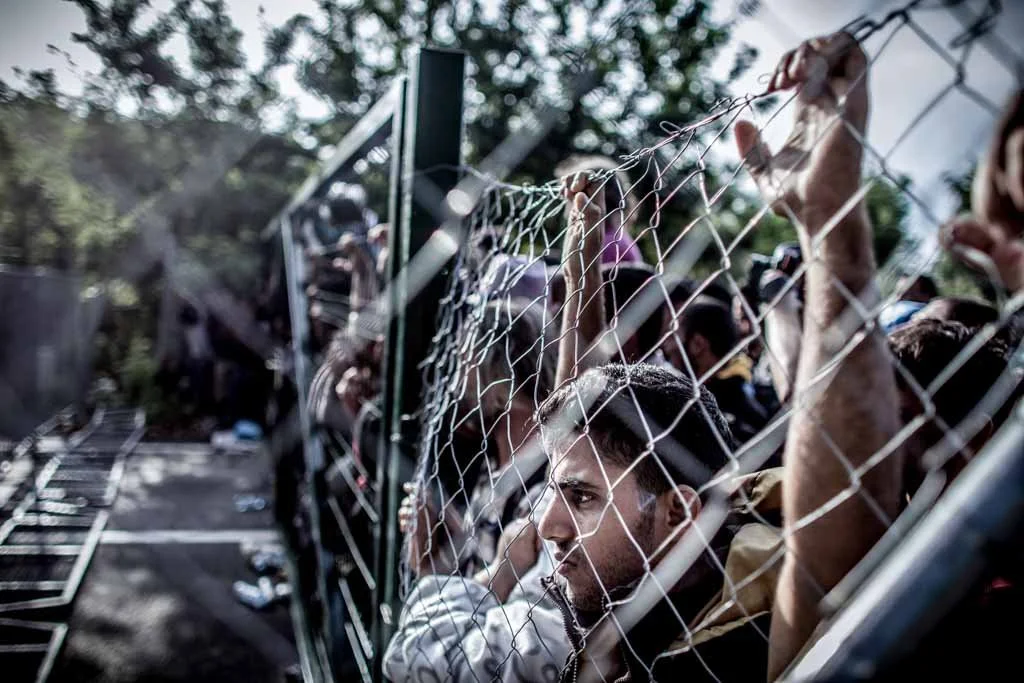
Image courtesy of Sandor Csudai via The Loop, ©2025. Some rights reserved.
The views and opinions expressed in this article are those of the author and do not necessarily reflect those of the wider St Andrews Foreign Affairs Review team.