In between Rule and Reality: Analysis of Afghanistan’s de jure obligations and the Taliban’s de factor reality for women and children
Posed as a legal guidance for spousal separation, the Taliban’s Decree No. 18 disguises the violence done to Afghan women and girls’ right to consent, education, independence, and their future. Published by the Ministry of Justice on 14 May 2026, this decree legally recognises child marriages. Reporters quoted by Global Human Rights Defence claim, ‘a code would not need a chapter on freeing child brides unless it first acknowledges and accepts the status quo where child brides exist.’
Two of its provisions raise concerns about child marriages and women’s consent. Article 5 does not establish a minimum age for marriage but grants a child’s legal guardian the authority to arrange the child’s marriage. Article 7 further erodes a girl’s right to consent by treating her silence as an agreement to marriage. Should a girl who has reached puberty not verbally object to the marriage, the law records this as consent.
This decree does not only challenge individual rights but is part of wider system of gendered politics in Afghanistan. It reinforces gender subordination and institutionalises patriarchal power. Thus, a feminist approach that begins examination at the individual level becomes useful in understanding the socially constructed gender hierarchies under the Taliban. These hierarchies shape the everyday lives of women and children and strengthen political institutions. Decree No. 18 begins its influence at the individual level, subjecting girls to male guardians, robbing them of independence and education, and obstructing them from obtaining legal justice or securing a future. Its normative recognition fuels a national crisis that Richard Bennett, UN Special Rapporteur on Afghanistan, describes as gender apartheid.This terminology refers to gender discrimination that is ‘intentional, systematic, [and] institutionalised’ under the Taliban.
Repeatedly an Afghan women’s autonomy is subordinated to patriarchal authority, not just de jure but in lived experiences as well. Feminist scholarship delves into structural violence: the indirect harm done to people by political structures when their basic needs are not met. Decree No. 18 enforces structural violence as girls are forced to relinquish their autonomy to male guardians and their husband. This vulnerability increases as the requirement of arbitration and witnesses makes escaping abusive marriages almost impossible. Paired with Decree No. 12, authorising physical violence by a husband towards his wife and children, the institutional blocks against women seeking protection legally subordinate women and children in marriage. This experience is not rare, rather the Afghanistan Human Rights Centre reports most victims of child marriages have reported experiencing psychological distress and/or domestic abuse. Moreover, physical and psychological harms effects child brides during early pregnancy in addition to the risk of abuse. The UN Office for the Coordination of Humanitarian Affairs has reported approximately 600 of every 100,000 women in Afghanistan die from pregnancy or childbirth-related complications. This places Afghanistan in the top 10 countries with the highest maternal mortality rates. In Afghanistan, the complications associated with mid-teen pregnancies makes early marriages a driving factor for this rate.
Furthermore, this subordination is not confined to the domestic sphere, but seeps into the public sphere. Afghanistan in 2021 became the only country to have formally barred girls from secondary school, and women were then banned from university in 2022. Activists sourced by The Guardian have quoted around 70 percent of the girls bared from education have been pushed into early or forced marriage with two thirds of those being under 18. These laws reduce opportunities for women and burden Afghanistan’s economy, with UNICEF estimating keeping girls out of school costs Afghanistan at least 500 million USD (~373 million GBP) a year in lost economic activity. This becomes a primary driver for child marriages with the loss of financial independence making marriage the only ‘future’ available for women. These daughters may also become a source of cash for their family after their husband pays the customary dowry. Following foreign aid cuts and billions of dollars being frozen in central bank reserves abroad in 2021 that quickened Afghanistan's economic collapse, this practice became more valuable to burdened families.
The disparities in Afghan women and children’s realities under the Taliban challenge Afghanistan's global commitments. In 2003, Afghanistan joined the Convention on the Elimination of All Forms of Discrimination against Women (CEDAW) in which Article 16 bans the engagement and marriage of a child. Under the Taliban, Afghanistan remains a state party to CEDAW. Moreover, states must pass laws establishing a minimum age for marriage. Yet, a legal recognition of child marriage and the absence of a minimum age requirement in Decree No. 18 directly oppose this international legal commitment. While the erosion of women’s rights has been incremental through each new policy, Decree No. 18 has seized any power the woman has at home regarding her decision to seek a divorce, after already erasing her from public life by banning them from public spaces. In Bennett’s words, ‘if you applied to gender the language that defines apartheid in the Rome Statute, but only on the grounds of race, it appears to apply to the current situation in Afghanistan.’ The ICC has recognised the systemic gender-based restrictions and issued arrest warrants for Hibatullah Akhundzada the Supreme Leader of Afghanistan and the Taliban’s chief justice on grounds of gender-based persecution.
Unfortunately, international condemnations are not enough to overturn domestic law and protect the women and children of Afghanistan. The legal framework that appeared to provide mechanisms for child marriage separation simultaneously legitimised child marriage without age requirements. Decree No. 18 must be understood alongside the Taliban’s wider restrictions covering education, employment, and public participation. Feminist theory can help express the interconnectedness of these factors in gender-subordination and patriarchal power, but it does not provide a solution. After stripping women and children of the ability to protect themselves, the Taliban has placed their future in the hands of men and the government. This power is transformed from the protection of women and children to the protection of the Taliban at the expense of the marginalised
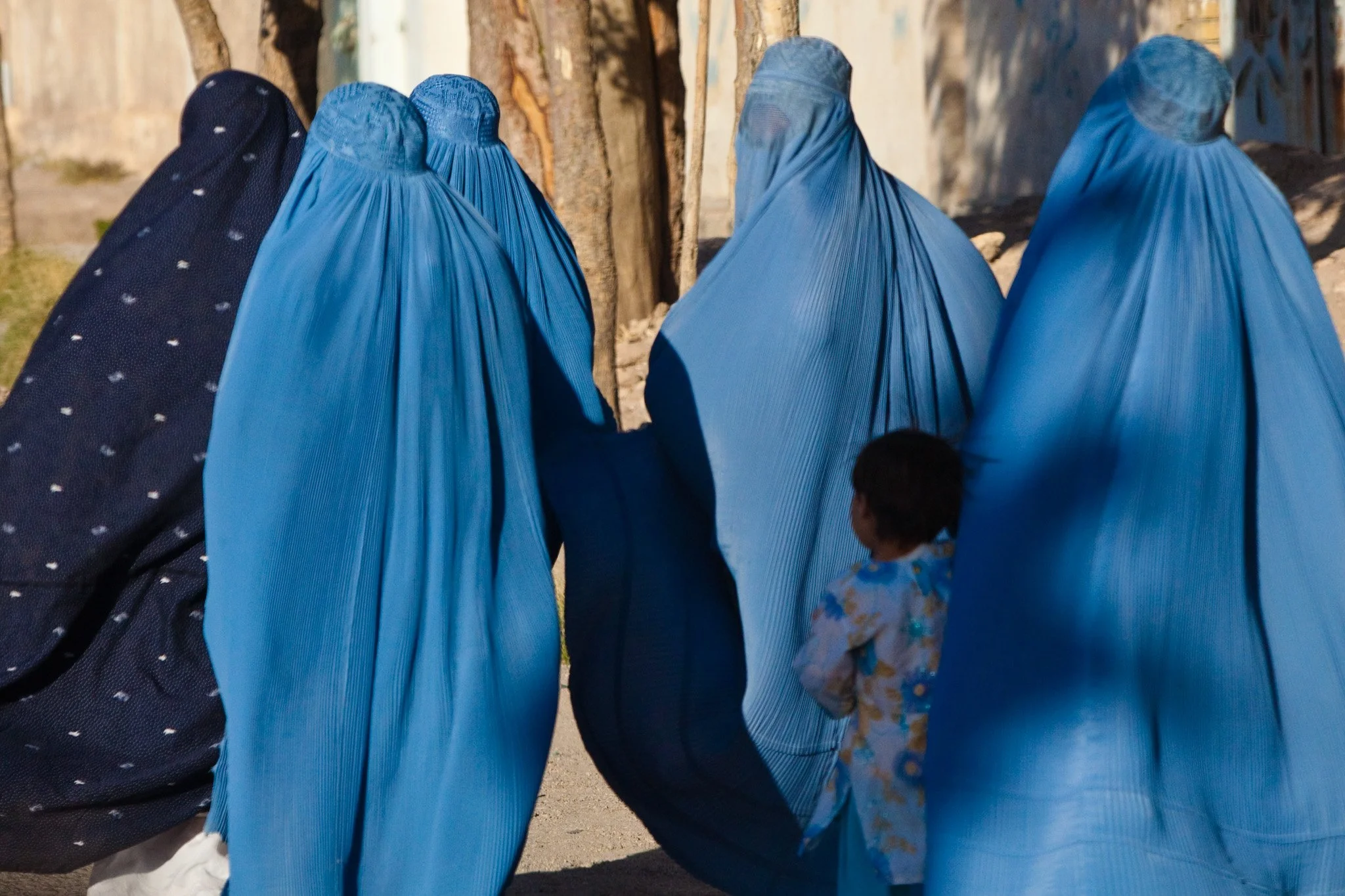
Image courtesy of Arnesen via Wikimedia Commons, ©2009. Some rights reserved.
The views and opinions expressed in this article are those of the author and do not necessarily reflect those of the wider St Andrews Foreign Affairs Review team.