China’s Youth League and Trade Unions Answer to the Party, Not to Their Members
In August 2023, China Youth Daily reported that each online lesson in the Communist Youth League’s Youth Study (Qingnian da xuexi) series reached more than 63 million people. That same report said that local Youth League participation figures for the lessons should be recalculated ‘according to the facts’ and that appraisal should avoid a ‘data-only’ tendency. Within a fortnight, the League’s central committee issued a separate notice launching a new study campaign and banning branches from demanding clock-ins and screenshots as proof of participation.
The episode is small, but it points to a problem that Xi Jinping, General Secretary of the Chinese Communist Party, named eight years earlier. In July 2015, Xi told a central conference that some mass organisations (qun tuan) had become ‘bureaucratised, administrative, aristocratic and entertainment-oriented,’ representing ‘detachment from the masses.’ Xi’s proposed remedy was that political character–in effect loyalty to the Party–come first.
Mass organisations are Party-led bodies that claim to represent particular groups of citizens. Two of the largest are the Communist Youth League and the All-China Federation of Trade Unions (ACFTU), which oversees the unions in China’s workplaces. Campaigns and reforms driven from the Party centre around Xi, and digital systems the organisations adopted themselves have not ended the detachment he described. The reason lies in how the organisations are built: they answer to the Party and managers rather than to their members and workers, so numbers, rather than grievances, travel upwards.
For a mass organisation, legitimacy means its members treat it as their rightful representative. The clearest test is whom they turn to first in a dispute. The Party wants organisations to take up members’ grievances. Xi told them to speak up where the masses’ lawful rights are infringed, to win hearts, yet unions, Xi also insisted, must never become Western ‘independent unions.’ However, members in conflict still do not treat the organisations as their representatives.
Who the organisations answer to
In 1920, Vladimir Lenin called the unions ‘transmission belts’ from the vanguard (the Party) to the masses, to be used ‘to protect the workers from their state, and to get them to protect our state.’ In 1922, he described the Party as the ‘higher body.’ Unions therefore answered to two authorities by design: the Party and their members, with a rule that the Party always came first.
Chinese Communist leaders applied the same rule. In 1944, Liu Shaoqi, then a senior Party leader, held that with the Party in power in its base areas, mass organisations should no longer represent the masses’ interests. In the strike wave of 1956 and 1957, ACFTU chairman Lai Ruoyu warned that if unions failed workers, ‘the masses will abandon the union.’ But after Lai’s death, the Party purged Lai’s supporters, leaving the federation, in the words of the sociologist Joel Andreas, ‘a docile auxiliary of the party organization’.
Today, three constraints shape how the organisations work: Party leadership, control over appointments and appraisals from above, and dependence on the state or employers for funds. The first is set by law. The 2021 amendment to the Trade Union Law wrote Party leadership into the legal definition of a union and added a duty to strengthen its political character. The second is set by ACFTU rules, which ultimately put the Party organisation in charge. Higher-level unions also approve the election of chairs. The third is funding: employers, state bodies among them, pay unions two per cent of payroll.
Employers thus become a third authority. In 2025, inspectors from the national legislature found that union chairs were sometimes managers themselves or were appointed by management. Konstantinos Tsimonis, a lecturer at King’s College London who studied the League, found that workplace League secretaries’ accountability was likewise ‘directed upwards, towards the Party committee and the management, not towards young employees.’ Because cadres–the officials who run these organisations–are appointed and appraised from above, upward accountability turns reporting into a numbers exercise.
What members do
Members rarely turn to the organisations first. In a 2010 survey at three institutions, only 4.2 to 6.0 per cent of students would turn first to the League. A non-independent survey in 2022 and 2023 pooled all Party, mass, and League organisations and found that 8.43 per cent of young people first turned to them.
The data on unions, however, largely measure coverage. Among urban migrant workers, 2.8 to 3.5 per cent named the union as a remedy for infringed rights between 2015 and 2017, while roughly a third named government departments. In 2016, only 20.8 per cent of employed migrant workers knew of a union at work. A calculation from the 3.5 and 20.8 per cent figures gives an upper bound: at most, about 17 per cent of those who knew of a union named it as a channel for dispute resolution. Low recourse fits the three constraints but does not show them at work.
What the Party has tried
The Party has tried five remedies: calibration, restructuring, extension, rebuilt representation, and digitisation. Each changed something, but none changed whom the organisations answer to. Calibration came first. The 2013 to 2014 mass-line campaign, the Party’s drive to restore its ties with ordinary people, attacked officials’ work styles, among them formalism and bureaucracy. Xi called them recurrent and stubborn, saying they grew back ‘like chives’. In 2016, central inspectors found that the four faults Xi had listed in 2015 still existed in the League’s Central Committee. Calibration changed what cadres were evaluated on, adding weight to Party building, but not to whom they answered.
Restructuring followed, and targets within the organisations’ own reach produced reportable numbers. In July 2022, the ACFTU said that model and frontline workers made up 21.1 per cent of its executive committee and 23 per cent of its presidium. By the end of 2016, 210,000 League cadres had logged direct contact with 16.8 million young people, the League reported. Targets that depended on members, however, did not produce results. Collective contracts are in clear decline, the legislature’s inspectors found.
Extension followed. From 2018, the ACFTU campaigned to enrol mobile workers, and from 2021 to mid-2025, it enrolled 20.95 million workers in new forms of employment. In 2025, the unions brought 15 leading platforms into a drive for negotiations on algorithms and labour rules, and several agreements set pay floors and phased out penalties for late delivery. These gains are real, but they came from above. The first agreement was signed by the platform Ele.me and nine rider representatives, but the press report did not name the union as a party.
Rebuilding representation went furthest and was then taken over. After the 2010 Honda strike, higher-level unions wrote the election rules, but ‘the party branch was a gatekeeper,’ and the outcome was ‘at most indirect and quasi-democratic elections, if not manipulated.’ At the same plant in 2013, the elected union ‘acted as the company’s mediator to halt the strike.’
The League also turned to digital systems. From 2017, it built an online register, Smart League-Building (Zhihui tuanjian), as the basis for managing and governing the League. In 2018, it made the results of its Youth Study campaign a top priority in assessing League bodies. These systems extend organisational control but do not replace it: digitisation ‘offsets the loss of information control suffered by the Party when citizens abandoned their stable work units.’
No approach has yielded an organisation that members recognise as their own.
Why the remedies do not work
The three constraints explain why no reform redirects power to the organisations’ members. Party leadership limits what the organisations may do, appointments from above make every chair and secretary answer to superiors, and dependence on funds makes them answer to whoever pays. In 2013, when workers at Eleco tried to recall a chair who had failed to back them in contract disputes, the enterprise and city unions blocked them.
When pressure from below creates an opening, higher levels withdraw it or take it over. In 1988, with Solidarity resurgent in Poland, China’s decision-makers apparently preferred more democracy inside the ACFTU to rival structures. But after 1989, the lesson became never to relinquish control, which ‘dooms the ACFTU to a subservient existence.’ After 2015, Guangdong’s labour NGOs were raided, leaving representation ‘monopolised by a single trade union solidly controlled by the Party-State.’ Unions often ‘intensify worker discontent rather than ameliorate it,’ yet recourse to them stays low.
The outcome is a low level of recognition that varies within limits set from above, not a collapse. The organisations deliver services, occupy the legal space for organising, and police their own members. Control, however, is secured through Party committees and coercion.
Note: All translations from Chinese are the author’s own.
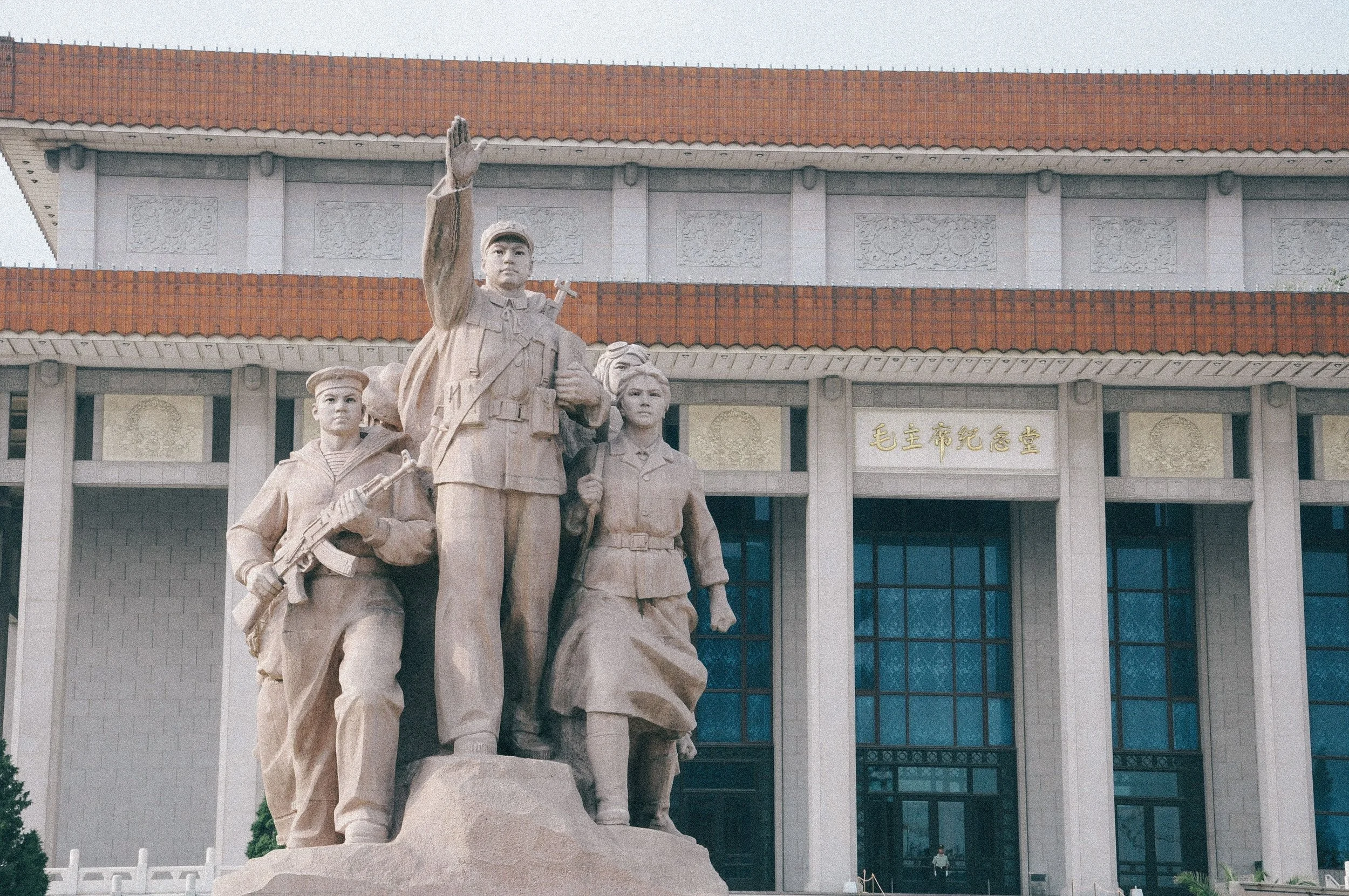
Image courtesy of Leon Huang via Pexels, ©2022. Some rights reserved.
The views and opinions expressed in this article are those of the author and do not necessarily reflect those of the wider St Andrews Foreign Affairs Review team.