From Western Sahara to the Sahel: how the Algeria–Morocco rivalry is reshaping regional security, trade routes and geopolitical influence in North Africa
On 28 April 2025, the foreign ministers of Mali, Burkina Faso and Niger met King Mohammed VI in Rabat. Their countries are landlocked, governed by military authorities and searching for more reliable routes to world markets. The ministers endorsed Morocco’s initiative to connect the Sahel to the Atlantic. Thirteen months later, Niger’s petroleum minister attended the launch of construction on Algeria’s section of a proposed trans-Saharan gas pipeline. The same country was engaging with two regional competitors. The apparent contradiction captures a new reality: influence in North Africa is increasingly being measured in routes, ports and practical partnerships.
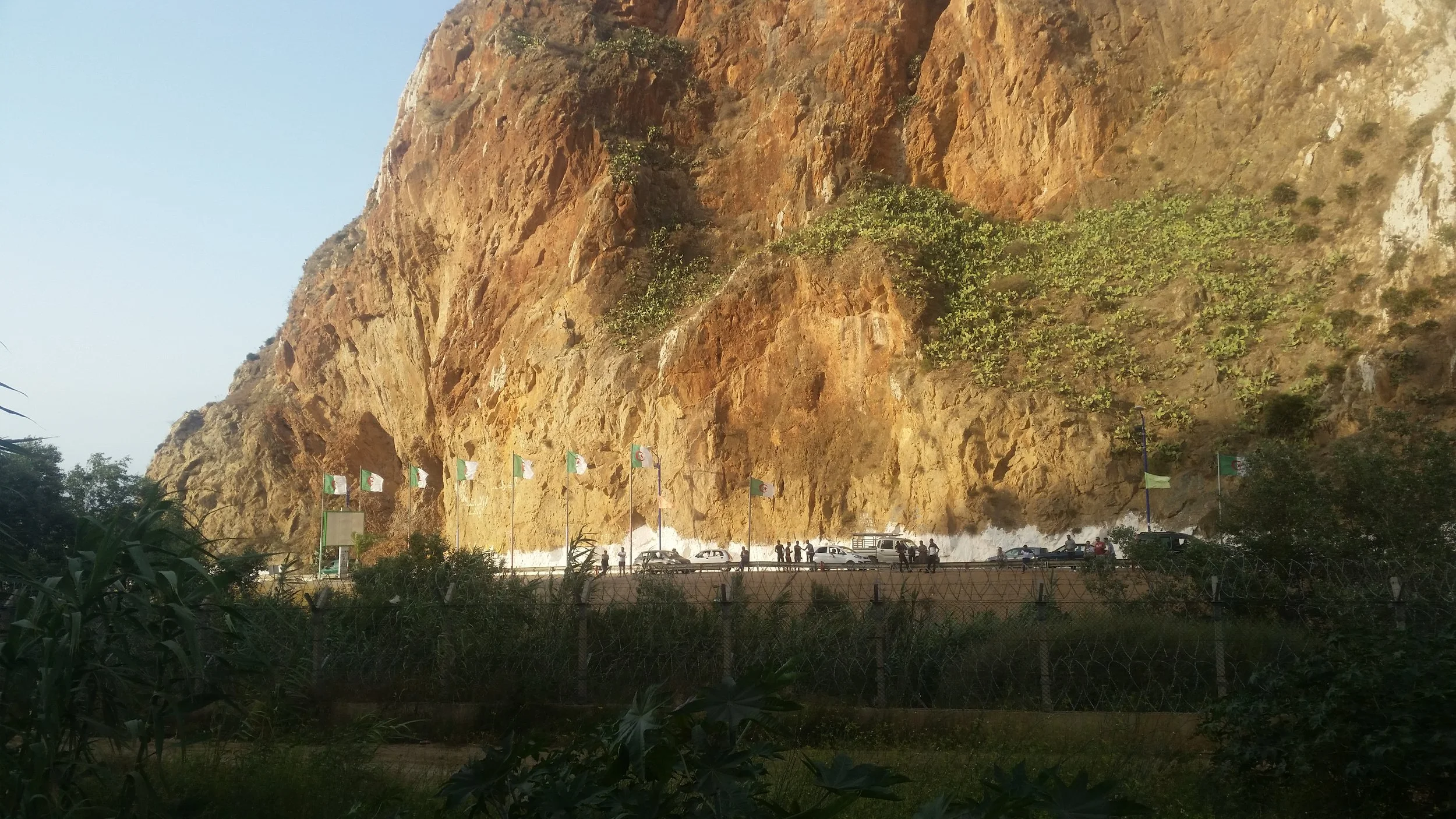
Algeria and Morocco share a land border that has been closed since 1994, and Algeria severed diplomatic relations in 2021. Yet each is looking south. Morocco offers Atlantic maritime access and the prospect of new commercial corridors. Algeria is pursuing trans-Saharan energy and transport links towards Mediterranean markets. The rivalry still hinges on Western Sahara, but its effects now reach deeper into the Sahel. The question is not simply which capital can claim influence. It is which can offer connections that its neighbours actually use.
Western Sahara remains the political fault line. Morocco administers most of the territory, which it regards as part of its southern provinces, and advocates substantial autonomy under Moroccan sovereignty. The Algeria-backed Polisario Front seeks independence and has proclaimed the Sahrawi Arab Democratic Republic, which Morocco does not recognise as a sovereign state. The United Nations continues to list Western Sahara as a Non-Self-Governing Territory, and the dispute’s final status remains unresolved. The 1991 ceasefire broke down amid events at Guerguerat in November 2020. These distinctions matter: an independence movement, its proclaimed state and the Sahrawi population are not interchangeable legal or political categories.
The diplomatic landscape, however, has shifted markedly in Rabat’s favour. In October 2025, UN Security Council resolution 2797 directed renewed negotiations to take Morocco’s 2007 autonomy proposal as a basis and recognised genuine autonomy as a feasible outcome. This was a significant advance for Morocco’s preferred framework, not a Security Council ruling conferring sovereignty. The text still calls for a mutually acceptable political solution providing for self-determination. Its importance lies precisely in that balance: a long-stalled process now has a more clearly identified negotiating foundation, but still requires negotiation.
The economic cost of the impasse is substantial. A 2019 International Monetary Fund study estimated that intra-Maghreb trade represented less than five per cent of the region’s total trade, making it one of the least integrated regions in the world. That is a dated benchmark rather than a current trade estimate. Nevertheless, it captures a structural absurdity: neighbouring states that aspire to connect whole continents cannot routinely trade across their own shared land frontier. Neither side gains from treating economic isolation as normal.
Morocco has increasingly tried to bypass that constraint through engagement farther south. The Atlantic initiative secured public support from the three Sahelian governments in April 2025. Then came a more consequential diplomatic signal: in April 2026, Mali withdrew recognition of the Polisario-proclaimed Sahrawi republic and endorsed Morocco’s autonomy proposal. That decision does not settle the dispute, but it shows how Rabat’s partnerships can produce political as well as commercial results. It also challenges the idea that North African influence in the Sahel must rest primarily on military relationships.
The Moroccan proposition is not merely a port on a drawing board. The Financial Times has documented the extensive footprint of Moroccan banks and businesses across West Africa; the Royal United Services Institute has highlighted Morocco’s combination of infrastructure, economic and security partnerships. This matters because a trade corridor needs financiers, insurers, logistics providers and repeat customers as much as asphalt. Morocco’s advantage is the chance to join a new route to commercial networks that already exist. That is a more durable form of influence than any single diplomatic communiqué.
The new Dakhla Atlantic port is the initiative’s most visible prospective anchor. In an October 2026 interview, the project’s director said work had reached 74 percent completion, with overall delivery planned for late 2028. That is construction progress, not evidence that an international Sahelian trade corridor is operating. Road quality, border administration, financing and security still matter. So does Mauritania: as Carnegie’s research on Maghreb–Sahel relations shows, Nouakchott cultivates ties with both Rabat and Algiers. Its own ports and strategic choices cannot be treated as an afterthought.
Algeria has a distinct offer. Its state-owned energy company Sonatrach announced the start of works on the Algerian section of the Trans-Saharan Gas Pipeline in June 2026, with Nigeria and Niger represented at the launch. The project envisages a gas route towards Algeria’s Mediterranean export infrastructure. Yet a gas pipeline and an Atlantic cargo corridor do not compete for exactly the same traffic. One transports a commodity; the other aspires to move many kinds of goods. Their rivalry is geopolitical more than strictly commercial: each would make different partners more important to the Sahel’s future.
Niger’s participation in both ventures illustrates a point often overlooked in debates about Algerian and Moroccan influence: Sahelian governments can exercise choice. Niger reopened a warmer dialogue with Algeria in early 2026, while its foreign minister had already supported Morocco’s Atlantic initiative. As a European Union Institute for Security Studies analysis observes, regional states increasingly diversify partnerships rather than commit to a single camp. This is not inconsistency. For a landlocked economy, a second viable route can be a source of bargaining power. Morocco’s initiative may succeed best by offering an attractive option, not by asking governments to abandon every other one.
The risk is that political crises make even promising corridors harder to sustain. In April 2025, Algeria and Mali restricted each other’s airspace after a disputed drone incident; Mali, Burkina Faso and Niger also recalled ambassadors from Algiers. Both governments gave conflicting accounts of the aircraft’s location. Nothing in the public record establishes that Morocco engineered this quarrel. Its significance is more prosaic, and perhaps more serious: regional border-security cooperation becomes harder when neighbouring states are absorbed by mutual distrust. Geography cannot be made safe by diplomatic alignment alone.
The Sahel’s security emergency is larger than the rivalry itself. ACLED recorded more than 10,000 deaths from political violence in Mali, Burkina Faso and Niger between January and November 2025, while the United Nations projected that 24.3 million people across the wider Sahel would require humanitarian assistance in 2026. Armed groups have targeted transport and economic activity. A deep-water port cannot protect a truck hundreds of kilometres inland, just as a pipeline ceremony cannot secure a border town. The test of connectivity is whether ordinary traders can move goods consistently and safely.
International diplomacy has strengthened Morocco’s position. In 2024, France stated that Western Sahara’s present and future lay within Moroccan sovereignty. In 2025, the United Kingdom described Morocco’s autonomy proposal as the most credible, viable and pragmatic basis for a lasting settlement. These endorsements are not legally identical: London continues to describe the territory’s status as undetermined. Likewise, the European Court of Justice’s 2024 decisions on EU–Morocco trade arrangements raised specific questions about the consent of the people of Western Sahara. Diplomatic momentum and legal safeguards must therefore develop together, not be mistaken for the same thing.
Human consequences should not disappear behind transport maps. In February 2026, the World Food Programme reported assistance to more than 133,000 vulnerable Sahrawi refugees near Tindouf, with widespread dependence on food aid. Their humanitarian needs are undeniable, whatever position governments adopt on a final settlement. Yet neither refugee figures nor claims by any single political organisation can substitute for a credible political process. A durable autonomy arrangement would need to demonstrate meaningful local participation, enforceable rights and the capacity to deliver better lives. Those are practical standards against which any proposed solution can be judged.
That creates an opportunity for Morocco as well as an obligation for regional diplomacy. As Carnegie has noted in its examination of economic statecraft, Rabat and Algiers increasingly convert commercial and energy relationships into political influence. But corridors need not become exclusive spheres of influence. More reliable customs procedures, transit arrangements and shared security information could help all parties without requiring agreement on every territorial question first. The strongest case for the Atlantic initiative will be made not through rhetoric, but through efficient transport, wider market access and benefits visible in the Sahel itself.
North Africa’s defining image may still be a closed border. Yet farther south, roads are being planned, a port is taking shape and governments are reconsidering their options. Algeria will remain a consequential energy and security actor; Morocco has an increasingly credible chance to become an indispensable Atlantic commercial partner. The outcome will depend less on diplomatic declarations than on whether projects work, local communities benefit and negotiations advance. In a region long divided by the politics of borders, the most persuasive influence may come from making borders easier to cross.
Image courtesy of Akaki98 via Wikimedia Commons, ©2017. Some rights reserved.
The views and opinions expressed in this article are those of the author and do not necessarily reflect those of the wider St Andrews Foreign Affairs Review team.