The UAE’s ‘Zero Hormuz’ Strategy
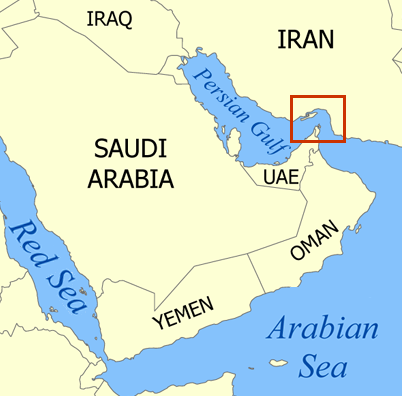
The UAE is building alternative trade routes that could buy it greater freedom in foreign policy. Its ‘Zero Hormuz’ strategy aims to reduce dependence on the Strait of Hormuz, a narrow waterway connecting the Persian Gulf of Oman and a key route for Emirati crude oil exports to overseas markets. In the first half of 2025, the strait carried almost 21 million barrels of oil daily, equivalent to about a fifth of the global petroleum consumption, according to the US Energy Information Administration. Dependence on this passage exposes UAE exports to disruption preventing oil from reaching buyers, threatening their revenue. Reducing that exposure could enable its government greater freedom in foreign policy by weakening the pressure created by potential interruptions to trade. Although alternative ports and pipelines remain vulnerable to regional conflict, the initiative is a worthwhile investment in greater political autonomy for the UAE.
Geography becomes leverage as Hormuz constrains the UAE’s choices
For the UAE, a route to market can also become a source of political pressure. Oil leaving its ports inside the Persian Gulf must cross the Strait of Hormuz to reach open ocean. Consequences extend beyond delayed deliveries. In March 2026, restricted shipping through Hormuz caused oil storage to fill, forcing six Gulf producers, including the UAE, to halt crude production equivalent to an estimated 7.5 million barrels daily, according to the US Energy Information Administration reports. When oil cannot leave, even the ability to keep producing becomes more challenging. Shipping can also become entangled in political confrontation. Iran seized the British-flagged tanker Stena Impero in July 2019, holding it until September. Although this was not an Emirati vessel, the incident demonstrated the risks facing commercial ships using the strait. Routes that bypass Hormuz could reduce that pressure by allowing trade to keep moving when passage through the strait becomes compromised.
Is infrastructure the key to independence for the UAE?
The UAE’s response is to give its exports more than one way out. Its existing Habshan-Fujairah pipeline carries crude oil across the country to the Gulf of Oman, allowing tankers loading there to reach overseas markets without passing through Hormuz. The strategic purchase is not simply a shorter journey, but rather a choice of routes when one becomes inaccessible. However, a crude-oil pipeline is incapable of supporting all kinds of cargo. Reducing dependence across the wider economy also requires eastern ports and road and rail connections capable of moving a diverse range of goods to them. Plans to expand Fujairah, Khor Fakkan and Dibba would increase the eastern coast’s role in international trade. Earlier investment provides a foundation: a AED 4.6 billion (approximately £946 million) contract, awarded in 2019, covered railway links connecting Fujairah and Khorfakkan ports to the national network. Cooperation with Oman broadens the options further. The planned Hafeet Rail project, valued at $2.5 billion (approximately £1.89 billion), will connect the UAE network to Sohar port outside Hormuz. These projects show how ‘Zero Hormuz’ builds on existing infrastructure and regional partnerships. The economic case is partly an insurance calculation An alternative route may be more costly compared to the standard journey, yet still a necessary implementation if it presents a much larger loss during a crisis. Spare capacity that appears underused in normal conditions could be a difficult balance: infrastruture must attract enough everyday business to support its operation while retaining the flexibility to absorb redirected cargo. The question is therefore not solely whether the UAE can construct more ports and railways, but whether businesses can switch between routes quickly enough for those investments to provide valuable protection when necessary.
Resilience creates influence: does safer trade equal greater power?
More reliable trade could strengthen the UAE locally and abroad. Protecting export earnings would help sustain public spending and domestic investment, while dependable deliveries could reassure overseas buyers. Businesses choosing a regional base may also value access to several trading routes rather than dependence on one vulnerable passage. These advantages may strengthen the UAE’s position as a commercial hub. A government that can afford to wait has more room for negotiation: alternative routes could make interruptions less costly, giving leaders more opportunities to negotiate and greater freedom to counteract non-advantageous demands. However, protecting trade does not guarantee freedom in foreign policy. The UAE’s decisions would still be shaped by regional security threats and its relationships with other states.
The limits of alternatives: will UAE bypass insecurity?
An alternative route can be useful only if it can handle the cargo that needs redirecting. Crude pipelines cannot replace container terminals or gas-export facilities, while new ports and railway links require substantial spending and time to complete. Moving trade outside Hormuz does not shield it from regional conflict. In May 2019, four commercial ships were attacked near Fujairah, demonstrating that bypassing the strait does not guarantee safe passage. Routes through Oman introduce another condition: continued cooperation over access, customs and transport. ‘Zero Hormuz’ could therefore spread the UAE’s risks across several routes but cannot remove them. Its value lies in reducing the damage one disruption can cause.
Geography still shapes Gulf power, but infrastructure can loosen its constraints. ‘Zero Hormuz’ is a worthwhile investment because alternative routes could protect trade and give the UAE greater freedom to resist political pressure. The strategy cannot fully eliminate regional insecurity, but it could make that insecurity less decisive in shaping Emirati choices. For Gulf states, power depends not only on producing energy, but on keeping access to buyers open when regional politics turns hostile.
Image courtesy of Kleptosquirrel (modified by Hohum, 2026) via Wikimedia Commons, ©2010. Some rights reserved.
The views and opinions expressed in this article are those of the author and do not necessarily reflect those of the wider St Andrews Foreign Affairs Review team.