Backsliding Democracy: The Authoritarian Threat to Global Human Rights
Corruption, political polarisation, and the erosion of checks and balances are among the most widely understood threats to democracy. In 2026, they are also among the most prevalent. In an era where political polarisation is at an all-time high and democratic governments face challenges everyday, the vital protection of human rights has deteriorated significantly. Across many nations, a clear relationship has emerged between the rise of authoritarian governance and the weakening of fundamental rights. But, why does this pattern exist?
Sliding Towards Authoritarianism?
On the first anniversary of U.S. President Donald Trump’s second inauguration, Human Rights Watch released a comprehensive report of the wide range of authoritarian tactics, policies, and actions the President and his administration have taken against human rights protections, both in the country and abroad. UN watchdogs have since released reports which highlight the Trump administration’s employment of racist hate speech and intense migration crackdowns as setting the stage directly for grave human rights violations.
These warnings were underscored by reported incidents within the United States, including deaths in custody and attempts to revoke the legal status of large numbers of immigrants. Taken together, such developments could suggest a broader shift towards increasingly authoritarian practices within the country, having potential implications for both domestic governance and international law.
However, this trend is not confined to the United States. In countries where governments have more clearly shifted toward authoritarian or dictatorial rule, the erosion of human rights has often been more pronounced. Even in states that continue to present themselves as democratic, the impact at the margins cannot be ignored. Funding cuts towards human rights organisations and other bodies of the UN have stemmed not only from the US but from nations such as France, Germany, and the UK. Alongside these cuts, CIVICUS has recently reported that nearly 81 out of 198 recognised countries suffer from restricted or closed civic space. Widespread repressive acts against fundamental freedoms within authoritarian regimes reflect a global environment in which human rights are increasingly under pressure.
Authoritarianism Exemplified: El Salvador
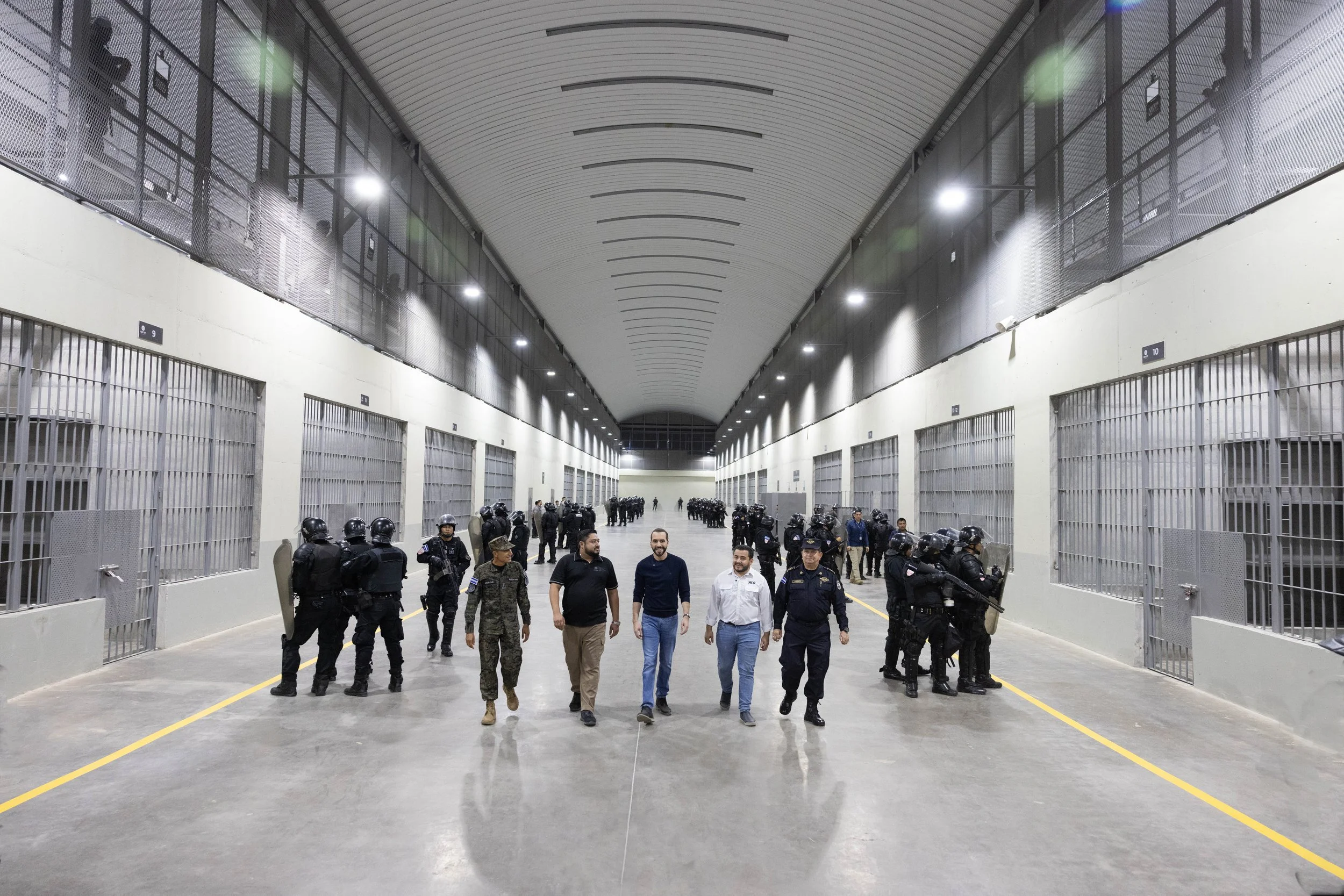
Recent developments in El Salvador provide a key example of how authoritarian tendencies can manifest in practice. In March, the Independent Review reported that a number of Salvadoran nationals who had been deported from the US had since been arbitrarily detained in El Salvador and disappeared into the nation’s prison system. Nearly 9,000 Salvadorans have been deported from the US since the beginning of President Trump’s second term; many of them were sent to the Center for Terrorism Confinement, a mega prison within the country, notorious for “losing prisoners” within its own hectic organization.
Families and representatives of some of these prisoners were contacted by Human Rights Watch who alleged that a number of detainees have been held without trial and prohibited from communicating with their families or talking to lawyers. Detainees disappearing into El Salvador’s prison system has become a regular phenomenon since President Nayib Bukele declared a ‘state of emergency’ in March 2022 in an attempt to suppress gang violence within the country. The state of emergency, often a temporary measure, has remained in place for the past four years; over 91,000 people have been detained within the country. Nearly 10,000 of them have retroactively been named innocent and released.
In the context of these disappearing prisoners, Bukele’s interesting political background has been thrust forward. Before running for president, the former mayor of San Salvador identified as a left-wing politician. During his campaign, he flipped to presenting as an independent, forming his own party and adopting a populist image. Running under the label of “Nuevas Ideas”, a political party of his own creation, he asserted himself to be neither right nor left. Since 2022, he’s adopted a far more authoritarian identity to support his crackdown on gang violence. In April of that year, he visited the White House and met with President Trump to assert his willingness for full cooperation with the U.S. government’s plan to send migrants to El Salvador for imprisonment.
While initially winning supporters for his efforts against the nation’s powerful criminal gangs, Bukele’s independent identity has expanded to something teetering on the edge of dictatorship. In 2024, he packed the Salvadoran Supreme Court with loyalists who enabled him to seek an unconstitutional second term. He has continued with increased attacks on the media and an expressed willingness to jail anyone who opposed his policies or who he deemed insufficiently loyal.
He and his party, who maintain control of El Salvador’s legislature, have consistently pushed forward rounds of constitutional reforms that have been criticized for chipping away at checks-and-balances. The government has consistently gone after its perceived enemies, detaining not just criminals but critics and activists, while also forcing journalists and opposition voices to choose between exile or prison. Most recently, his party has sought a constitutional reform which would permit further life prison sentences while more than 1% of the Salvadoran population remains in jail. Amidst all of this, Bukele referred to himself as "the world's coolest dictator" in his X bio.
Authoritarian Impact on Human Rights:
The patterns observed in both the United States and El Salvador reflect a broader global trend. Authoritarian-leaning governments often employ similar strategies to consolidate power: restricting dissent, undermining independent institutions, controlling information, and framing such actions as necessary for national security or stability. In doing so, they create political environments in which fear and division can be leveraged to justify increasingly repressive measures.
The consequences for human rights are significant. As institutional safeguards weaken, individuals may become less willing to speak out, while access to reliable information becomes more limited. Over time, rights that were once assumed to be secure can be eroded gradually, without immediate or widespread resistance. Often, the change happens before members of the public at large are even able to recognize that it’s begun.
At the international level, responses to such developments have frequently been inconsistent. Critics have pointed to a tendency among Western nations to prioritise strategic or diplomatic relationships over the consistent enforcement of human rights standards. This selective approach risks sending a broader message that the protection of human dignity is conditional rather than universal. Actions domestically have provided authoritarian regimes with more breathing room to act with impunity, sending the message that "some people's dignity is worth protecting, but not everyone's".
The relationship between authoritarianism and human rights erosion is neither new nor accidental. As governments accumulate power and weaken institutional constraints, the space for accountability narrows, and the risk of abuse increases. The challenge facing the international community is not simply to recognise these patterns, but to respond to them consistently and effectively.
If democratic values are to be preserved, the protection of human rights must remain a central priority. Without such commitment, the gap between principle and practice will continue to widen, with consequences not only for those directly affected but for our international community at large. What does it say about the “liberal world order” if anything is prioritised above human rights?
Image courtesy of Casa Presidencial via Wikimedia Commons, ©2023 Some rights reserved.
The views and opinions expressed in this article are those of the author and do not necessarily reflect those of the wider St Andrews Foreign Affairs Review team.