Adaptation and Opportunity: How the Iran War Reshapes the Balance of Power in Ukraine
Much of the existing commentary on the Iran War’s implications for Ukraine creates a narrative of assured Russian victory. Certain Russian strategic benefits are clear: increased revenue on Russian fossil fuel exports, greater competition for vital air defenses, and a shift in diplomatic attention away from Ukraine. However, a rapid and proactive response by the Ukrainian state has successfully mitigated Russian gains across all three domains. After fifty days of war in Iran, Russia is the obvious short-term beneficiary; however, an adaptive Ukrainian response has successfully circumvented a seemingly existential crisis.
Despite a sharp hit to Russian crude oil revenues in recent years, its economy has remained structurally dependent on hydrocarbon exports. The toll of Western sanctions had thus been steep, with Russian oil trading at a $10-$13 per barrel discount before the war. The disruption of 20% of the global oil supply due to the war, however, has reversed Russia’s immediate economic outlook, doubling its oil revenues in March. Russian oil now sells at a $5-a-barrel premium, as Rosneft and Gazprom--two state-run Russian oil giants--take rapid steps to increase exports to meet rising demand. As prices soar and the United States provides a temporary sanctions reprieve, Russia stands to benefit from increased sales due to market gaps, sold at higher prices and yielding higher profits.
In response, the Russian government has abruptly dropped plans for a 10% budget cut this year, alleviating domestic fiscal pressure despite steadily rising wartime spending. The closure of the Strait of Hormuz further accelerates Russia’s reorientation toward Asian markets: where Europe had once been Russia’s main client, China and India now account for 48% and 38% of Russia's oil revenue, respectively. Rather than a temporary adjustment, this shift may represent a permanent pivot towards Russian hydrocarbons among Asian buyers, who see it as more reliable amid growing geopolitical instability. Russian financial benefits may therefore extend beyond short-term relief, sustaining Moscow’s current strategy of simultaneously wearing down Ukrainian materiel and wavering Western commitment.
Ukraine, however, has doggedly contested Russian economic gains. Numerous long-range drone strikes have struck Russian export facilities in the Baltic in the weeks since the war began, projected to stall Russian oil exports by 40%. These strikes form part of a broader campaign of drone, missile, and sabotage operations against Russian hydrocarbon infrastructure, costing Russia over $13 billion in damage in 2025 alone. Ukraine’s asymmetric operations against Russian infrastructure, which Russia has struggled to counter, have limited its ability to fully capitalise on higher prices and demand for its hydrocarbon exports.
Another immediate cause for Ukrainian concern is the growing scarcity of vital air defenses on the international market. While Ukraine produces most of its air defense systems domestically, it still relies on the United States for Patriot Systems to counter Russian Iskander and Kinzhal ballistic missiles. Even before the war, Patriot Systems were in short supply globally; however, Iranian aerial attacks on the Gulf States have dramatically increased competition. For perspective, the Gulf states reportedly expended over 800 patriot missiles within the first three days of the war, more than Ukraine had received in four years of fighting. While Raytheon and Lockheed Martin have increased Patriot Systems production in response, these measures are projected to take two years to meet demand fully. In the meantime, Ukraine must choose between defending its military assets or civilian sites, aiding Russia’s attritional tactics.
Compounding Ukraine’s dilemma, its vulnerability in air defenses corresponds with intensifying Russian salvos against both military and civilian targets. Russia was initially heavily reliant on Iran for its offensive air assets during the early years of the war, requiring mass imports of Iranian Shahed 131 and 136 drones. Yet, Russian domestic production of Shahed drones now outpaces that of Iran, allowing it to continue its offensive operations unimpeded. In contrast to Ukraine, the impact of the war in Iran on Russia's materiel capabilities is negligible, positioning Russian offensive aerial operations to outpace Ukraine's ability to acquire air defenses.
Ukraine, however, has leveraged the war to shift its image from a passive recipient of international aid to an invaluable security partner. The Gulf states lack effective anti-drone defense infrastructure, evidenced by their usage of $3.7 million Patriots to counter drones costing under $30 thousand. Thus, Ukraine’s four years of experience defending against nearly identical drone models has become a vital bargaining chip in securing crucial ordinance and funding. Following Zelensky’s personal visit to the region in March, Ukraine has signed a series of agreements securing investment into domestically produced air defenses. Talks are further underway to trade Ukrainian anti-drone assets for the Gulf’s Patriot systems, leaving Ukrainian air defenses insulated from, and a possible beneficiary of, the war in Iran.
This January saw the first trilateral peace talks of the war; however, three months on, and the hope of an imminent diplomatic solution has largely dissipated. The United States, keen to portray itself as a mediator before the war in Iran began, now has neither the diplomatic assets nor the political will to devote to Ukraine. Its attack on Iran has also dramatically eroded its future credibility as a mediator. The United States struck Iran in violation of international law and in the midst of negotiations; thus, why should either party trust its commitment to fulfill security guarantees? Ukraine’s European allies are unable to fill the diplomatic void left by the US, as they prioritise cushioning their own economies against the conflict’s repercussions over a peace settlement. The Iran War almost instantaneously became the foremost political concern for the international community, decisively shifting attention away from Ukraine.
While its partners will undoubtedly be less likely to respond quickly to changes in Ukraine's battlefield needs, the shift in global focus offers vital breathing room for Ukraine. Reports from the January trilateral talks in Abu Dhabi claim that the United States representatives were mounting pressure on the Ukrainian delegation to cede the remaining 20% of the Donetsk oblast to Russia. With American attention diverted, Ukraine can attempt to improve its situation on the front line, augmenting its bargaining power in future talks. Momentum has recently shifted in Ukraine’s favor, with territorial gains in Zaporizhzhia Oblast and Gulf funds spurring domestic drone production, rapidly improving Ukraine’s military outlook since January. Thus, for the first time since the war began, Ukraine may be the beneficiary of stalled peace negotiations as it steadily gains leverage.
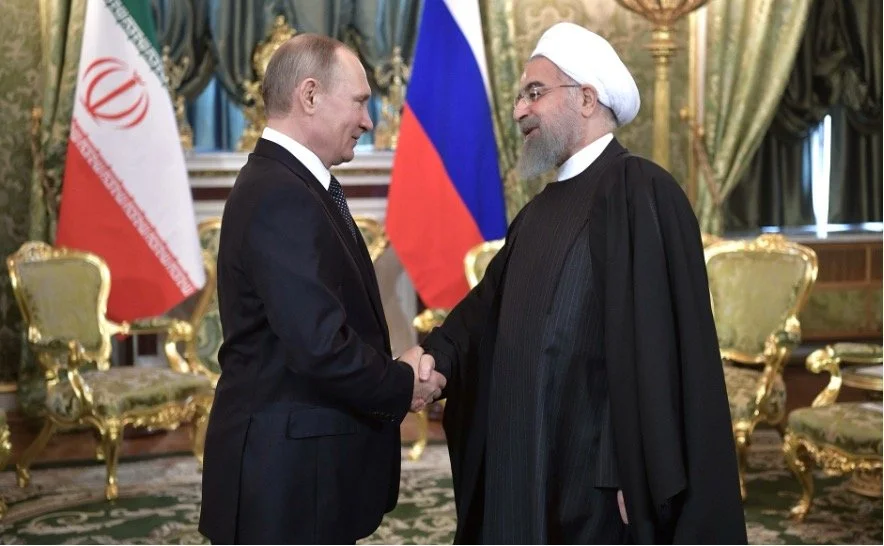
Russia's diplomatic position is tenuous: the war decisively challenges its dual role as a counterweight to US power and as an amicable partner to the Trump administration. Iran is vital to Russia’s diplomatic infrastructure in the region. The ‘Comprehensive Strategic Partnership Agreement’ signed in January, 2025 formally enshrines the close military, economic, and diplomatic ties that have been cultivated over the years between the two nations. Therefore, the Russian Foreign Ministry’s primarily rhetorical response in support of Iran’s war effort appears incongruous with Iran’s proactive support during the opening years of its invasion of Ukraine. These stern yet toothless responses from the Kremlin, however, illuminate the fine line Russian diplomats walk. On the one hand, Russia must position itself as a relevant regional player and a reliable ally, especially in the wake of strategic setbacks in Syria and Venezuela. On the other hand, hostility with the Trump administration over Russian support for Iran could not only remove diplomatic pressure from Ukraine but also restart direct US weapons shipments to Ukraine. While Trump has dismissed concerns about Russian intelligence sharing, his volatility renders any further material support an acute risk.
Contrary to the popular narrative of an inevitable Russian victory stemming from its immediate gains from the Iran War, Ukraine's proactive response has insulated its position on both the battlefield and the negotiating table. Without fully capitalising on economic, military, and diplomatic opportunities, Russia is unlikely to translate these benefits into decisive military victories. On the contrary, Gulf investments in Ukraine’s drone production infrastructure will further spur Ukraine’s long-term drone production, widening its existing lead over Russia’s. The effects of the Iran War on Ukraine are by no means peripheral; yet Ukraine’s innovative response renders it unlikely that they will dramatically pivot the course of the war in Russia’s favor.