Why can’t we access Turkmen gas?
With the current wars in Ukraine and the Middle East ramping up global energy prices and contributing to political and economic challenges at home, Western markets are becoming increasingly desperate for diversified gas suppliers. Turkmenistan, situated between Europe, Russia and the Middle East, may appear to be the perfect solution to the West’s energy needs. Given Turkmenistan’s claim to the world’s fourth-largest natural gas reserves, why aren’t Western policymakers and energy companies rushing to invest in this relatively untapped resource? There is no simple answer, but rather an interconnected web of economic, political, geographic and legal reasons why Western markets are hesitant to invest in Turkmenistan’s abundant gas deposits.
From a logistical perspective, there is the issue of connectivity, transit costs and Russian domestic priorities. Turkmen gas pipelines are technically connected to Europe via Russia however there is little evidence of Turkmen gas reaching the EU via Russia. Historically, Gazprom would buy it at the Turkmen border, use it domestically and retain control of gas export routes to the EU. Additionally, since January 2025, the main Russia-EU pipelines through Ukraine have been shut off, making transportation increasingly expensive and politically unviable due to the war. Europe, under increasing pressure for energy diversification, has increased demand along the South Caucasus Pipeline, a BP contracted project which stretches through Georgia to connect the plentiful gas fields of Azerbaijan with the Turkish-EU pipelines. Given Azerbaijan and Turkmenistan's proximity, separated by approximately 300km of the Caspian Sea, paired with high gas prices, one may expect equally rapid development of a Trans-Caspian pipeline.
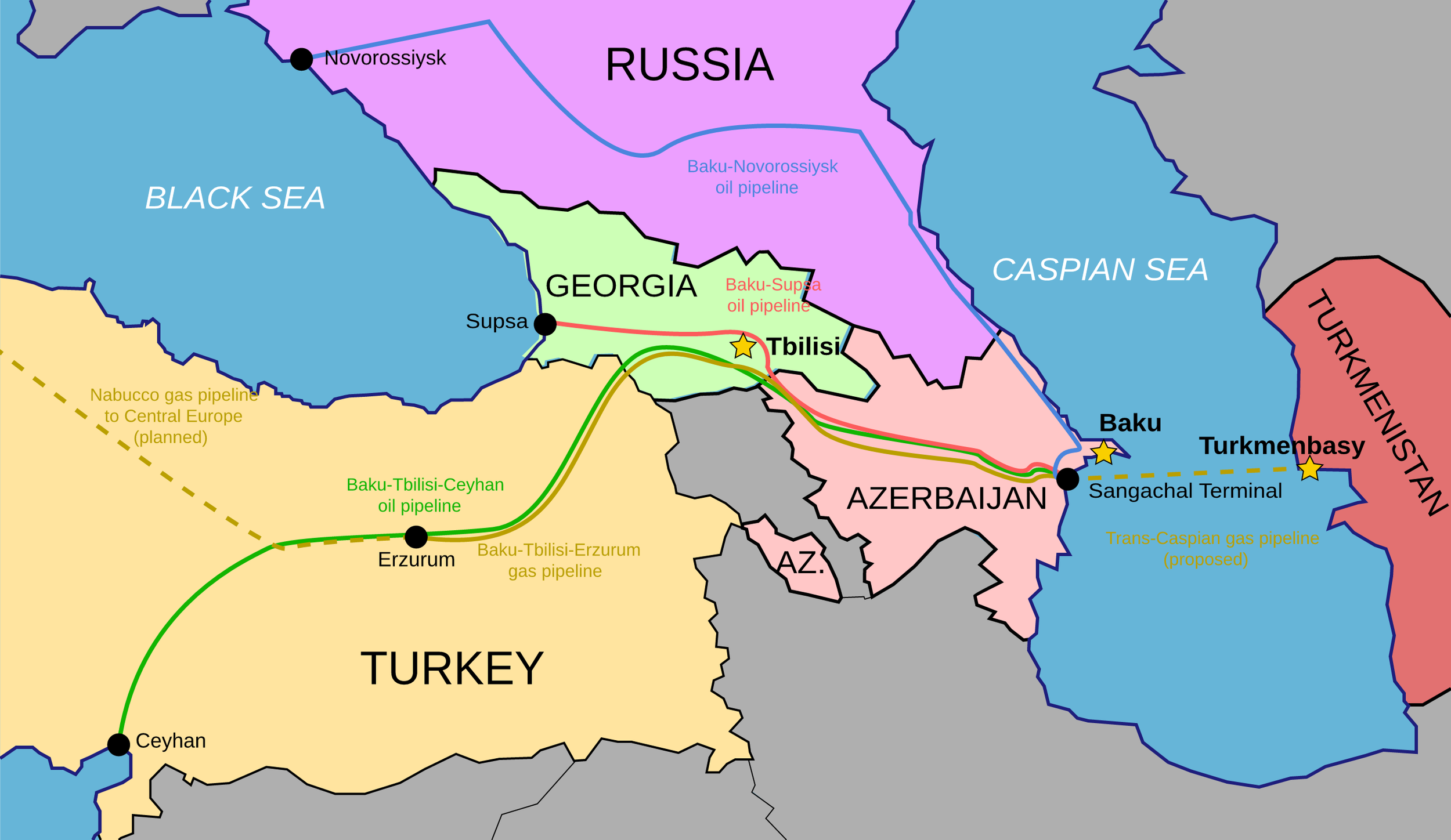
A proposed subsea pipeline connecting Turkmenistan and Azerbaijan.
Image courtesy of Thomas Blomberg via Wikimedia Commons, ©2008. Some rights reserved.
The reason this hasn’t manifested lies in the second main obstacle for Turkmen gas: Ashgabat’s strict policy on border sales and preference for domestic processing. For decades, Turkmen policymakers have been insistent that all gas exported from Turkmenistan must be sold at the border. Ashgabat has been equally strict on resisting responsibility for any downstream risk or infrastructure costs. This means that any gas infrastructure built outside Turkmenistan’s borders must be paid for by external investors. Consequently, such prospective investors are dissuaded from committing to such expensive, long-term infrastructure projects. Furthermore, Iran and Russia have both rejected any form of Trans-Caspian pipeline, citing ‘ecological concerns’. Clearly, power politics continue to cast a shadow over regional infrastructure projects, further dissuading potential investors.
It is not only the private sector that is hesitant about a long-term commitment to Turkmen gas. The EU has a variety of reasons to hesitate to fund a Trans-Caspian pipeline. While the recent Nord Stream crisis has raised serious political questions about dependence on major pipeline projects, there are deeper economic and legal issues for Brussels. Firstly, EU regulations stress open access and trading at certain trading points within the EU system, terms that contradict Ashgabat’s policy of selling at the border, on its own terms. Secondly, owing to the EU’s commitment to the green transition and developments in alternative energy supplies, there is a lack of long-term EU buyer commitment. Large infrastructure projects spanning hundreds of kilometres of subsea pipeline are deeply expensive endeavours, only achieving economic viability if decades of buyer commitment can be established. Despite current rising gas prices, Brussels is hesitant to sign long-term gas contracts which, despite immediate savings, risk commitment to an energy source of questionable value in 20 years’ time.
To bypass the large infrastructure costs, smaller-scale alternatives have been proposed that would still allow some access to Turkmenistan’s abundant supplies. Yet these have faced challenges due to Ashgabat’s rigid priorities. A smaller offshore connector linking a Petronas-operated field to Azerbaijan’s offshore infrastructure was proposed at a fraction of the cost of a major Trans-Caspian pipeline, but Turkmenistan declined, holding out for a larger long-term pipeline.
Turkmenistan, like any energy exporter, has the chief priority of securing consistent income from a reliable and low-risk partner. Given the issues of Western commitment and regulatory clashes, Ashgabat has little incentive to pursue these partnerships when China is happy to meet its demands. Through the steadily expanding Central Asia Pipelines, the state-owned China National Petroleum Corporation (CNPC) has served as the ‘project champion’ Turkmenistan wanted. CNPC has built and part-owns the Central Asia-China Pipelines, taking on the transport infrastructure and its risk, while also offering long-term purchase contracts in return for a direct line into Turkmenistan’s rich gas fields. Additionally, the pipeline allows access to smaller but local, and currently (or soon to be), gas-hungry markets such as Uzbekistan and Kazakhstan. Although China is undergoing its own green transition, and competition from Russia’s China-facing Power of Siberia 2 pipeline is fierce, Beijing comes off as the most serious long-term industrial power with a lasting need for gas. Despite the issues of over-dependence on one customer, Ashgabat seems comfortable enough to diversify through local markets while waiting out EU pressure and hoping for a new large-scale proposal that conforms to its priorities.
While on the surface Turkmenistan may look like a saving grace for the West’s energy crisis, economic, political and legal realities explain why it makes much more sense for Ashgabat to focus on longer-term, secure and reliable industrial markets that conform to its particular policies. While Western markets and energy giants can provide abundant cash and support, their insistence on European regulations on transfers and lack of long-term commitment give Ashgabat little incentive to reach an agreement. China’s willingness to embrace the priorities of Turkmen policymakers, and to fund downstream infrastructure, reinforces Turkmenistan’s reluctance to commit to shakier Western markets.
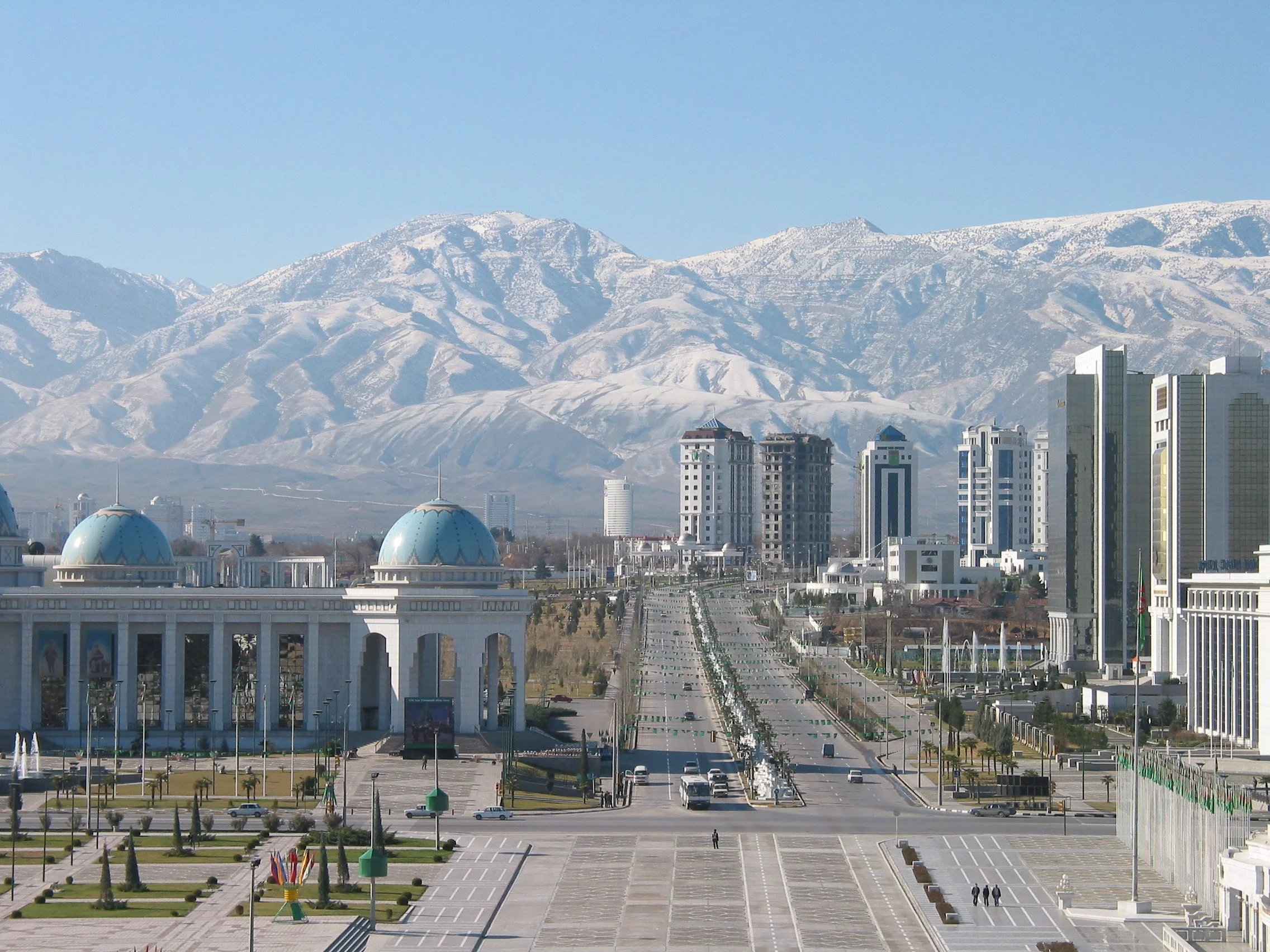
Image courtesy of cercamon via Flickr, ©2009. Some rights reserved.
The views and opinions expressed in this article are those of the author and do not necessarily reflect those of the wider St Andrews Foreign Affairs Review team.