Sovereignty at What Cost? The Security Implications of Israeli Recognition of Somaliland
On 26 December 2025, Israel became the first country to recognise the breakaway Republic of Somaliland as a state. In the days that followed, mass celebrations in Somaliland's capital, Hargeisa, demonstrated widespread hopefulness that this action would spearhead an international trend, with President Irro calling it “a historic moment,” for the state. However, politicians in neighbouring Somalia have pointed out that Israel's recognition stems from a transactional standpoint rather than one based on principle.
Somaliland's call for independence has roots in colonial borders established in the 19th century. While Northern Somalia fell under British jurisdiction, the South was controlled by Italy until the unification of the country as an independent Somalia in 1960. In 1969, the state came under the rule of dictator Mohamed Siad Barre, whose repressive regime led to Somaliland separatist uprisings and eventually civil war. Barre's brutal suppression culminated in the Isaaq Genocide and the massacre of up to 200,000 civilians. After he was overthrown in 1991, Somaliland declared independence and has since built up a relatively secure, democratic government, despite a lack of recognition from its neighbours. Alongside its claim of free and fair elections, the Somaliland government has established features such as its own currency, security forces, and passports as indicators of a right to sovereignty. However, association with Somalia's collapsed government has prevented Somaliland from developing economically and gaining access to international financial systems. The crucial port of Berbera, which lies on the Gulf of Aden, is estimated to operate at roughly 25% capacity and attracts limited trade from key supporters such as Ethiopia. Somalilanders understand the critical nature of recognition in maintaining their cultivated stability, and the opportunities it creates for political and economic advancement.
The agreement between Somaliland and Israel comes at a precarious time for Israeli relations in the Middle East. It may be a further step in what some analysts have argued is Israel's 'Axis of Secession' strategy which aims to bolster alliances by supporting secessionist movements within Arab states, many of which have had increasingly sour relations with Israel following the Gaza War. The scheme would increase Israel's traction in the region and could lead to more states signing on to the Abraham Accords. Netanyahu has stated his vision of a hexagon of alliances in the Middle East to propagate “an axis of countries that see reality, the challenges, and the goals in the same way, in contrast to the radical axes.” The nature of the divisive strategy, however, risks further destabilising targeted countries. In the case of Somaliland, the alliance makes it more vulnerable to attacks from the Islamist militant group Al-Shabaab, which remains a dominant insurgent force in Southern Somalia.
Reports that from March 2026 have cemented suspicions that Israel plans to set up military bases near Berbera in the breakaway state. This would allow Israel to conduct operations against the Houthis in Yemen, one of the most formidable Iranian proxy groups that have begun expanding to the Horn of Africa. While Somaliland has stated that discussions on military bases have not yet taken place, Israeli officials have confirmed that this remains a determining factor in the decision to recognise Somaliland. As the Iran war wages on, and the Houthis have entered the conflict with missile attacks on Israel on 28 March, the precariousness of Israeli presence in the area has reached a new level. Somalia's President Mohamud has warned that the country's territory cannot be used for military operations and that Somalia will fight against Israeli military presence in Somaliland as a defensive measure.
The Somaliland government's desire for independence and a standing on the global stage has made a partnership with Israel, and the potential for US recognition, a highly attractive proposition. Access to Israeli technology and military cooperation may seem to offset political isolation, but the limitations of this advantage will be felt, as the republic is now part of a war without adequate defences in place. Not everyone in Somaliland feels the right decision has been made. Pro-Palestine protests swept Somalia following Israeli recognition, especially after reports stated that Israel had approached Somaliland, among other East African nations, to accept the resettlement of Palestinians from Gaza.
Although more than 20 Arab and African states have condemned the agreement, Somaliland seems set on gaining US recognition, which the government views as the ultimate legitimization factor. Somaliland has spent years building connections with congressional Republicans, including Senator Ted Cruz, who has advocated for President Trump to recognise the republic. As tensions have arisen between Somalia and the US, with President Trump verbally attacking Somali immigrants as 'garbage', Somaliland has offered resources to the US, including access to its mineral deposits and an established US military presence in the region. While recognition may not currently be of high priority to the US government, the trajectory of the ongoing war could make an alliance particularly advantageous.
Israel and the US are by no means the first countries to have ventured recognition of Somaliland in exchange for a influence in the Horn of Africa. While Ethiopia's 2024 signing of a Memorandum of Understanding with Somaliland for access to the Gulf ultimately fell through due to external political pressure, it signalled the secessionist state's willingness to enter into any alliance that would grant recognition. Somaliland's ties with Taiwan and the UAE and resulting animosity from China and Saudi Arabia have further highlighted how essential US backing has become to the Somaliland government, and a US failure to recognise would severely cripple any chance the republic has to gain global standing and protect itself from conflict.
The Somaliland government's desire for independence and global standing has made a partnership with Israel, and the potential for US recognition, a highly attractive proposition. However, the consequences of following this alienating path have become clear with the disintegration of regional security. Somaliland's reputation as a uniquely stable, democratic republic in a highly volatile region is currently sitting at a precarious point. What happens next for the breakaway state will surely be revealed as the Horn of Africa becomes a new battleground for the war in the Middle East.
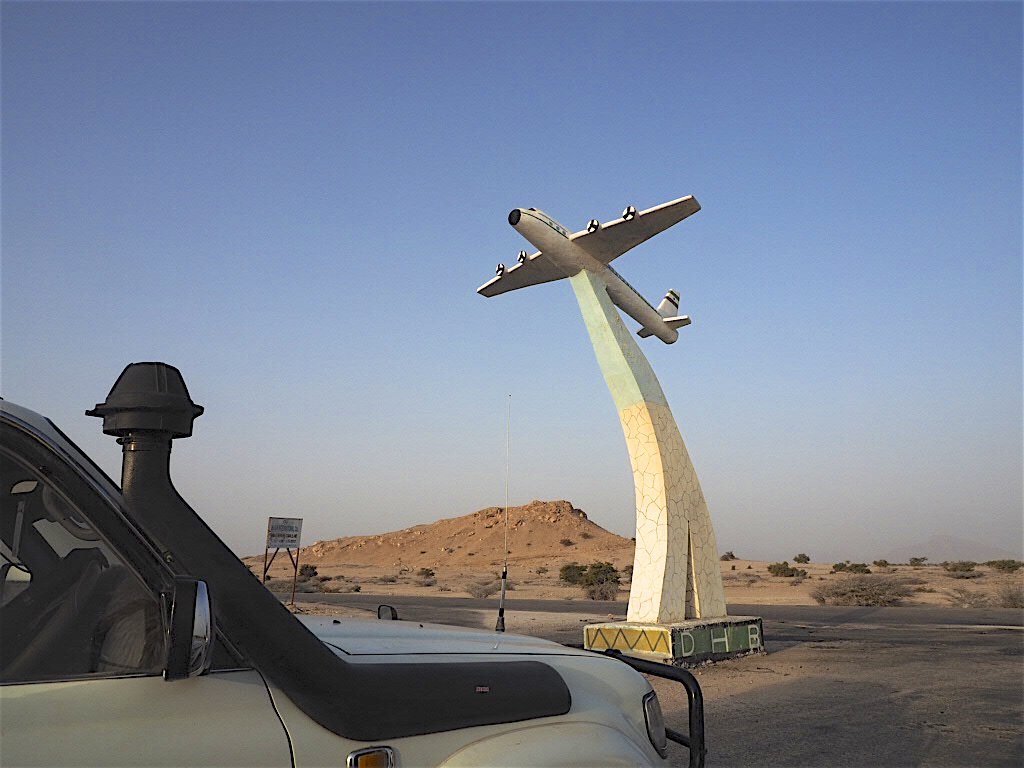
Image courtesy of Clay Gilliland via Flickr, ©2016. Some rights reserved.
The views and opinions expressed in this article are those of the author and do not necessarily reflect those of the wider St Andrews Foreign Affairs Review team.