Operação Contenção and the Battle Over the Favelas
Carnival. Football. Dancing. The beach. These are the images traditionally associated with Rio de Janeiro. But only a couple of months ago, the favelas of Rio turned into a war zone.
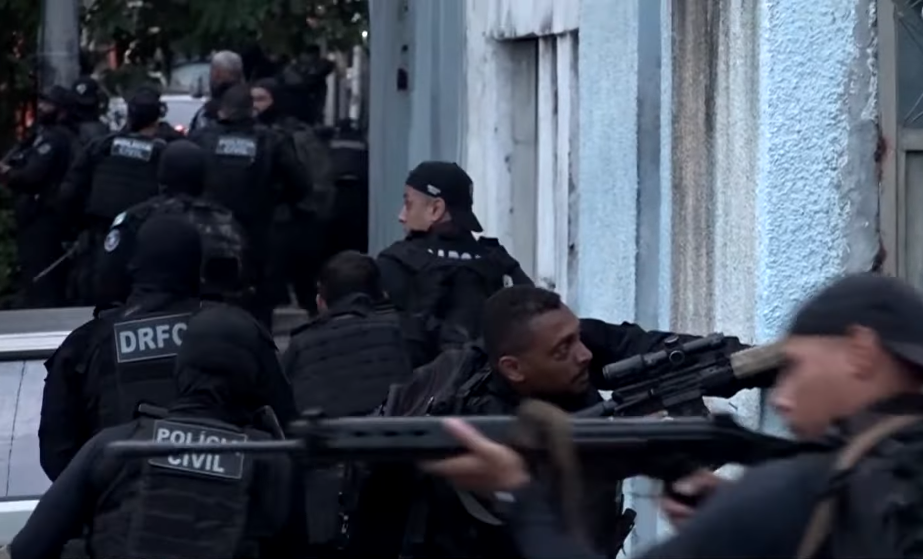
Rio de Janeiro military police, including the controversial Batalhão de Operações Policiais Especiais (BOPE) or ‘Battalion of Special Police Operations’, raided the Alemão and Penha favelas, targeting the Comando Vermelho (Red Command) criminal gang in Operação Contenção or ‘Operation Containment’. The confrontation resulted in over a hundred dead, including five police officers, and over a hundred arrested, making the raid the deadliest police action in Rio's history. The day after the operation, residents of the neighborhoods lined up the bodies of the dead on the street, revealing whose child had died the day before.
The military police of Rio launched Operação Contenção to counter the Comando Vermelho's presence and capture its leaders. Labelled as “narcoterrorists” by conservative Rio de Janeiro governor Cláudio Castro, the gang has ruled multiple favelas for years. Not limiting itself to drug trafficking, Comando Vermelho has held a monopoly over the provision of gas, cable television, internet, and transportation. Residents often pay 1/3 more for gas than residents in other neighborhoods and businesses pay security fees to operate. Perceived transgressions can result in harsh consequences for residents. Stealing can result in losing a hand or being burned alive. Posting videos of Comando Vermelho can result in assault or torture.

Image courtesy of CanalGov via Wikimedia, ©2025. Some rights reserved
Claudio Castro hailed Operação Contenção as “a success”. The police seized 122 weapons, 5600 rounds of ammunition, 12 explosives, 22 kg of cocaine, 2 tons of marijuana, and 15 vehicles. However, the leaders of Comando Vermelho escaped. Edgar Alves de Andrade (known as Doca), the longtime leader of Comando Vermelho, is still at large. Furthermore, of those killed by the police, none were among the 68 listed in the initial judicial complaint that authorized the raid (as per initial identification). The police have stated in response that those killed were “carrying weapons of war, confronting the teams, offering resistance, and endangering the lives of the officers.” The very next day, after the police left, Comando Vermelho armed men once again were patrolling in the favelas. In the words of the deputy intelligence secretary for Rio’s military police, the raid had “negligible” impact in taking apart Comando Vermelho.
President Luiz Inácio Lula da Silva (commonly known as Lula) called the operation “disastrous”. Many human rights groups, representatives within the UN, have called for investigations into human rights abuses during the operation. Alexandre de Moraes, the controversial Supreme Court justice sanctioned by the Trump administration, is currently investigating to determine if the police committed human rights abuses or any other illegal actions. Despite the brutality, the operation gained broad domestic support. A survey showed that 55% of Brazilians approved of the police operation, and a further 62% of residents in Rio de Janeiro. Another survey showed that 8 in 10 residents in favelas approved of the operation. Cláudio Castro gained 10 percentage points in approval ratings following the operation. Romeu Zema, the conservative governor of Minas Gerais, congratulated Castro on the operation, while drawing a parallel with Salvadorian President Nayib Bukele’s anti-gang policies.
With the presidential election only a year away, Operação Contenção has taken on a political dimension. The political right in Brazil is trying to capitalize on the widespread approval of the operation. Romeu Zema is running for president and was deliberate in congratulating Castro. Lula was also careful not to criticize the purpose of the operation, admitting that drug violence needs to be confronted, and in a post on X said, “We cannot accept that organized crime continues to destroy families, oppress residents, and spread drugs and violence throughout the cities.” However, Lula has so far focused his energy on environmental issues encapsulated by the recently concluded COP30 Conference.
Brazilians have been struggling with gang violence for years. When gangs control sections of cities, Brazilians demand solutions. Operação Contenção was not the first police raid to counter gangs, as gangs have controlled favelas for decades. In 2021, the Jacarezinho favela saw another ‘massacre’, resulting in 28 deaths. In 2019, Rio de Janeiro governor Wilson Witzel initiated a “shoot on sight” policy. In 2010, attacks by the gangs resulted in an intervention by the Brazilian military.
With so much history of heavy-handed policing, the El Salvador exemplar referenced by Zema might prove to be a false inspiration for dealing with gang violence in Rio. Unlike in El Salvador, the favelas of Rio are incredibly dense. As Operação Contenção revealed, deploying thousands of police officers will not guarantee the arrest of anyone important within these gangs. A leader like Doca can vanish in the labyrinth of bodies and alleyways of the favelas. Military police in Brazil have already tried to shoot gangs away, only resulting in more deaths.
Writing for the think tank Espaço Democrático, public security expert Tulio Khan has argued that confrontation has been proven ineffective. Confrontations result in death, but rarely result, like in Operação Contenção, in the arrest of the primary target. Instead, Brazil should invest in aerial surveillance, interceptions, and infiltrations. Khan highlights how financial investigations and intelligence monitoring in Italy resulted in the arrests of multiple Sicilian mafia bosses. Rio can better execute arrest warrants by having improved intelligence on the whereabouts of gang leaders.
The Unidade de Polícia Pacificadora (UPP) programme has also seen success in decreasing violent crime. Started in 2008, the UPP programme aimed to establish a permanent police presence in the favelas. UPP units tend to be heavily armed. By opening police stations in specific favela communities, violent crime decreased; however, UPP presence has seen increases in petty crime as they fear a heavy-handed response (due to their heavy armaments) would decrease popular support. In fact, after initial success, the UPP has seen its popularity dwindle. Like other police branches in Rio, the UPP has struggled with corruption and police brutality despite initial promises to the contrary. In 2013, the disappearance of a resident with no connection to a criminal gang after he got into a police car caused uproar amongst favela residents. Due to growing mistrust and rising costs, the government has cut funding for the programme in favor of inefficient, violent confrontations.
Operations like Operação Contenção have only succeeded in killing the gangs’ foot soldiers, not pacifying the favelas. Bukele might have made violent confrontation fashionable to counter gang violence, but Rio’s uniquely challenging favela geography makes it inefficient and costly to continue this violence. Violent confrontations and an armed presence can only maintain peace for so long. Investments in intelligence to target gang leaders can better cut off the head of the snake to bring a more sustainable peace. Yet, troops on the ground shooting gang members is an image with a strong appeal to Brazilians frustrated with insecurity at home.
Image courtesy of CanalGov via Wikimedia, ©2025. Some rights reserved
The views and opinions expressed in this article are those of the author and do not necessarily reflect those of the wider St Andrews Foreign Affairs Review team.