Cutting Compassion: Britain's Dismantling Aid Legacy and How to Rescue It
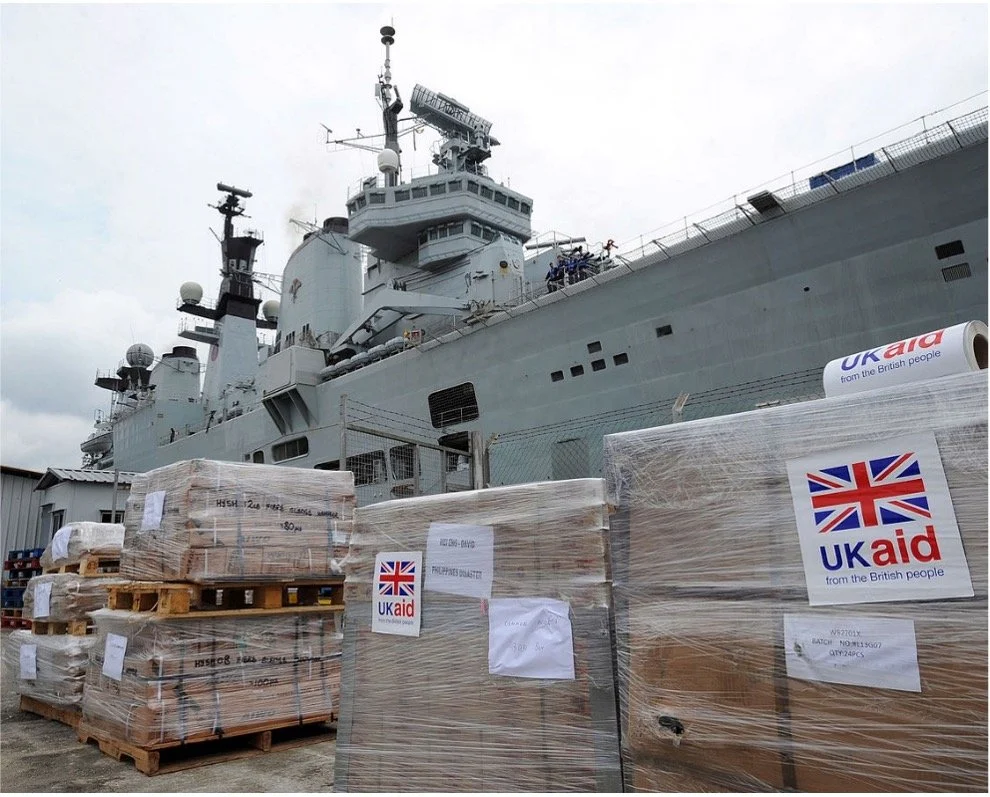
For years, the UK has been a global leader in international development and aid, helping millions around the world. But today, it risks shifting from a global leader to a follower. For over a decade the UK has hit the UN’s target of spending of 0.7% of Gross National Income (GNI). Since 2021, this has been cut to 0.5%, and now it is at risk of being slashed further to only 0.3% by 2027. Britian’s commitment to Official Development Assistance (ODA) was a symbol of moral leadership and soft power. However, in a world of increasing hostility, it seems that the only game in town is militarisation. Why are these cuts happening, and what will the consequences be for millions both across the globe and living here in the UK?
A Legacy left behind:
The UK’s history of international aid dates back to 1964 with the establishment of the Ministry of Overseas Development. Prior to this, the British government sent economic assistance to its colonies, eventually ex-colonies, in exchange for profit. However, in the era of the cold war and communism, Western nations felt the duty to do more to help these ‘third world’ countries on the edge of adopting communist ideologies. The West saw foreign aid as a way of promoting political stability and preventing the spread of communist influence. Aid was not only an act of goodwill, but a form of soft power, intended to align ‘third world’ countries with Western economic and political systems.
In the aftermath of the Cold War, the UK’s modern aid story began in earnest with the creation of the Department for International Development (DFID) in 1997. Under DFID’s leadership, the UK became a consistent advocate for poverty reduction, gender equality, and humanitarian action. Its commitment to the 0.7% target, achieved for the first time in 2013 and maintained for nearly a decade, earned cross-party support and international respect.
In 2020, this changed yet again when DFID was merged with the Foreign and Commonwealth Office to form the Foreign, Commonwealth and Development Office (FCDO). Now a super department, critics warned this blurred the line between humanitarian objectives and national self-interest. The International Development Committee (IDC) warned that this closer alignment risked damaging the UK’s ‘soft power.’ Opposition leaders also voiced concern; Sir Keir Starmer stated it would ‘diminish Britain’s place in the world.’
In 2021, the UK government won a parliamentary vote to lock in cuts to overseas aid, reducing spending from the legally pledged 0.7% of GNI to 0.5%. Following the vote, Chancellor Rishi Sunak confirmed that the reduction, initially framed as ‘temporary’, would continue as planned amid economic pressures following the pandemic. In their manifesto, Labour promised to return aid spending to 0.7% of national income ‘as soon as fiscal circumstances allow.’ However, the future of ODA continues to remain uncertain.
Austerity Goes Global
The proposed cut to 0.3% of GNI would represent one of the steepest aid contractions in British history. Government ministers defend the move as pragmatic and fiscally responsible, stating that there will be a ‘refocusing’ of aid towards stability, investment, and national interest. However, with a reduced budget, the very nature of UK aid and development assistance is changing. The Minister for International Development has outlined four so-called ‘essential shifts’ in the way Britain will deliver aid:
Moving away from giving traditional aid, treating developing countries as economic partner rather than and aid recipient through increasing private involvement and investment.
Moving away from direct funding and running services to shift focus towards helping countries run and build their own services.
Rather than providing a financial grant, using the UK’s universities, finance through the City of London and the tech industry.
Finally, moving to financing local actors such as local charities, communities and businesses, and promoting locally-led development
While these reforms are framed as promoting sustainability and long-term resilience, they risk commercialising aid and prioritising UK economic and strategic interests over genuine poverty alleviation. In a world facing rising climate pressures and stagnating progress against global poverty, with extreme poverty expected to start rising in 5 years’ time, the stakes are high. The question remains, can the world afford these cuts?
The Cost of Cutting
The impact of these drastic aid cuts will be severe and effect multiple sectors. According to the Atlas Institute, these reductions put sectors that were previously both effective and economically sustainable at risk. Programmes spanning renewable energy, education, healthcare, and infrastructure are being scaled back or cancelled, leaving local economies and communities vulnerable. Commercialised development projects, which were profitable and largely self-sustaining, are particularly exposed, raising serious questions about the long-term viability of UK-led development initiatives. If the UK is committed to promoting private sector investment as the future of its development strategy, then cutting support to successful, sustainable and profitable ventures is unlikely to encourage further private sector investment.
Equally, there will be security and geopolitical ramifications. Chatham House has warned that the aid budget will undermine the UK’s ability to help countries remain stable and prevent conflict. Reduced engagement in hotspots such as the Sahel, Yemen, and parts of South Asia could create security vacuums, potentially exploited by rival powers, such as Russia and China. Increased instability would likely drive further displacement, generating more refugees and, paradoxically, greater humanitarian costs for the UK and its partners in the long term.
The impact of these cuts, however, will be felt most significantly and most devastatingly in the poorest countries. Analysis from Development Initiatives (DevInit) has found that while nearly every sector has declined since 2019, aid to least-developed countries overall dropped by a significant 55%. Meanwhile, in-donor refugee costs now account for around 30% of total ODA, leaving less funding for international development abroad. These reductions threaten progress in nations that have relied heavily on UK support, leaving vulnerable populations exposed to economic, health, and social crises.
Humanitarian consequences are equally stark, with cuts endangering global health programmes including vaccination campaigns and interventions against HIV, malaria, and TB, as well as maternal and child health initiatives. Education programmes, particularly those targeting girls in fragile or conflict-affected countries, and clean water and sanitation projects are also at risk, threatening to reverse decades of progress. With global poverty stagnating and climate crises intensifying, these reductions come at a particularly critical moment.
The long-term consequences are clear. Communities face diminished development prospects, fragile states are left more exposed to instability, and Britain’s reputation as a reliable international partner is at risk. Cuts such as this will redefine Britain’s role on the global stage and the repercussions will be felt for decades.
Rethinking Aid
If the UK government wants to ensure that the remaining aid budget will have the most significant impact, they must be strategic with their allocation. The UK’s international development must be rethought and re-justified and focused on interventions that are targeted to where they can make the most difference.
Poorer countries, especially those in sub-Saharan Africa, should be the primary beneficiaries of aid, as the region has the highest concentration of extreme poverty. Concentrating aid in fewer countries and scaling up larger programmes not only increases impact, but also reduces administrative overheads and ensures that limited funds are deployed strategically.
Two issues should be prioritised: governance, and global health. Governance can be strengthened by effective civil services, robust legal and regulatory frameworks, and independent institutions, enabling already weak states to handle political tensions more effectively. This will make these states more stable and reduce the chances of situations being exploited by hostile actors. In the long run, strong governance will pave the way for local governments to assume responsibility for their own development.
The global health sector should be a central focus. The UK has the best scientific and medical expertise, which can be leveraged to build resilient health systems in other countries while also demonstrating the country's leadership in health at the international level. Development should be directed towards crisis healthcare, maternal and child health, immunisation, nutrition, and long-term plans for the system. With domestic expert knowledge and well-targeted international spending, the UK can address urgent health challenges, and at the same time, get the best out of every pound spent.
Partnerships will be crucial; multilateral institutions such as Gavi, the Global Fund, and the International Development Association (IDA) can deliver interventions efficiently and at scale. Additionally, these development-focused mini-laterals- small, flexible groups of like-minded countries- can respond rapidly to targeted challenges, giving partner countries a greater voice while leveraging expertise and resources from allies including Japan, Australia, Canada, and the EU. Private sector investment should also be mobilised, multiplying development outcomes, respecting taxpayer money, and creating economic opportunities globally. Strong governance underpins these partnerships, making investments predictable, scalable, and effective.
Finally, communication, too, plays a role. It is essential that the public be made aware of the fact that strategic development expenditures go hand in hand with, instead of opposing, national defence. Good, evidence-based communication should focus on the number of lives saved, communities lifted out of poverty, and measurable health improvements, as a way to reinforce the value of aid. At the same time, rising defence budgets should be subject to rigorous and transparent scrutiny, with accountability to Parliament to ensure public trust.
The UK stands at a crossroads. Decades of leadership in international development are under threat, and the looming cuts to aid risk not only harming the world’s poorest communities but also diminishing Britain’s global influence and moral authority. Yet this moment also offers an opportunity to rethink and sharpen the focus of UK aid, ensuring that every pound spent achieves the greatest possible impact. The UK should continue to demonstrate that its power is not only measured in military might, but in the ability to save lives, reduce poverty, and build a more stable, secure world.